 Image: Gary Todd · Szilas
Vase of Entemena
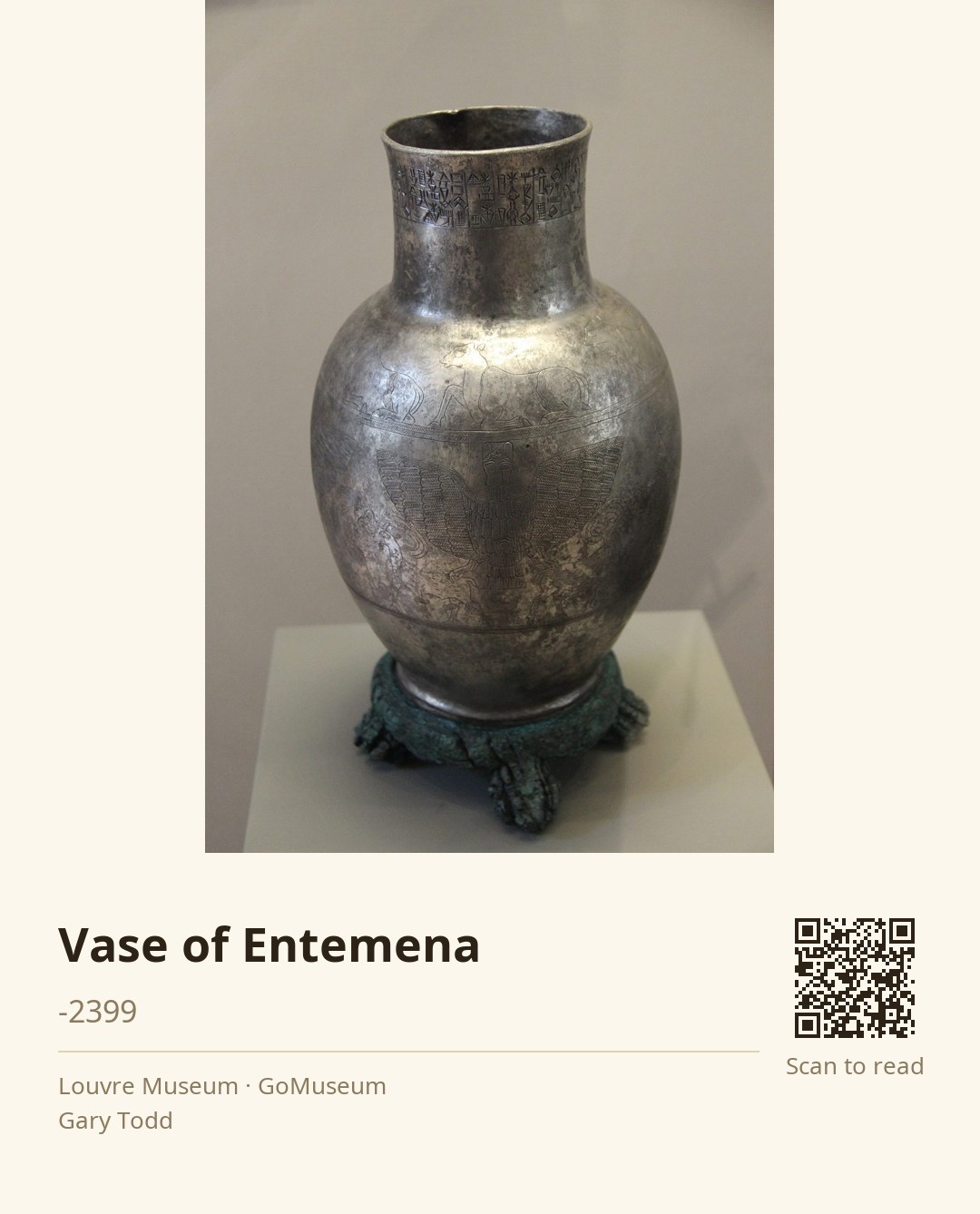
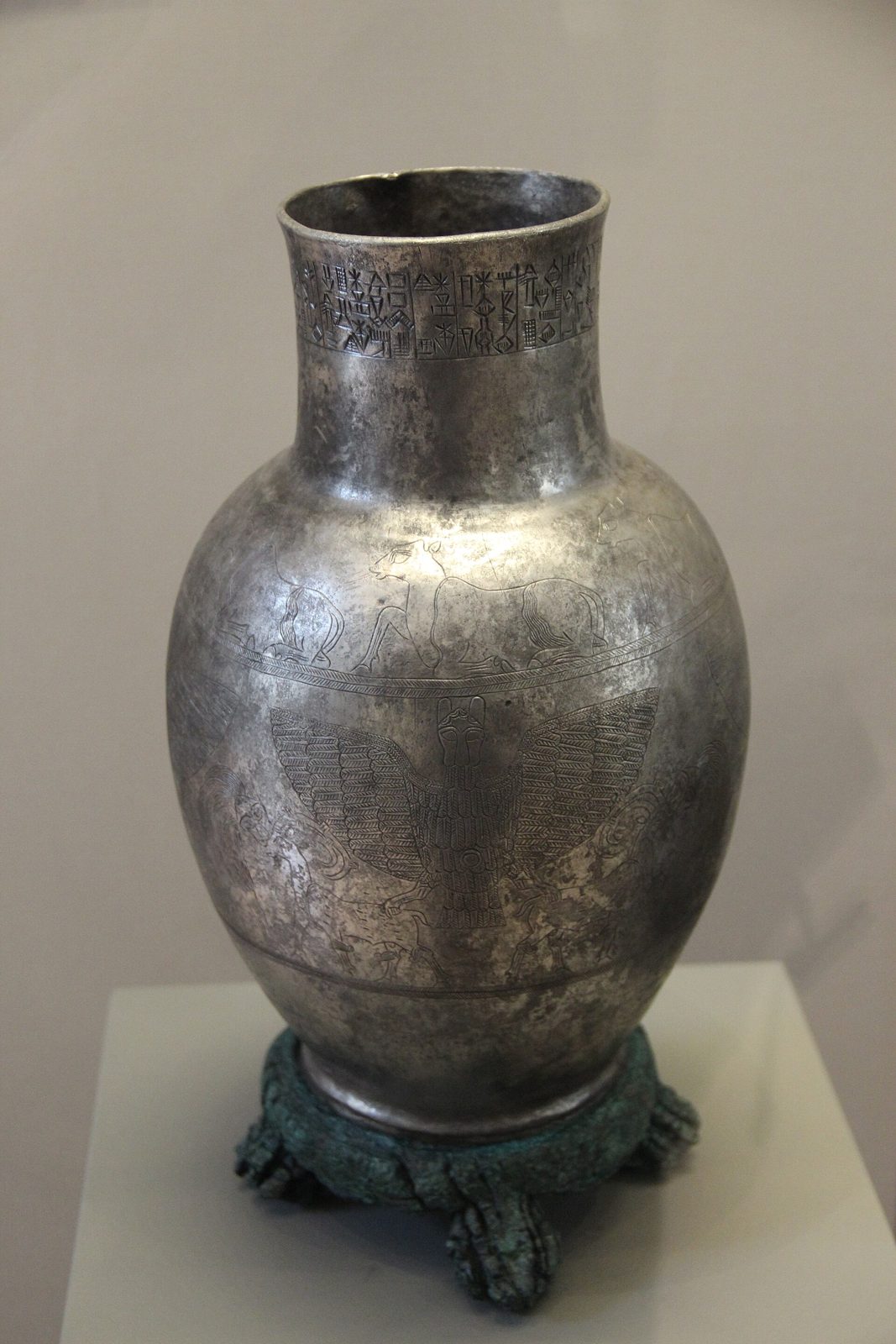
🎧 This work has audio narration — listen in the appTake a moment to really look at the Vase of Entemena. Notice how it stands on its tripod legs, a striking blend of silver and copper that glimmers under the museum lights. Now, focus on the intricate engravings: the lion-headed eagle, Anzud, fiercely grasping two lions in its talons.
This vase isn’t just a beautiful artifact; it represents the might of Lagash and the Sumerians' mastery over nature and the divine. The imagery reflects their beliefs and the importance of warfare and agriculture in their society, showcasing how art served both a decorative and a ceremonial purpose.
Discovered in 1888 at Telloh, an ancient site in Mesopotamia, this piece dates back to around 2400 BCE, making it one of the oldest examples of metal engraving known to us. It was crafted during a time when Sumerian artisans were pushing the boundaries of metallurgy, importing metals from distant lands to create stunning works like this.
As you stand here, think about the hands that shaped this vase thousands of years ago. What stories might it tell if it could speak?
The Vase of Entemena is named after its patron, Entemena, the ruler of Lagash. Imagine him, a powerful figure in ancient Mesopotamia, commissioning this exquisite piece to honor Ningirsu, the war god. This vase was more than a decorative item; it was a statement of power and piety, a tangible link between the earthly and the divine.
As you admire the vase, take a closer look at the materials. It’s crafted from silver, with legs made of copper, a combination that speaks to the Sumerians' advanced metallurgy. Notice the intricate engravings of Anzud, the lion-headed eagle, and the lions it grasps. The craftsmanship reflects a deep understanding of alloying techniques, allowing for both durability and elegance.
One fascinating detail about the Vase of Entemena is its discovery in 1888, when archaeologist Ernest de Sarzec unearthed it in a trench at the ancient site of Telloh, known as Shirpurla. It’s believed that the vase was intentionally hidden there by the Sumerians to protect it from theft, or perhaps it was buried because it was no longer functional.
The vase was unearthed in a trench, leading archaeologist Ernest de Sarzec to speculate that it may have been intentionally hidden by the Sumerians to prevent it from being stolen, or perhaps buried as a ritualistic act for non-functional liturgical items.