 Image: Alain Basset
Saint Dominic and Saint Francis Protecting the World from the Wrath of Christ
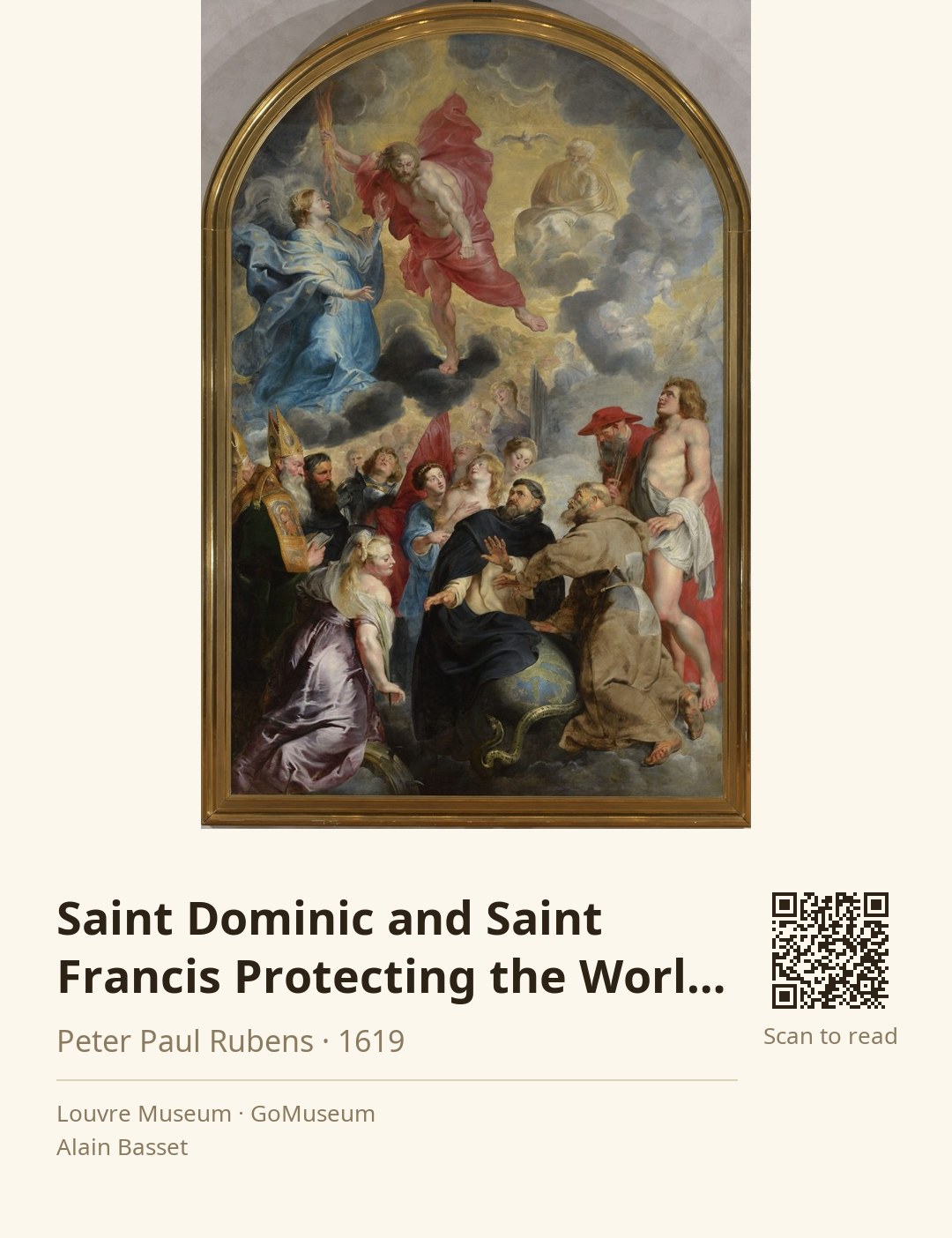
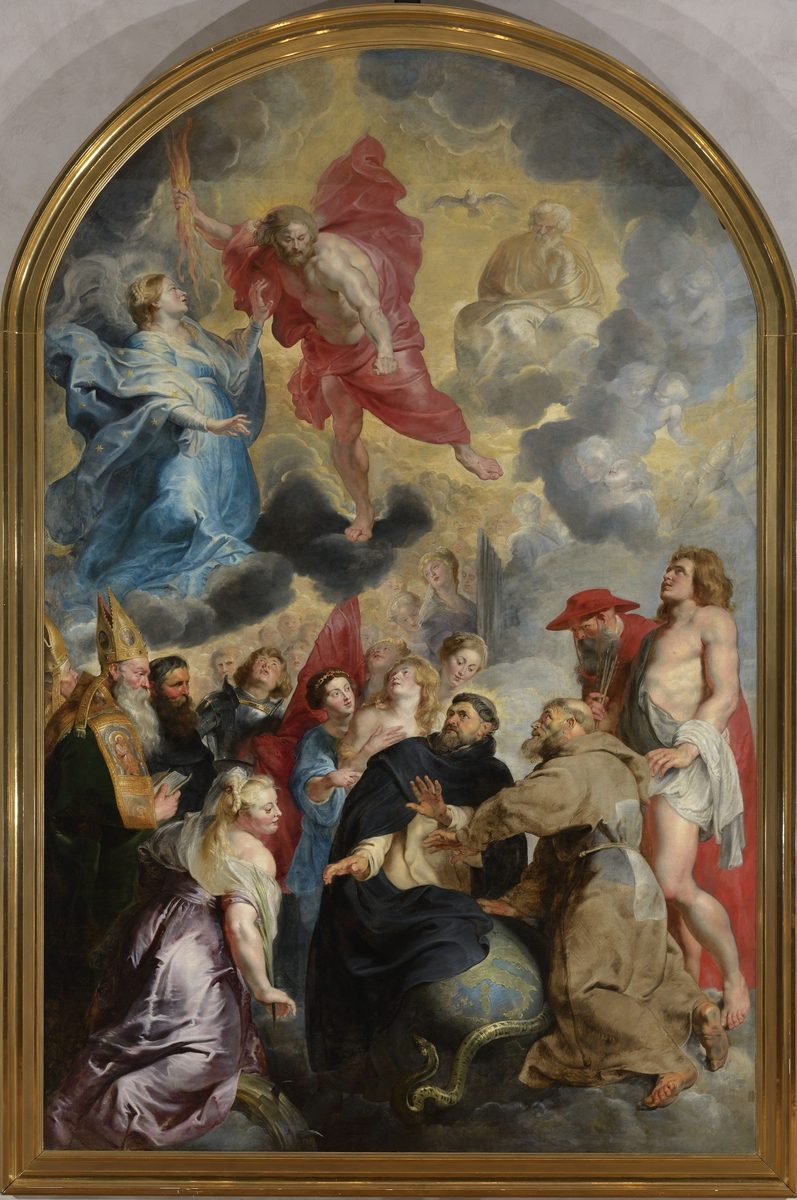
🎧 This work has audio narration — listen in the appTake a moment to really soak in the drama of this painting, "Saint Dominic and Saint Francis Protecting the World from the Wrath of Christ" by Peter Paul Rubens. Look closely at the intense expressions on the faces of Saints Dominic and Francis. You can almost feel their determination as they stand defiantly against the looming figure of Christ, who holds a thunderbolt, ready to unleash his wrath.
Notice how Rubens captures the tension in the air. The saints are not just passive figures; they are actively shielding humanity from divine punishment. It’s a powerful reminder of the role of saints as mediators, a theme that resonated deeply during the Counter-Reformation when this painting was created in 1619.
Rubens, a master of the Baroque style, infused this work with vibrant colors and dramatic movement, reflecting the emotional turmoil of the time. The painting was commissioned for the high altar of a Dominican church in Antwerp, underscoring its religious significance.
As you stand here, consider this: what does it mean to you to have figures like these saints standing up for humanity? How does their courage inspire you in your own life?
Sir Peter Paul Rubens was a Flemish artist and diplomat born on June 28, 1577, in Siegen, Germany. He is celebrated as a leading figure of the Flemish Baroque tradition, renowned for his dynamic compositions that intertwine classical and Christian themes. Rubens's work is characterized by vibrant color, movement, and sensuality, aligning with the dramatic style of the Counter-Reformation. His prolific output includes altarpieces, portraits, landscapes, and history paintings, with a catalog of over 1,400 works.
Raised in Antwerp after fleeing religious persecution, Rubens was a well-educated humanist and skilled diplomat, knighted by both Philip IV of Spain and Charles I of England. He managed a large workshop that produced art for European nobility and collectors, and he was also an influential art dealer. Rubens's designs extended beyond painting; he created tapestries, prints, and even contributed to architectural projects.
His legacy endures in the art world, where he is recognized for his mastery of color and form, and his ability to convey emotion and drama. Rubens's impact on Baroque art is profound, making him a pivotal figure in the evolution of Western art history. He passed away on May 30, 1640, leaving behind a rich artistic heritage that continues to inspire.
It was created during a time of intense religious fervor, reflecting the Counter-Reformation's emphasis on the power of saints as intercessors. Initially rectangular, the painting underwent alterations in the 1670s to fit a new altarpiece, which added a rounded top. Its journey has been tumultuous; it was stolen during the French Revolution in 1794, making its way to the Louvre before finally being transferred to the Museum of Fine Arts in Lyon in 1811. Over the years, it faced significant restoration challenges, including damage from insects and previous restoration attempts, leading to a comprehensive restoration completed in 1994. Each of these events adds layers to its history, making it not just a piece of art but a testament to resilience through time.
As you gaze at this painting, notice Rubens's masterful brushwork. The dynamic movement is palpable; the figures seem to leap off the canvas, their expressions intense and full of emotion. The use of light and shadow creates a dramatic contrast, drawing your eye to the central figures of Saints Dominic and Francis as they stand resolute against the looming threat of Christ. Rubens employs a rich palette, with vibrant reds and deep blues that evoke a sense of urgency and passion. The composition is carefully structured, leading your gaze from the saints to Christ, whose thunderbolt looms ominously. The scale of the painting, at over five meters tall, amplifies its emotional impact, making you feel the weight of the moment. Each stroke feels deliberate, as if Rubens is inviting you into a dialogue about faith, fear, and hope.
Interestingly, Rubens was not just a painter; he was also a diplomat and an avid art collector. His connections with the nobility and his extensive travels throughout Europe allowed him to gather a vast collection of artworks, which influenced his own style and the art scene in Antwerp. This multifaceted life enriched his paintings with layers of meaning and context that went beyond mere aesthetics.
Originally, the painting was rectangular, but in the 1670s, it was modified to fit a new altarpiece, resulting in the addition of a rounded top.
The painting was stolen in 1794 and subsequently made its way to the Louvre, where it underwent various restorations due to its deteriorating condition before being transferred to the Museum of Fine Arts in Lyon in 1811.