Portrait of Erasmus (1467-1536) writing
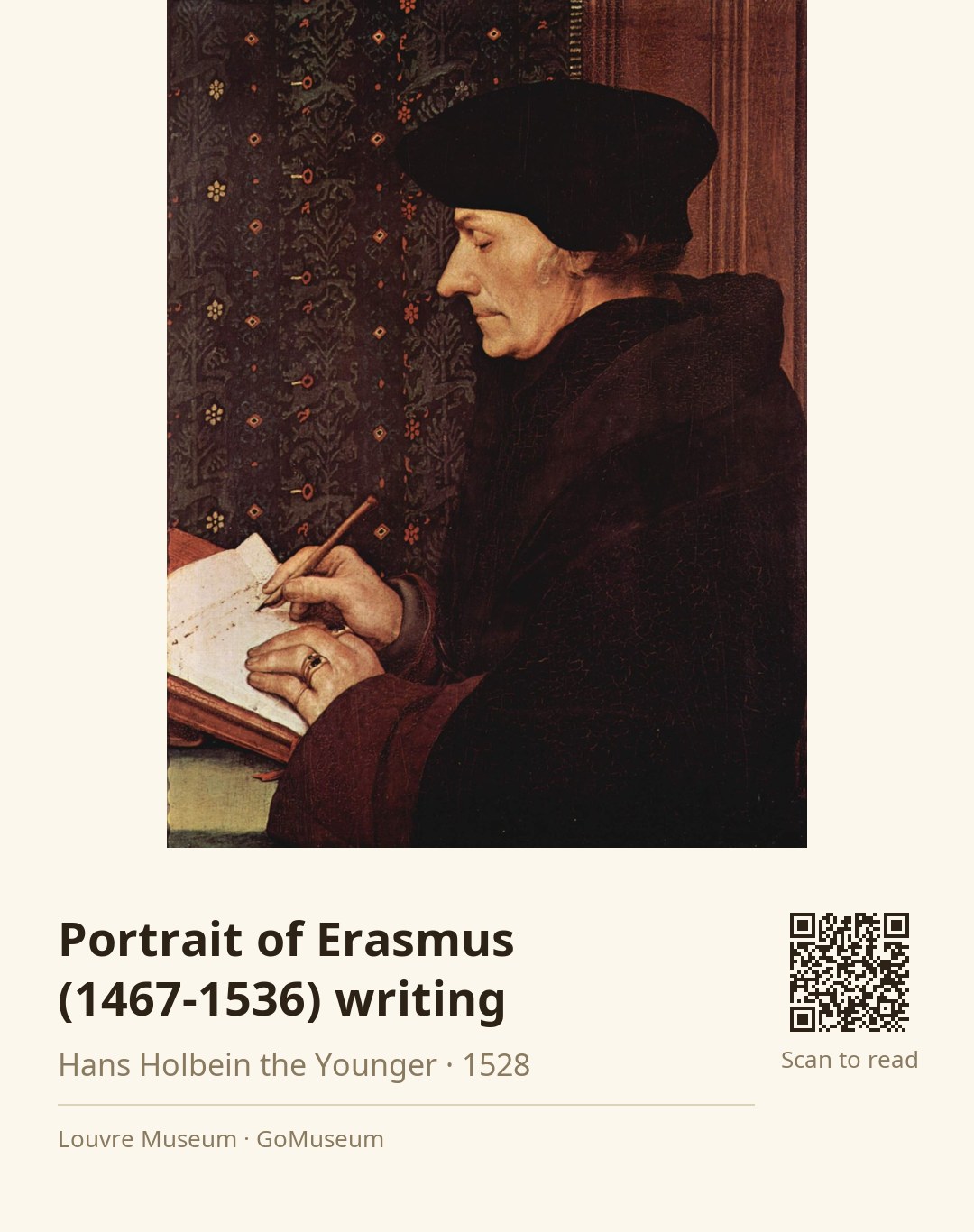
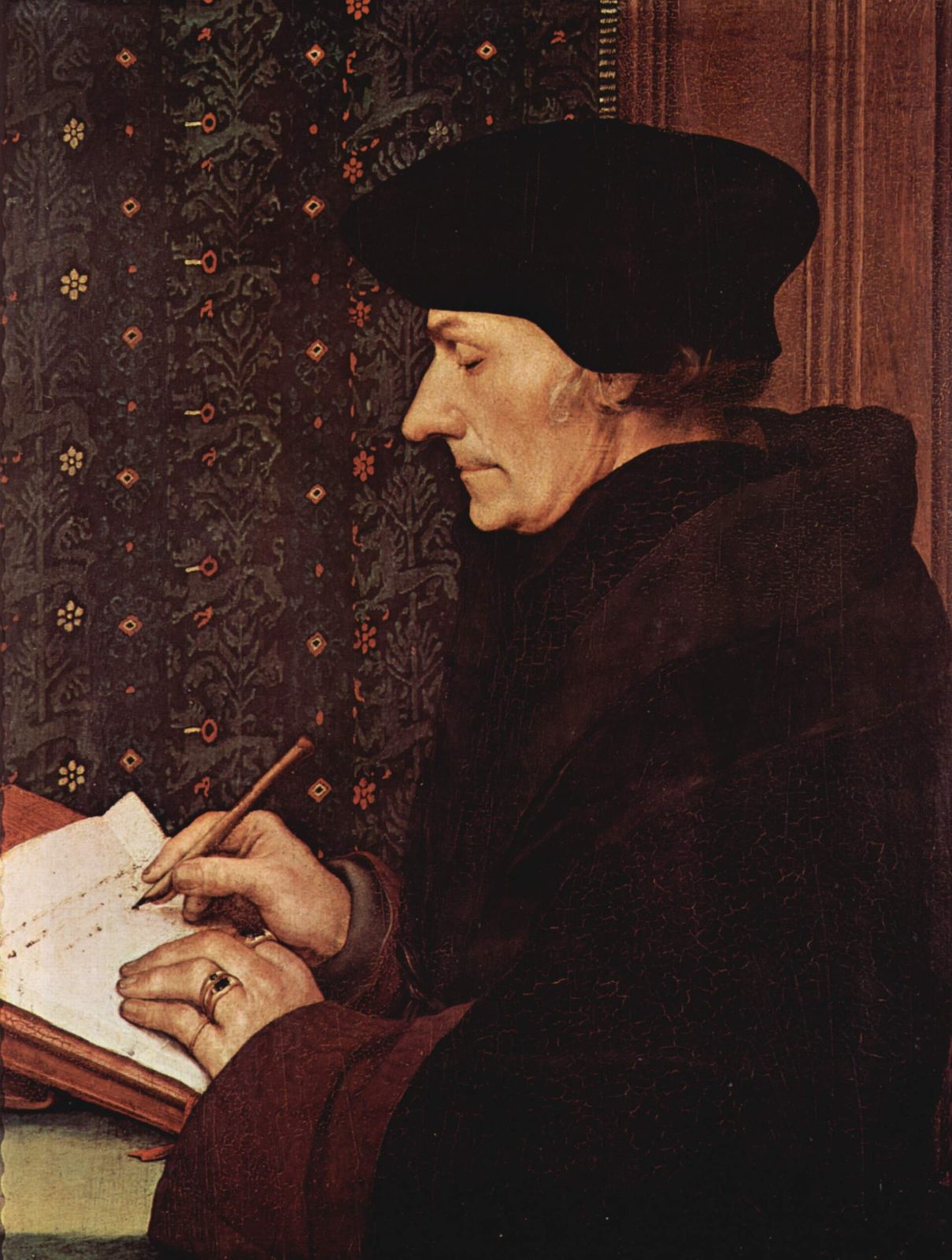
🎧 This work has audio narration — listen in the appErasmus, the renowned Dutch philosopher, is captured here in a moment of deep concentration as he writes with a quill, his profile illuminated against the muted tones of his dark robe and cap. The intricate tapestry behind him, adorned with floral and geometric patterns, adds a rich texture to the scene, drawing attention to the intimacy of his scholarly pursuit.
This portrayal by Hans Holbein the Younger, painted in 1528, emphasizes not just Erasmus's intellectual engagement but also the meticulous detail of Holbein's brushwork, which brings the textures of the fabric and the subtle play of light on Erasmus's face to life. The act of writing, central to Erasmus's identity as a humanist and thinker, is made palpable, inviting viewers to appreciate the weight of his contributions to philosophy and literature. Holbein's choice of a profile view enhances the sense of introspection, allowing us to witness a moment that feels both personal and monumental.
Holbein, originally from Augsburg, had established himself in Basel, where he first met Erasmus, leading to a significant artistic relationship.
Hans Holbein the Younger, born around 1497 in Augsburg, was a pivotal figure in Northern Renaissance art, renowned for his extraordinary portraiture. Initially trained in his father's workshop, he moved to Basel, where he honed his skills in religious art and humanist themes. His early works, including portraits of notable figures like Erasmus, showcased his keen observational prowess and wit.
In 1526, Holbein relocated to England, quickly gaining favor among the humanist elite, including Thomas More. His return to England in 1532 marked the height of his career, as he became the official court painter for Henry VIII. Holbein's portraits, such as "The Ambassadors," are celebrated for their realism and intricate symbolism, often embedding deeper meanings within the likenesses of his subjects.
Despite his acclaim, Holbein did not establish a school, making him a unique figure in art history. His work influenced subsequent generations, and he is remembered for his precision and the emotional depth of his portraits. Holbein's legacy endures, as his art continues to captivate scholars and enthusiasts alike, reflecting the complexities of human character and the era's cultural shifts. He passed away in 1543, leaving behind a rich body of work that remains influential today.
Holbein's technique in this portrait is nothing short of masterful. The use of oil on a wooden panel allows for a depth of color and detail that brings Erasmus to life. Holbein's brushwork is precise, capturing the textures of Erasmus's dark robe and the intricate patterns of the tapestry behind him. The way he handles light is particularly striking; it illuminates Erasmus's face, drawing our attention to his focused expression as he writes. This choice of profile view not only enhances the intimacy of the scene but also emphasizes the act of writing, a central theme in Erasmus's life. The composition is carefully balanced, with the figure dominating the space, creating a sense of immediacy and engagement. Holbein's ability to convey character through subtle details—like the ring on Erasmus's hand—adds layers of meaning, inviting viewers to ponder the thoughts and ideas swirling in the philosopher's mind.
The profile view adds a layer of intimacy and introspection to the portrait, making the moment feel both personal and monumental.
Holbein's style is noted for its realism, as he employed a rare precision in his drawings and paintings.
Erasmus recommended Holbein to Thomas More, which helped him secure work and establish a reputation in England.