 Image: Rama
Amarna letter EA 362
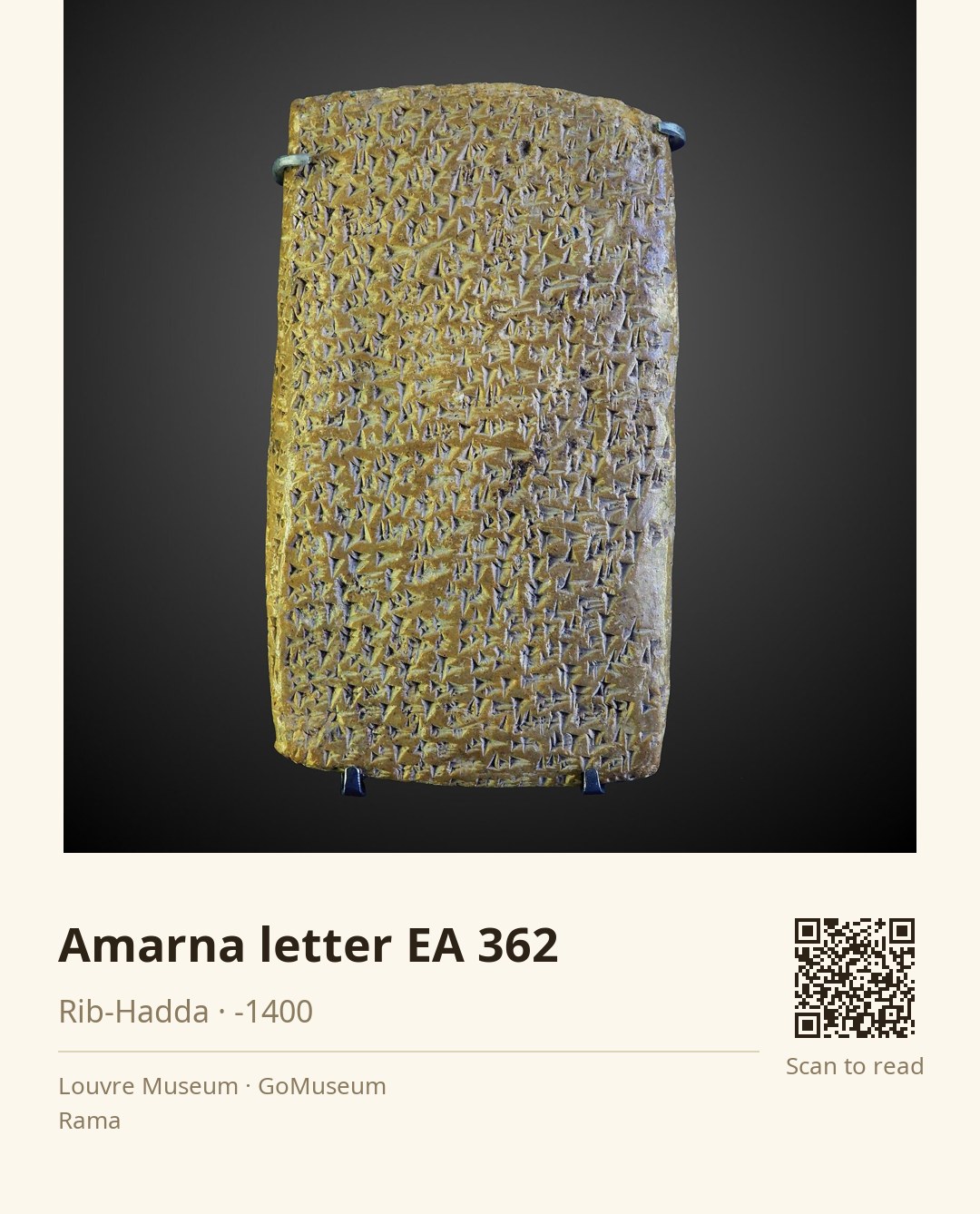
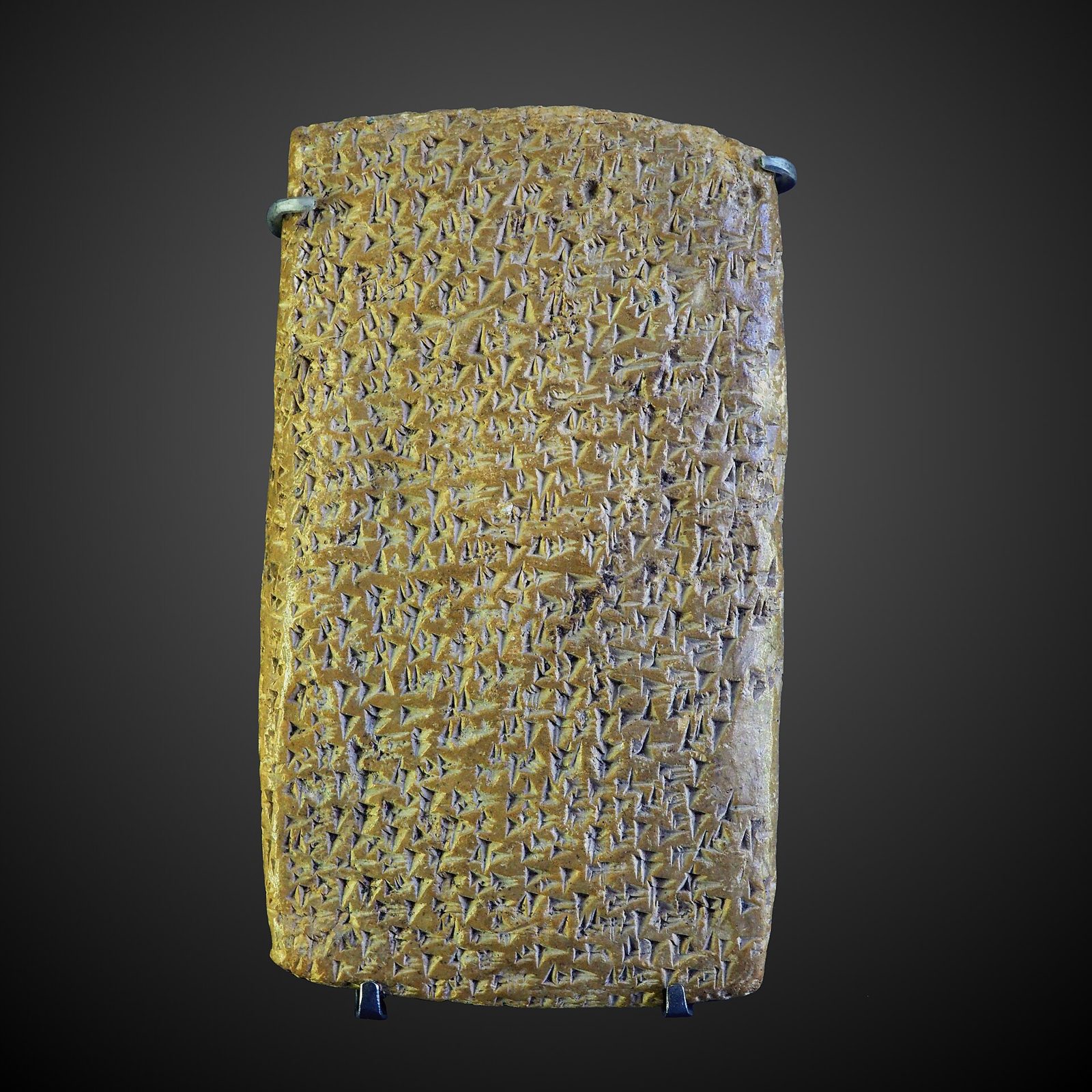
🎧 This work has audio narration — listen in the appTake a moment to really look at this clay tablet, known as Amarna letter EA 362. Notice the intricate inscriptions that wrap around its surface, each line a plea from Rib-Hadda, the mayor of Byblos, to Pharaoh. The urgency in his words is palpable, especially when he implores for archers to defend his city from looming threats.
These details matter because they reveal the desperation of a leader facing not just external enemies but also internal strife. Rib-Hadda’s city, a vital coastal hub, was under siege, and his life depended on the Pharaoh’s response. This letter isn’t just a historical artifact; it’s a window into the political turmoil of the 14th century BCE, where alliances were fragile and survival was a daily battle.
His letters, including this one, were among the largest collections of correspondence from that era, showcasing the complexities of diplomacy and warfare.
As you stand here, think about the weight of Rib-Hadda’s words. What would it feel like to be in his position, reaching out for help while knowing the fate of your city hangs in the balance?
Rib-Hadda was the king of Byblos in the mid-fourteenth century BCE, known for his poignant correspondence with Pharaoh Akhenaten, encapsulated in the Amarna letters. His letters reveal a ruler beset by turmoil, pleading for assistance against external threats and internal strife. Rib-Hadda's character was marked by desperation and resilience; he faced the encroachment of rival powers, particularly Abdi-Ashirta of Amurru, and the rebellion of his own people. His writings often conveyed a sense of vulnerability, as he likened himself to a trapped bird, reflecting his precarious position amidst political upheaval.
Despite his efforts to secure aid, Rib-Hadda's appeals largely went unanswered, leading to his eventual exile orchestrated by his brother. His legacy is one of a king struggling against overwhelming odds, providing a unique glimpse into the challenges faced by rulers in the ancient Near East. Rib-Hadda's letters not only document his plight but also serve as a vital historical source, illustrating the complexities of power dynamics during a tumultuous period in art history.
The Amarna letter EA 362, often referred to as 'A Commissioner Murdered,' is a remarkable clay tablet crafted by Rib-Hadda, the mayor of Byblos, around 1400 BCE. This letter is part of a larger collection known as the Amarna letters, which were discovered in the ruins of Akhetaten, the city built by Pharaoh Akhenaten. Rib-Hadda was a prolific correspondent, writing around 70 letters to the Pharaoh, detailing the dire situations in Byblos and the surrounding regions. His letters reflect a time of political instability, with threats from rival city-states and internal strife. EA 362 specifically addresses the urgent need for military support against enemies and mentions the death of an Egyptian commissioner, Pawura. The letter's discovery in the Louvre highlights its significance, as it provides a direct glimpse into the diplomatic struggles of the era and the desperate pleas of a leader fighting for his city's survival.
Did you know that Rib-Hadda, the author of this letter, was not just a mayor but a desperate leader fighting for the survival of his city, Byblos? In this letter, he pleads for archers from Pharaoh, fearing that without them, his city would fall. What’s striking is his mention of a pestilence—he insists it’s over, even as he battles against the looming threat of enemies and internal strife. This gives us a glimpse into the chaos of his time, where every word could be a matter of life or death.
Byblos housed a significant Egyptian community, indicating a close alignment with Egypt during Rib-Hadda's rule. This connection likely influenced his diplomatic correspondence, as he often appealed to Pharaoh for military support and assistance.