The Sleep of Endymion
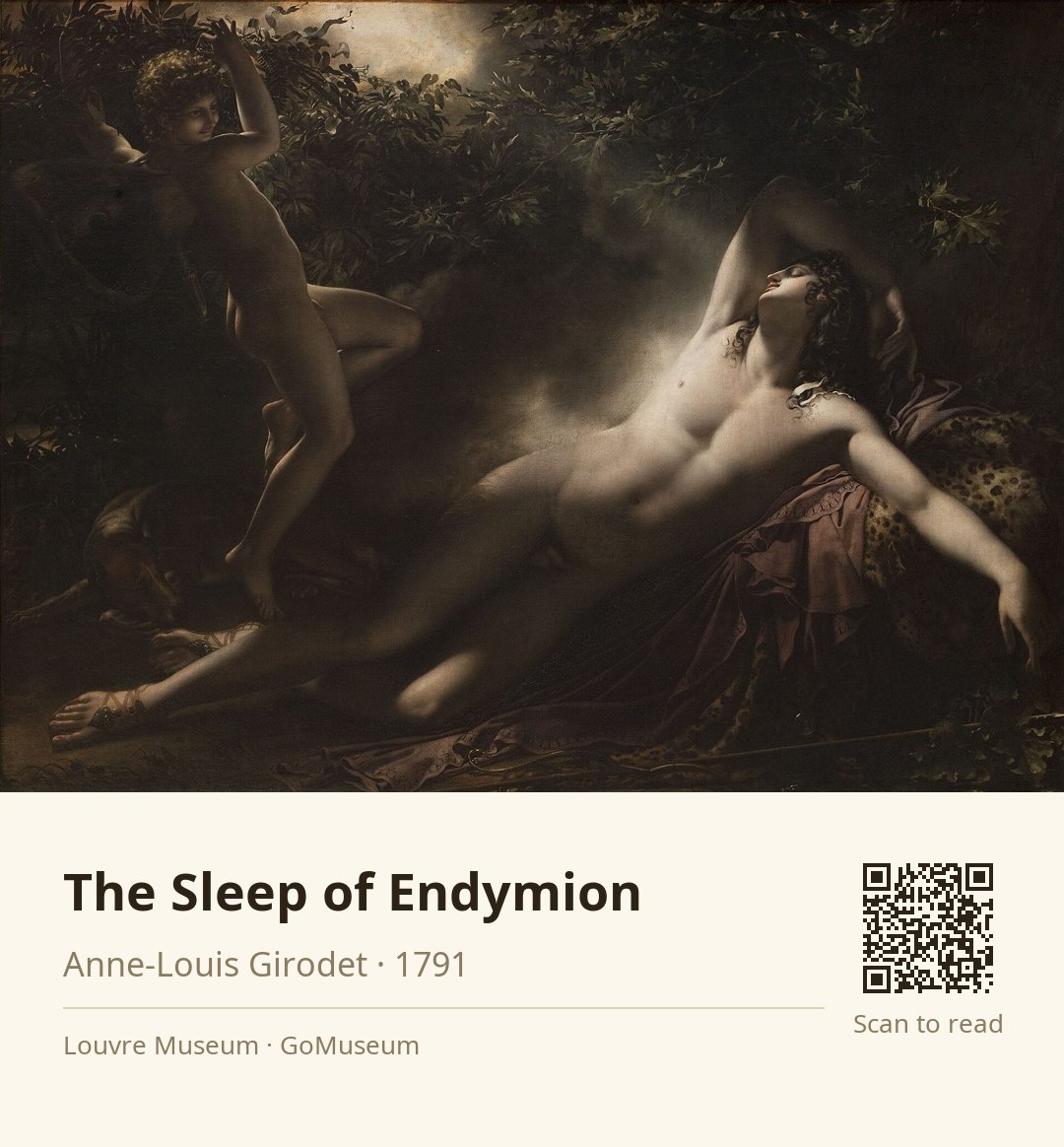
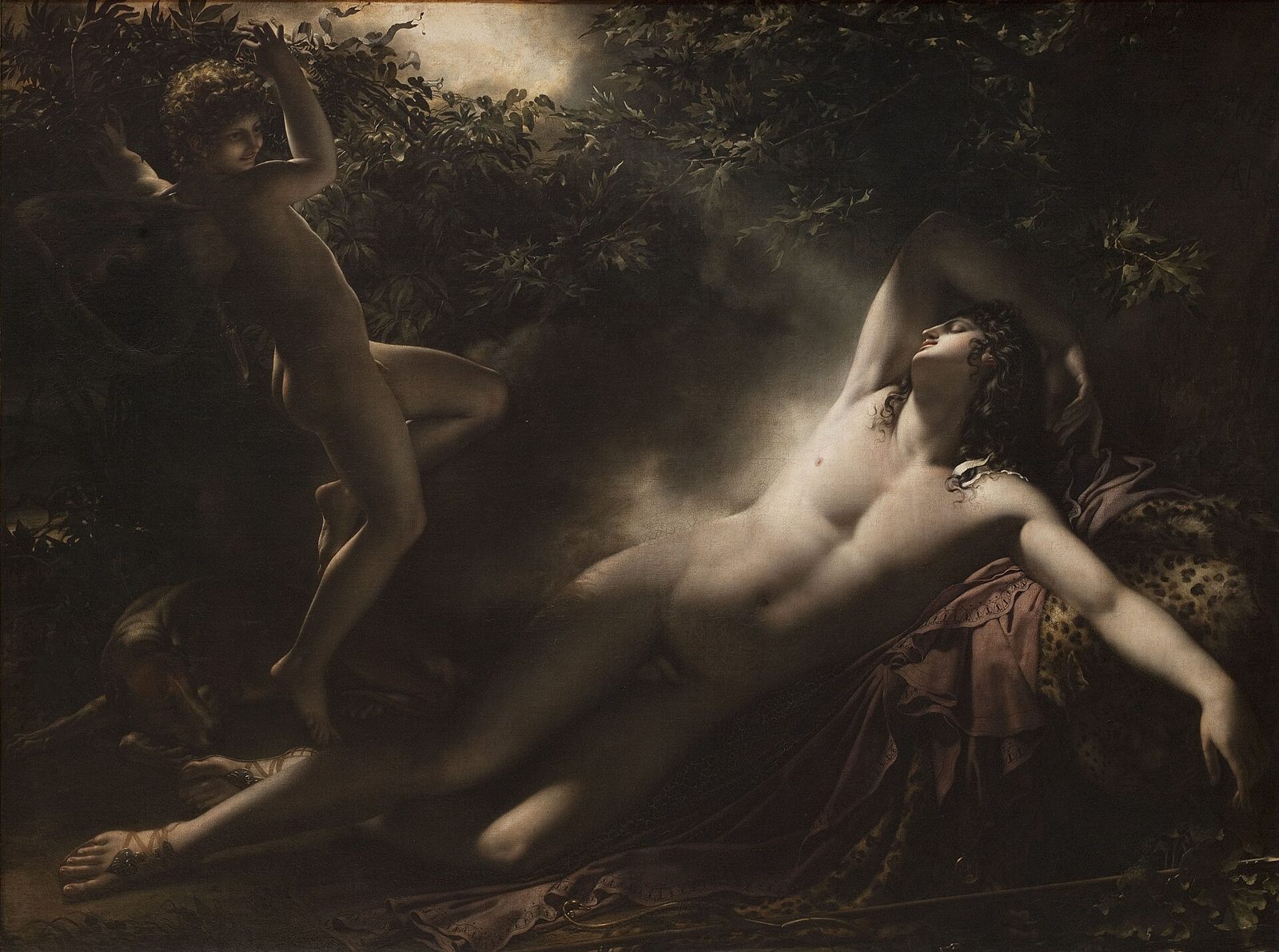
🎧 This work has audio narration — listen in the appTake a moment to really look at "The Sleep of Endymion." Notice how the soft glow of moonlight bathes the young shepherd in a serene, almost ethereal light. Look closely at the way the goddess Selene, depicted as a beam of moonlight, gently illuminates Endymion's tranquil face and relaxed body, creating a dreamlike atmosphere.
These details matter because they capture the essence of a mythological tale where beauty and eternal sleep intertwine. Endymion, granted the choice of immortality, opts for perpetual slumber, forever untouched by time. This choice reflects a longing for beauty that transcends the mundane, a theme that resonates deeply in the Romantic movement that Girodet is often associated with.
Painted in 1791, this work marked a pivotal moment in Girodet's career, showcasing his unique ability to blend classical ideals with a new, emotive style. It was his first major success at the Salon, setting the stage for his future as a prominent figure in French art.
As you stand here, think about the price of beauty and eternal youth. Would you choose to sleep forever if it meant never aging? Let that question linger as you take in the captivating scene before you.
Anne-Louis Girodet de Roussy-Trioson, born on January 29, 1767, in Montargis, was a pivotal figure in the transition from Neoclassicism to Romanticism in French art. A talented pupil of Jacques-Louis David, he gained recognition for his precise style and innovative approach, incorporating elements of eroticism and emotional depth into his works. After losing both parents in his youth, he was adopted by his guardian, Dr. Benoît-François Trioson, whose influence shaped his career.
Girodet's artistic journey began with a focus on architecture before he shifted to painting, winning the prestigious Prix de Rome at just 22. His time in Italy profoundly impacted his style, leading to acclaimed works like "Endymion" and "Hippocrates Refusing the Gifts of Artaxerxes." Upon returning to France, he painted notable portraits, including members of the Bonaparte family, and won the decennial prize for "Scène du déluge."
Despite his success, Girodet faced personal challenges, including declining health in his later years. His final works, such as "Pygmalion and Galatea," reflected a deterioration in his artistic vigor. He passed away on December 9, 1824, in Paris, leaving behind a legacy that bridged classical ideals and Romantic sensibilities, influencing future generations of artists. His contributions were later celebrated in major exhibitions, affirming his place in art history.
Anne-Louis Girodet painted 'The Sleep of Endymion' in 1791, marking a significant milestone in his artistic journey. This work was commissioned as part of his return from Rome and was first exhibited at the Salon of 1793, where it garnered considerable acclaim, establishing Girodet as a prominent figure in French art. The painting was later shown again at the Salon of 1814, reinforcing its status. The painting's provenance is notable, as it has been preserved in the Louvre, where it continues to draw visitors, intrigued by its mythological narrative and exquisite execution.
Notice how the soft, diffused moonlight envelops Endymion, creating a serene and almost otherworldly atmosphere. The brushwork is fluid, lending a sense of tranquility to the scene, while the gentle contours of Endymion's body are rendered with a delicate touch that emphasizes his youthful beauty. The composition is carefully structured; Selene, depicted as a beam of moonlight, directs your gaze to Endymion, drawing you into this intimate moment. The use of color is particularly striking—soft blues and whites contrast with the earthy tones of the cave, enhancing the dreamlike quality. This careful handling of paint not only conveys emotion but also invites you to ponder the deeper themes of beauty and eternal rest.
Interestingly, Girodet's portrayal of Endymion as an eternally youthful figure without the typical muscularity of classical nudes was quite radical for its time. This choice not only defied traditional representations but also sparked discussions about beauty and sensuality in art, making it a subject of admiration and critique alike. The painting's unique approach to the male form reflects Girodet's innovative spirit and his desire to push the boundaries of artistic expression.
During his five years in Italy, Girodet moved away from the strict neoclassical style of his teacher, Jacques-Louis David, embracing a more ethereal and dreamlike quality in his work. This shift is evident in 'The Sleep of Endymion,' which showcases his innovative use of light and emotion.
When 'The Sleep of Endymion' was first exhibited at the Salon of 1793, it received considerable acclaim, establishing Girodet's reputation as a leading painter. The painting's unique portrayal of a youthful, non-muscular male figure sparked both admiration and debate about beauty standards in art.