 Image: Jebulon · Charles Marville / Louis Désiré Blanquart-Evrard · William Henry Goodyear · Tangopaso · Tangopaso
Fountain of Diana
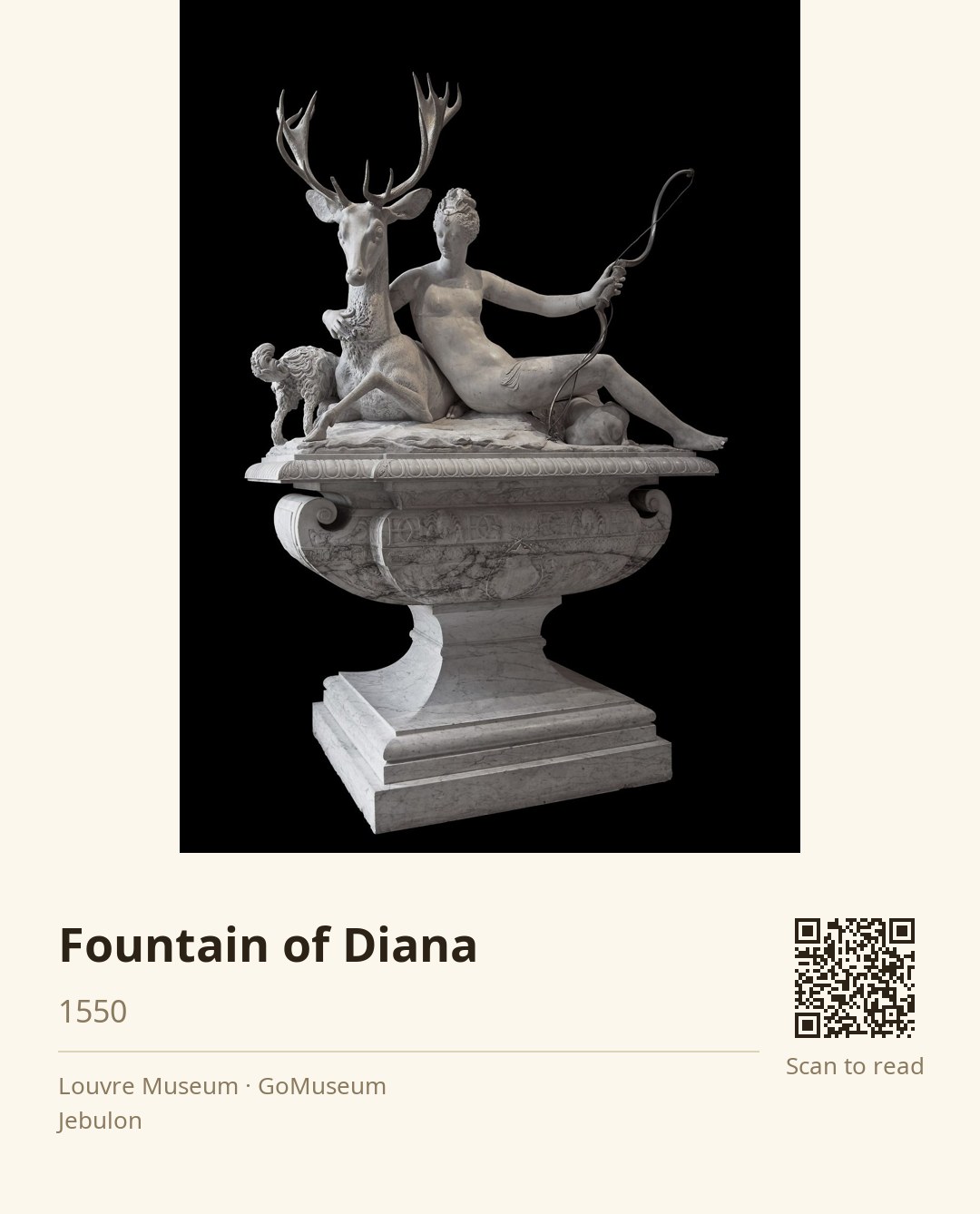
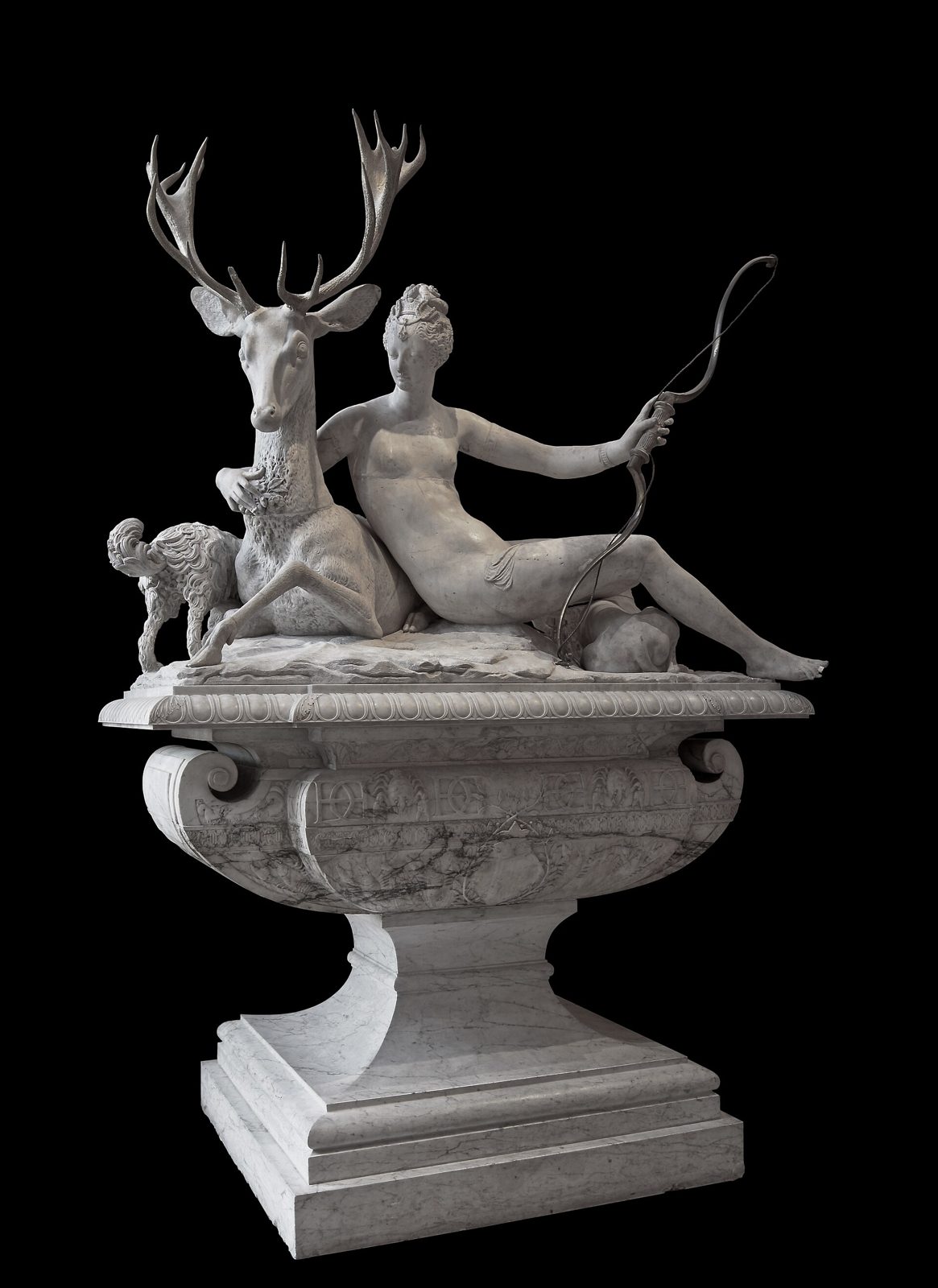
🎧 This work has audio narration — listen in the appTake a moment to really look at the Fountain of Diana. Notice how the goddess is elegantly leaning against a stag, her expression a blend of grace and strength. Look closely at her dogs—one a sleek greyhound, the other a fluffy barbet—both poised and alert at her feet.
These details matter because they tell a story of companionship and hunting, reflecting Diana’s dual role as both a fierce protector and a nurturing figure. The stag, often seen as a symbol of nobility, represents the royal connection to Diane de Poitiers, the woman immortalized in this sculpture.
Created around 1550, this piece was originally the centerpiece of a grand fountain at her Château d'Anet, designed to showcase her status and beauty. While the sculptor's identity remains a mystery, the work embodies the artistic tensions of the Renaissance, merging Italian Mannerism with French classicism.
As you stand here, think about the stories this sculpture has witnessed over centuries. What emotions do you think it evokes in you, just as it did for those who first admired it?
Take a closer look at the marble of the Fountain of Diana. The sculptor, whoever they may be, has masterfully carved the goddess with a delicate touch, capturing the softness of her skin and the intricate details of her flowing drapery. Notice how the texture of the stag's fur contrasts with the smoothness of Diana's form. The way the dogs are rendered—one sleek and elegant, the other fluffy and playful—shows a keen eye for both realism and stylization. This blend of techniques reflects the Mannerist style, where elegance and complexity reign supreme, inviting you to explore every curve and contour.
The Fountain of Diana was created around 1550, commissioned for the Château d'Anet, a lavish residence of Diane de Poitiers, the mistress of King Henry II of France. Originally, this sculpture was the centerpiece of a grand fountain, designed by the architect Philibert de L'Orme. After Diane's death, the fountain fell into disrepair, and the sculpture underwent significant restorations in the 18th century and again in the late 18th century.
One intriguing aspect of the Fountain of Diana is its original function as part of a grand fountain at Château d'Anet, where water actually spouted from the mouths and other parts of the dogs at its base. Imagine the spectacle of water cascading from a barbet and a greyhound, creating a lively scene around the goddess herself! This playful interaction between sculpture and water was a hallmark of Renaissance gardens, designed to delight and surprise visitors.
The monogram 'H' and 'D' on the pedestal represents Henri II and Diane de Poitiers, symbolizing their connection and the royal patronage behind the sculpture.