The Delicate Musician
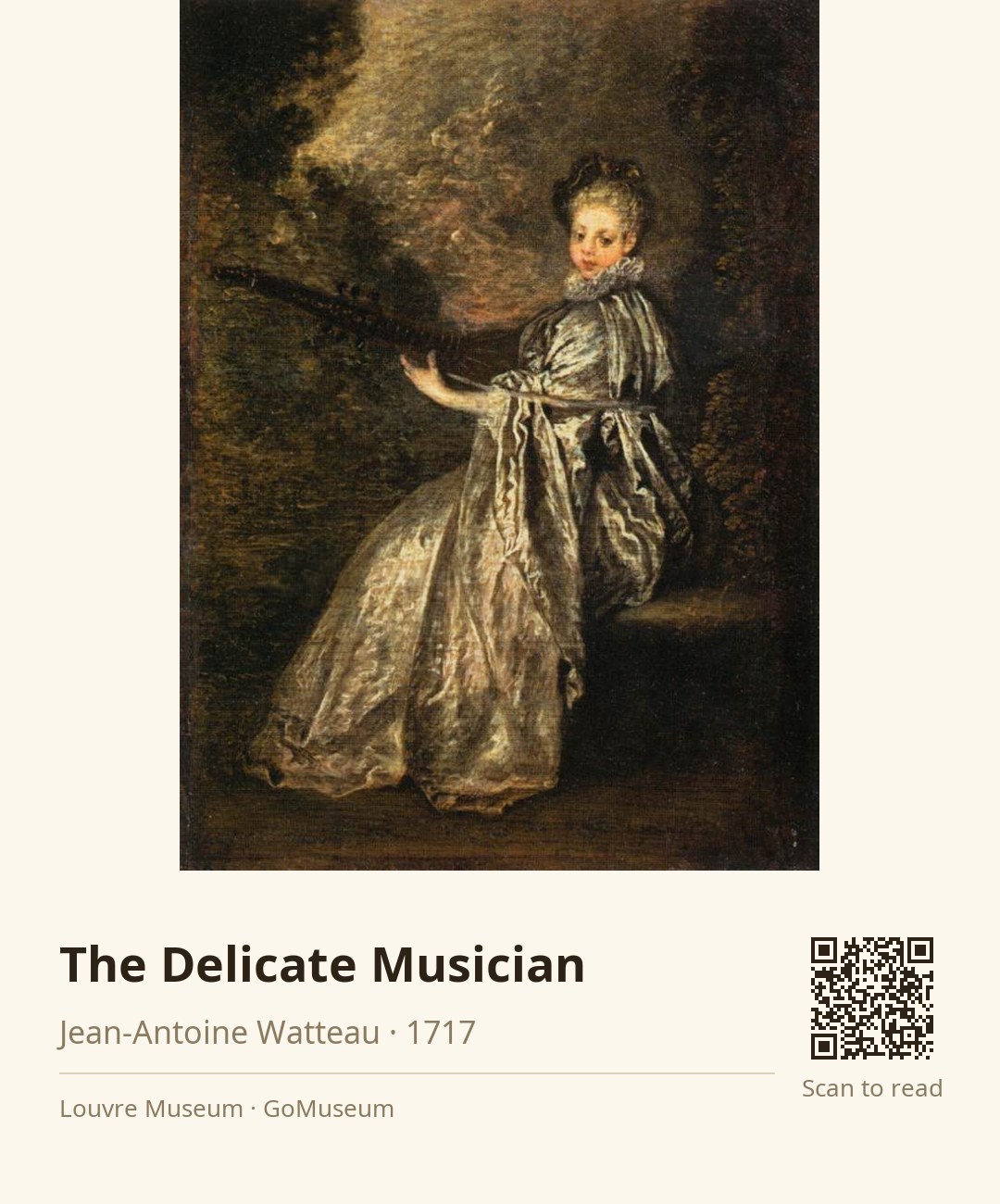
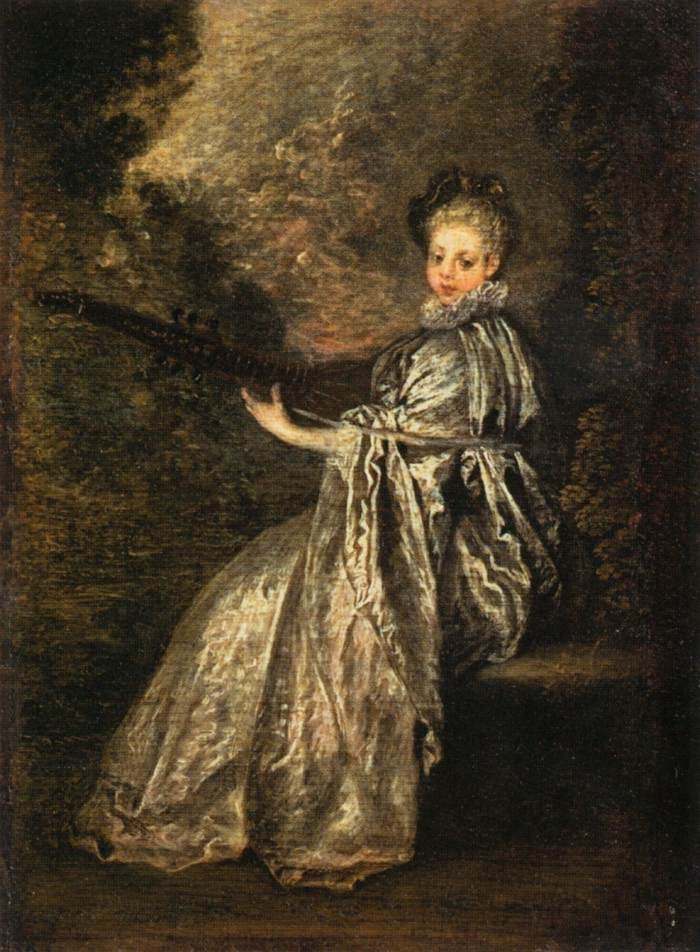
🎧 This work has audio narration — listen in the appA woman in an elaborate gown sits gracefully outdoors, her gaze meeting yours as she cradles a guitar in her lap. The intricate folds of her dress, combined with the lush greenery and soft clouds behind her, create a serene atmosphere that invites contemplation. Watteau’s delicate brushwork captures not only the texture of her attire but also the gentle play of light that dances across the scene, enhancing the sense of intimacy.
This portrayal of a musician reflects the Rococo fascination with leisure and elegance, where art becomes a celebration of beauty and the fleeting moments of life. The woman’s direct gaze suggests a connection with the viewer, drawing you into her world, while the soft, muted palette harmonizes with the natural setting, emphasizing the theme of tranquility. Watteau’s ability to blend figures with their surroundings speaks to his mastery in creating a narrative that feels both personal and universal.
In 1717, Watteau presented this work, titled "The Delicate Musician," as part of his reception into the Académie Royale de Peinture et de Sculpture, marking a significant moment in his artistic career.
Jean-Antoine Watteau, born in Valenciennes in 1684, was a pivotal French painter whose brief but impactful career transformed the Baroque style into the more playful Rococo. He is renowned for pioneering the genre of fêtes galantes, which depicted charming, idyllic scenes infused with theatricality, often inspired by the commedia dell'arte. Watteau's early life was marked by a tumultuous family environment, which likely influenced his introspective nature and artistic sensibilities.
After moving to Paris in 1702, he honed his skills under various influences, notably Claude Gillot and Claude Audran III, before establishing his unique style characterized by vibrant colors and fluid movement. His masterpieces, including "Pilgrimage to Cythera" and "Pierrot," reflect his fascination with love and leisure, capturing the essence of 18th-century French society.
Despite his struggles for recognition, Watteau achieved success during his lifetime, becoming a full member of the Académie Royale in 1717. His legacy endures through his extensive body of work, which continues to inspire artists and collectors alike, solidifying his place in art history as a master of color and emotion. Watteau passed away in 1721, leaving behind a rich artistic heritage that would influence generations to come.
Watteau's technique in 'The Delicate Musician' is a testament to his mastery of oil painting on wood. The delicate brushwork creates a sense of softness, particularly in the intricate folds of the woman's gown, where each stroke adds depth and texture. The palette is carefully chosen, with earthy browns and muted greens that harmonize with the natural backdrop, enhancing the serene atmosphere. Watteau's composition is striking; the figure is slightly off-center, allowing the lush landscape to envelop her, creating a sense of intimacy. This balance draws the viewer's eye, inviting them to engage with the subject. The play of light across the scene is subtle yet effective, highlighting the contours of the gown and the gentle curves of the guitar, making the entire painting feel alive.
A curious tidbit about 'The Delicate Musician' is that it was originally titled 'La Finette.' This name reflects the charm and delicacy of the subject, but it was later renamed to emphasize the musical aspect of the painting. This shift in title hints at how the artwork was perceived and appreciated over time, showcasing the evolving narratives that art can embody.
The commedia dell'arte influenced Watteau's work by introducing him to theatrical characters and themes, which became a lifelong passion reflected in his paintings.