Assemblée dans un parc
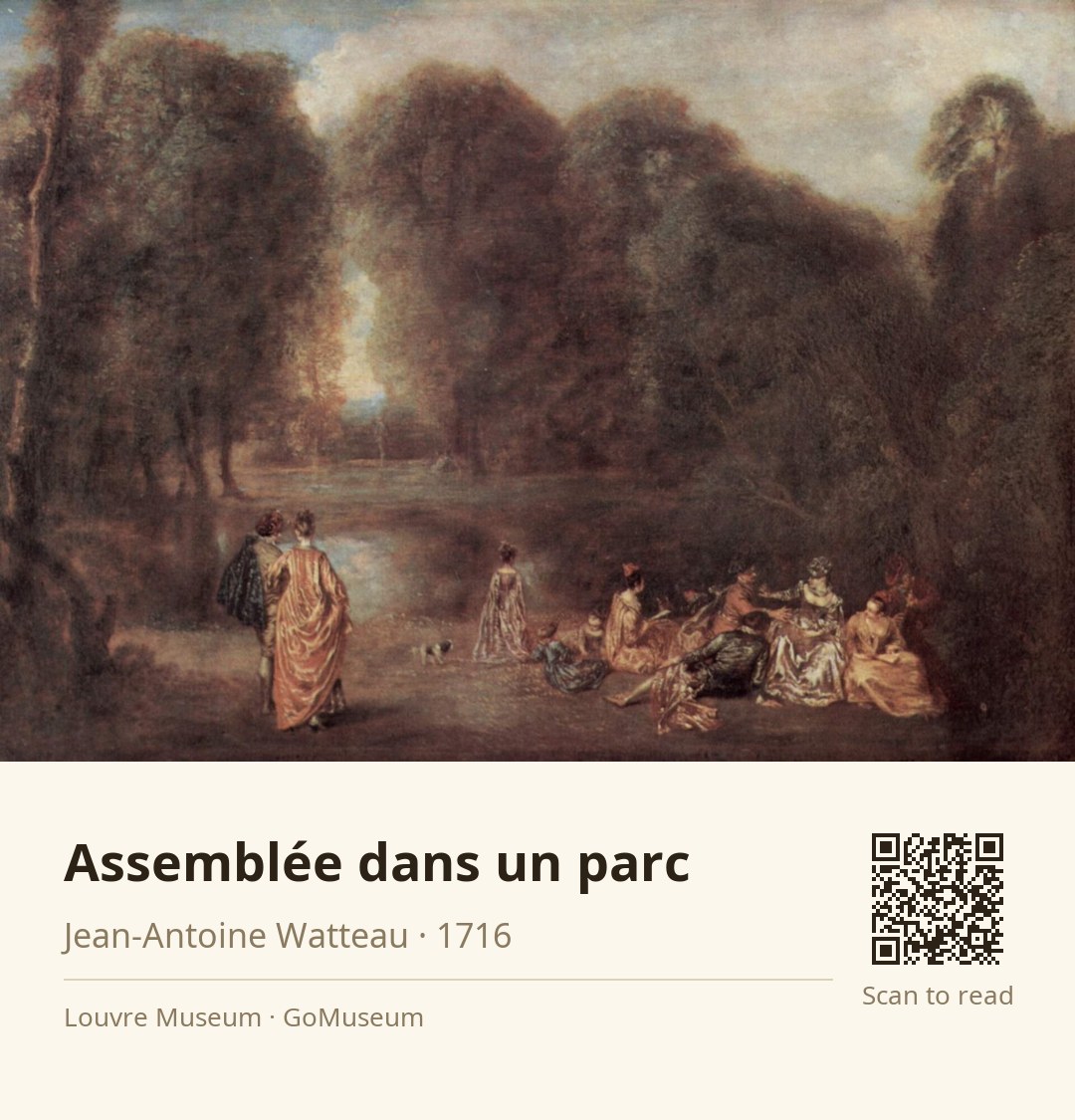
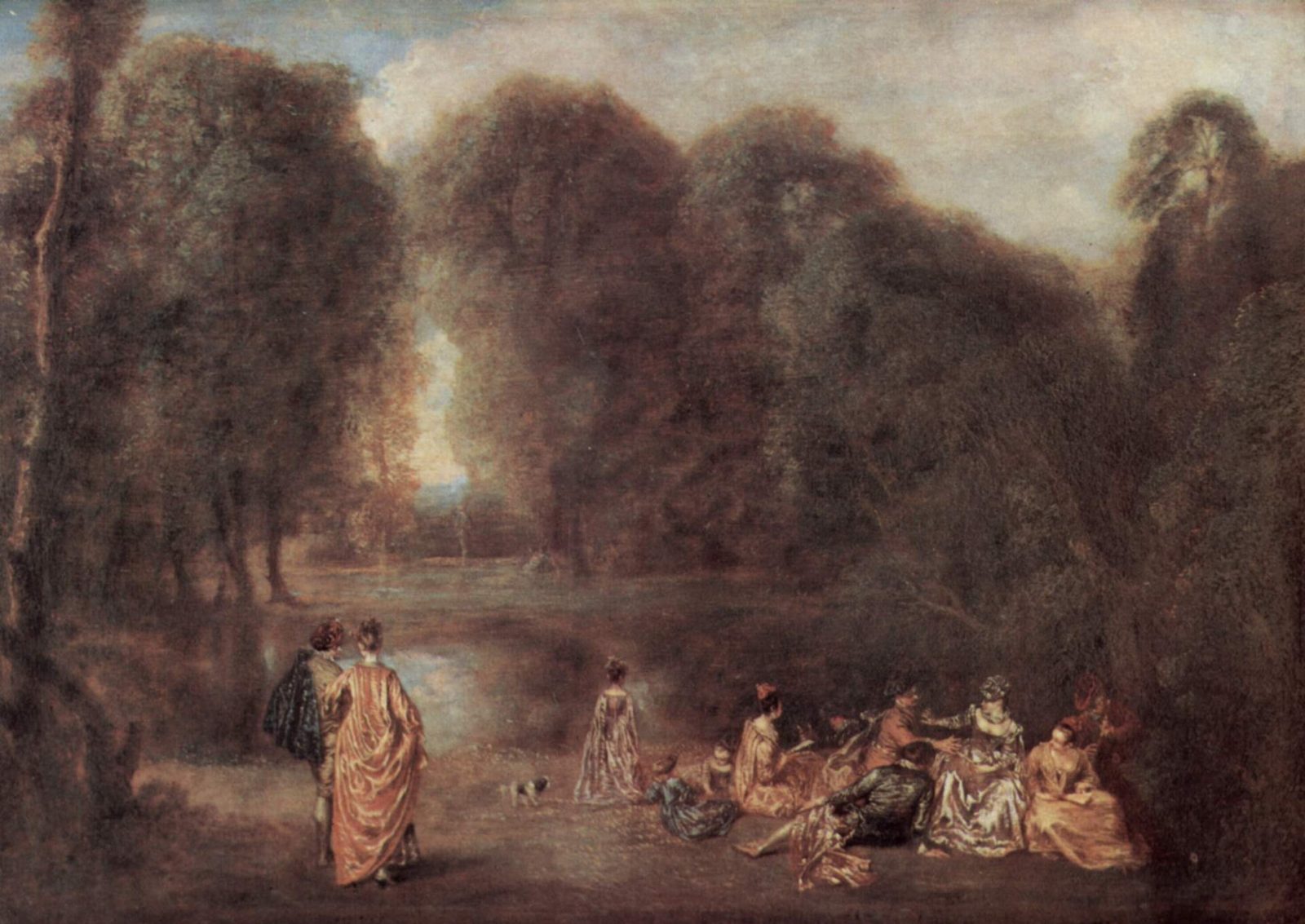
🎧 This work has audio narration — listen in the appA couple in elegant attire strolls towards the shimmering water, their small dog trotting alongside them in Watteau's "Assemblée dans un parc." The vibrant orange of the woman's flowing garment contrasts beautifully with the lush greens of the surrounding trees, which create a natural frame for this serene gathering.
This scene captures a moment of leisure and connection, reflecting the Rococo era's fascination with the pleasures of life. The figures, some seated and engaged in conversation, embody a world of refined social interaction, inviting viewers to step into a tranquil escape from the everyday. The soft brushwork and earthy palette enhance the dreamlike quality, suggesting a fleeting moment suspended in time.
Watteau, born in 1684, was pivotal in shifting the Baroque style towards the more playful and naturalistic Rococo, inventing the genre of fêtes galantes that celebrated idyllic charm. His brief but impactful career left a legacy of over two hundred paintings that captivated collectors across Europe.
Jean-Antoine Watteau, born in Valenciennes in 1684, was a pivotal French painter whose brief but impactful career transformed the Baroque style into the more playful Rococo. He is renowned for pioneering the genre of fêtes galantes, which depicted charming, idyllic scenes infused with theatricality, often inspired by the commedia dell'arte. Watteau's early life was marked by a tumultuous family environment, which likely influenced his introspective nature and artistic sensibilities.
After moving to Paris in 1702, he honed his skills under various influences, notably Claude Gillot and Claude Audran III, before establishing his unique style characterized by vibrant colors and fluid movement. His masterpieces, including "Pilgrimage to Cythera" and "Pierrot," reflect his fascination with love and leisure, capturing the essence of 18th-century French society.
Despite his struggles for recognition, Watteau achieved success during his lifetime, becoming a full member of the Académie Royale in 1717. His legacy endures through his extensive body of work, which continues to inspire artists and collectors alike, solidifying his place in art history as a master of color and emotion. Watteau passed away in 1721, leaving behind a rich artistic heritage that would influence generations to come.
In "Assemblée dans un parc," Watteau employs a soft, fluid brushwork that creates a sense of intimacy and movement. The way he layers the paint gives the figures a delicate, almost ethereal quality, inviting the viewer into this serene moment. The earthy palette, with its rich greens and warm oranges, enhances the naturalism of the scene, making it feel alive and inviting. Watteau's composition skillfully balances the figures against the lush backdrop of trees, which frame the gathering and draw the eye towards the reflective water. The scale of the painting, measuring 32.5 by 46.5 inches, allows for a detailed exploration of the characters' expressions and interactions, making the viewer feel as if they are part of this idyllic escape. His technique, influenced by the Venetian masters, emphasizes color and light, creating a dreamlike atmosphere that captures the essence of leisure in the Rococo era.
One intriguing anecdote about Watteau is that he struggled with poor health throughout his life, which often affected his work. Despite this, he managed to produce a remarkable body of art in just over a decade. His health issues were so pronounced that he sometimes had to work in short bursts, leading to a unique spontaneity in his brushwork. This characteristic became one of the hallmarks of his style, allowing him to convey emotion and atmosphere in ways that resonated deeply with viewers.
Watteau was significantly influenced by the works of the Venetian masters, as well as by Peter Paul Rubens, which shaped his approach to color and movement.