Self-Portrait with Her Daughter, Julie
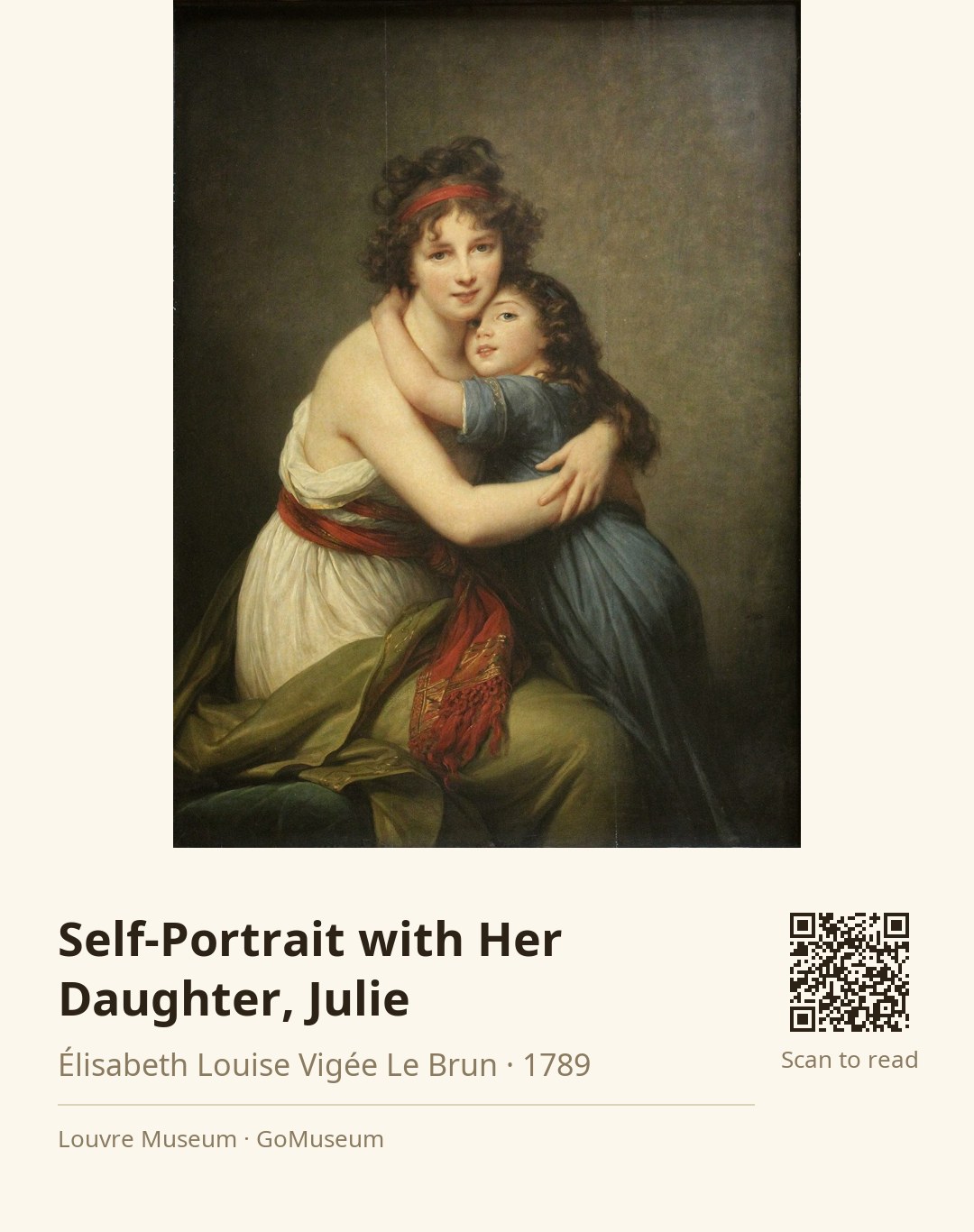
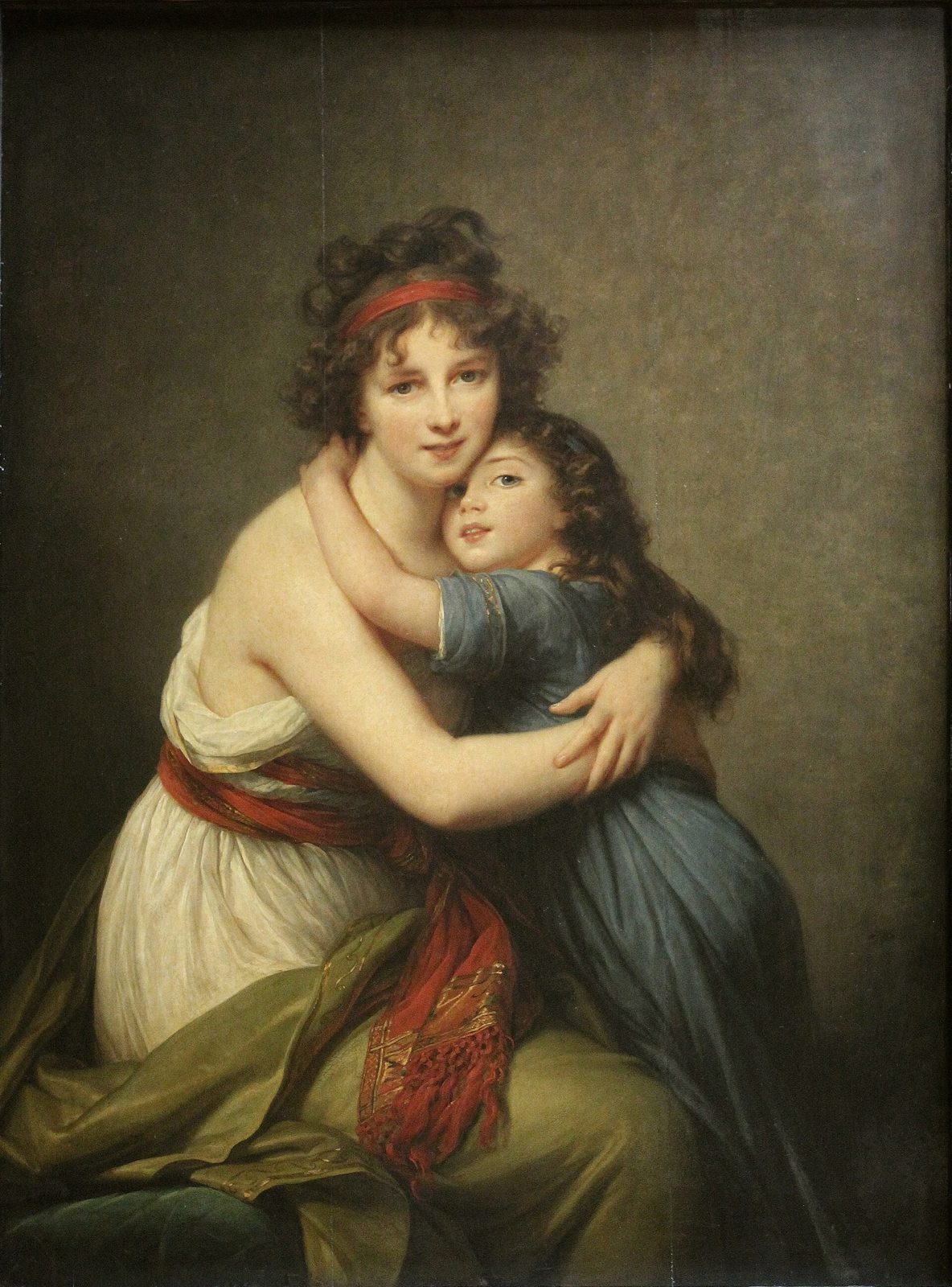
🎧 This work has audio narration — listen in the appTake a moment to really look at this painting, “Self-Portrait with Her Daughter, Julie.” Notice how Élisabeth Louise Vigée Le Brun embraces her daughter with such warmth, both figures draped in flowing, classical attire. The way the white fabric wraps around her shoulder, secured by a striking red scarf, isn’t just about fashion—it’s a bold statement.
This choice of clothing connects her to the ideals of ancient Greece and Rome, a nod to Neoclassicism that was sweeping through art at the time. By dressing this way, Vigée Le Brun elevates her identity as an artist in a male-dominated world, claiming her place among the greats. It’s a clever blend of motherhood and artistic independence, showcasing her strength as both a mother and a creator.
Painted in 1789, right at the start of the French Revolution, this piece reflects not just personal but societal upheaval. Vigée Le Brun, who had painted for royalty, faced exile shortly after creating this work, yet here she stands, defiantly gazing at us, asserting her autonomy.
As you take in this intimate moment between mother and daughter, think about the balance she strikes between her roles. How does this painting challenge your perception of motherhood and artistry? What stories do you think lie behind that direct gaze?
Élisabeth Louise Vigée Le Brun, born on April 16, 1755, in Paris, emerged as one of the foremost portrait painters of her time. The daughter of a portraitist, she displayed artistic talent from a young age, receiving encouragement from her father and later studying under prominent artists. Her career flourished as she became the official portraitist for Marie Antoinette, gaining recognition among European aristocrats and artists alike.
Vigée Le Brun's style, a blend of Rococo and Neoclassicism, was marked by a sensitivity to color and composition, often draping her subjects in elegant fabrics. Over her lifetime, she produced around 660 portraits and 200 landscapes, with her works housed in major museums worldwide. Despite the upheavals of the French Revolution, her royalist sentiments and artistic prowess allowed her to navigate the shifting tides of art and society.
Her memoirs, published in her later years, provide insight into her life and the challenges she faced as a female artist in a male-dominated field. Celebrated by contemporaries like Joshua Reynolds, she remains a pivotal figure in art history, symbolizing the transition from the ornate Rococo to the more restrained Neoclassical style. Vigée Le Brun passed away on March 30, 1842, leaving behind a legacy that continues to inspire.
Élisabeth Louise Vigée Le Brun painted 'Self-Portrait with Her Daughter, Julie' in 1789, a pivotal year marked by the onset of the French Revolution. This work was commissioned by Charles Claude Flahaut de La Billarderie, the director of the king's buildings, reflecting her close ties to the monarchy. The painting, which showcases the artist's intimate bond with her daughter, was a reimagining of her earlier 1787 work, 'Self-Portrait with Julie.' Following the Revolution, Vigée Le Brun faced exile due to her royal connections, yet this painting remained a testament to her resilience. It was later housed in the Louvre, where it continues to be celebrated for its emotional depth and technical prowess. The reception of Vigée Le Brun's work was complex; while she was adored by the aristocracy, the political upheaval of her time cast a shadow over her legacy, leading to a period of uncertainty in her career.
In 'Self-Portrait with Her Daughter, Julie,' Vigée Le Brun employs a striking use of color and composition that draws the viewer's eye. The classical drapery of the garments, particularly the white fabric secured by a bold red scarf, creates a dynamic contrast that emphasizes the figures' forms. Notice how the light plays across the surfaces, highlighting the textures of the fabric and the softness of their skin. The loose brushwork conveys a sense of movement, almost as if the figures are caught in a moment of tender embrace. The composition is carefully structured; the diagonal lines created by the drapery lead your gaze from Vigée Le Brun's direct gaze to her daughter, establishing a connection between the two. This technique not only showcases her skill but also reinforces the emotional bond depicted in the painting. The overall effect is one of warmth and intimacy, inviting you to reflect on the duality of her identity as both an artist and a mother.
Created in 1789, amidst the upheaval of the French Revolution, this work redefined the role of women in art. By dressing herself and her daughter in classical attire, Vigée Le Brun aligned her identity with the revered traditions of Neoclassicism, asserting her place in a male-dominated field. It’s a reminder that art can challenge societal norms, and through her gaze, Vigée Le Brun invites us to recognize the strength and independence of women artists, making her legacy resonate even today.
One intriguing anecdote about Vigée Le Brun is that she often painted her subjects with open smiles, a choice that was considered unconventional at the time. This technique was part of her broader strategy to engage viewers more personally, breaking away from the more stoic expressions favored by many of her contemporaries. Her approach not only made her portraits more relatable but also contributed to her reputation as a groundbreaking artist who understood the emotional depth of human experience.
The red scarf not only adds a striking visual element but also symbolizes passion and strength, reflecting Vigée Le Brun's assertive identity as both an artist and a mother in a tumultuous political climate.