 Image: VladoubidoOo · James Pradier · James Pradier · James Pradier · Mscmkt2017
Satyre et bacchante
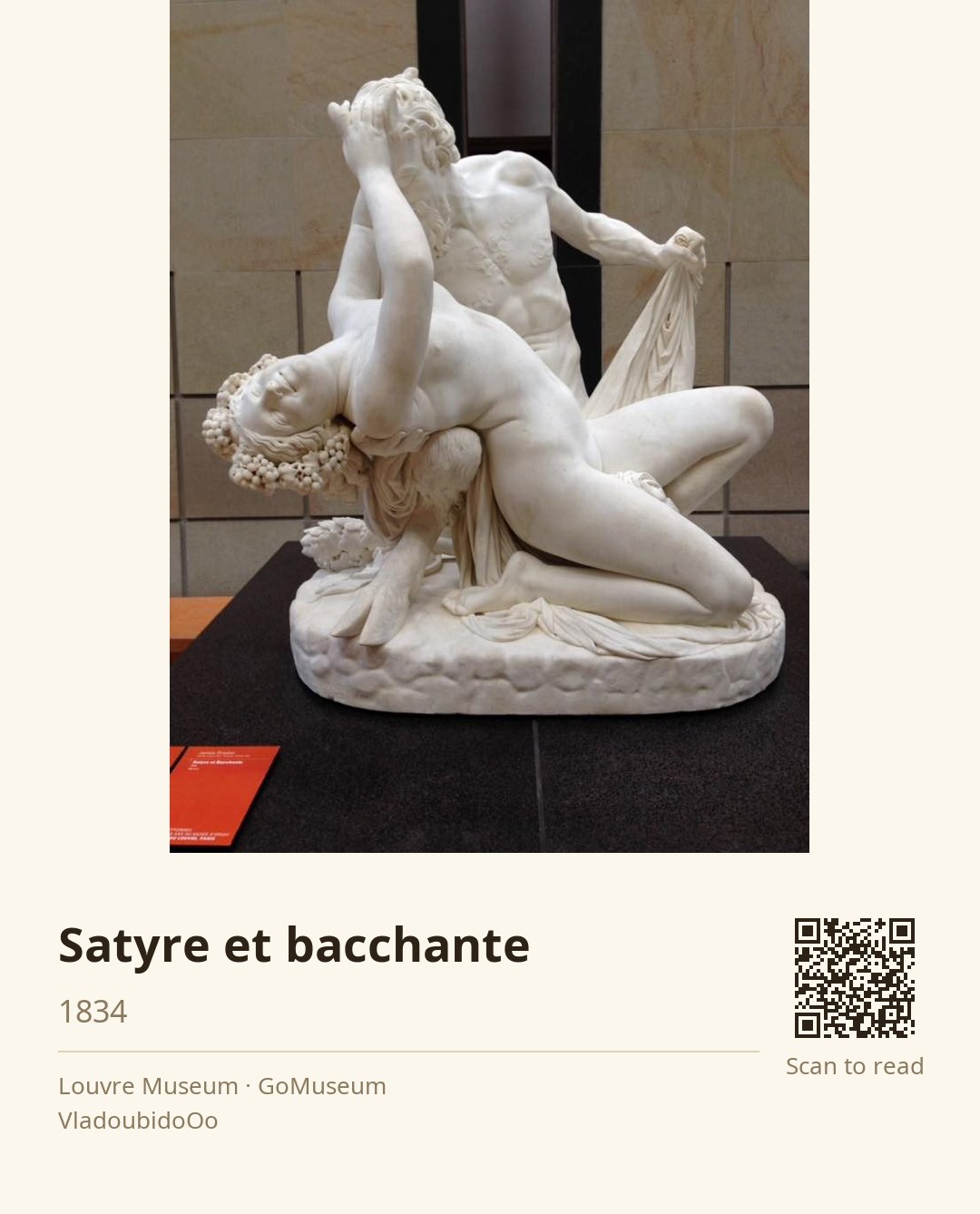
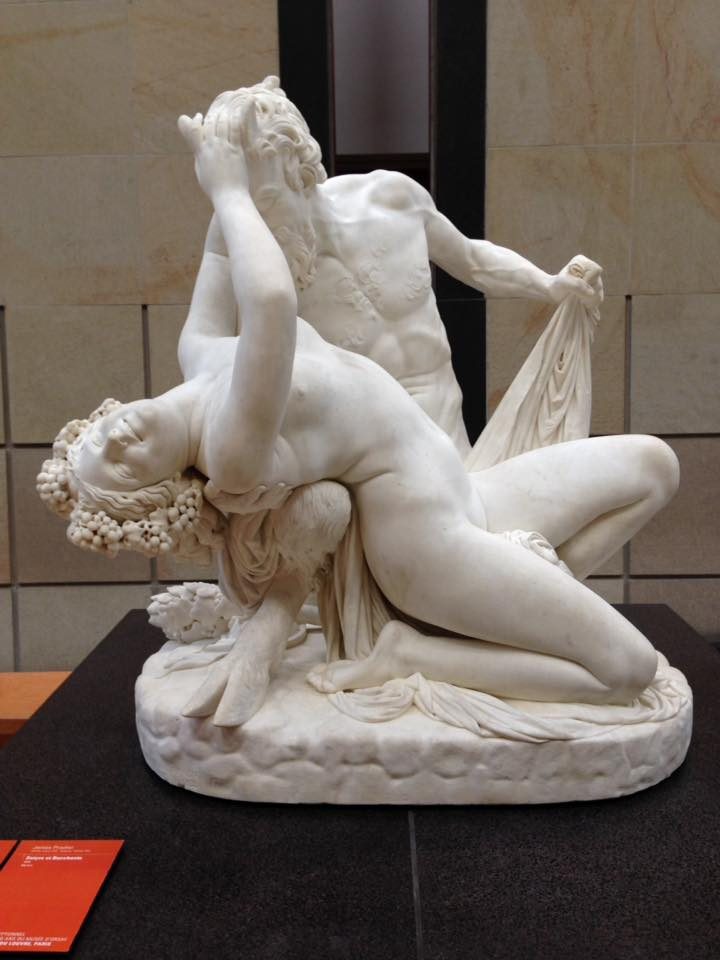
🎧 This work has audio narration — listen in the appThe Bacchante, adorned with grape clusters in her flowing hair, reclines gracefully, her body twisting in a dramatic pose that captures both vulnerability and allure. Behind her, the satyr, muscular and partially draped, leans in, his hand pulling away the fabric that conceals her, revealing the tension of their embrace. This intimate moment, carved in smooth marble, evokes a raw sensuality that was shocking for its time.
The interplay between the figures speaks to the mythological theme of desire and indulgence, a classic subject in erotic art that dates back to antiquity. Pradier’s choice to depict this scene with such realism and detail was groundbreaking; critics at the 1834 Salon found the nudity and the overt sensuality at odds with the neoclassical ideals of the era. The satyr's gaze, filled with longing, and the Bacchante's half-closed eyes and faint smile suggest a complex narrative of seduction and power dynamics, challenging the viewer's perceptions of beauty and morality.
Created between 1830 and 1834, "Satyre et Bacchante" was initially met with scandal, leading to its rejection by the government for acquisition.
James Pradier, born Jean-Jacques Pradier in Geneva on May 23, 1790, was a prominent French sculptor known for his neoclassical style. He moved to Paris in 1807 to work with his brother and studied at the École des Beaux-Arts, where he honed his craft. Winning the Prix de Rome allowed him to study in Italy, further shaping his artistic vision. Pradier debuted at the Salon in 1819, quickly gaining recognition for his skillful sculptures, which often blended mythological themes with a subtle eroticism.
His workshop became a hub for artists and writers, reflecting his vibrant social life, including a notable relationship with Juliette Drouet. Pradier's work, such as the scandalous "Satyr and Bacchante," showcased his ability to evoke emotion through form. He created significant public sculptures in Paris, including allegorical figures at the Place de la Concorde and the crypt of Napoleon at Les Invalides.
Despite his acclaim during his lifetime, Pradier's legacy faded after his death in 1852. His dedication to craftsmanship and artistry earned him respect, as noted by contemporaries like Gustave Flaubert. Today, his contributions to sculpture are recognized in various collections, including the Louvre, yet he remains a somewhat overlooked figure in art history. Pradier's influence persists through his students and the enduring quality of his work, which reflects the complexities of his life and the artistic currents of his time.
Pradier crafted this sculpture from a single block of smooth white marble, showcasing his skill in carving intricate details, particularly in the flowing hair of the Bacchante and the drapery of the satyr. The figures are life-sized, with the Bacchante's hair adorned with grape clusters, and the base textured to resemble a rocky surface, enhancing the sense of movement and tension in the scene.
Created between 1830 and 1834, 'Satyre et Bacchante' was displayed at the Salon des artistes français in Paris in 1834, where it sparked scandal due to its realism and sensuality. The government rejected it for acquisition, leading to its purchase by Count Anatole Demidoff, who took it to Italy. It changed hands several times, including a sale in 1904 and later in 1940, before being acquired by the Louvre in 1980.
The sculpture is noted for its scandalous reception at the 1834 Salon, where critics found its realism and sensuality at odds with neoclassical ideals. It was placed in a restricted area to limit its exposure to the public. The work's nudity and the satyr's overt actions were perceived as contrary to the artistic standards of the time, marking it as a controversial piece in Pradier's oeuvre.