Portrait of a young girl
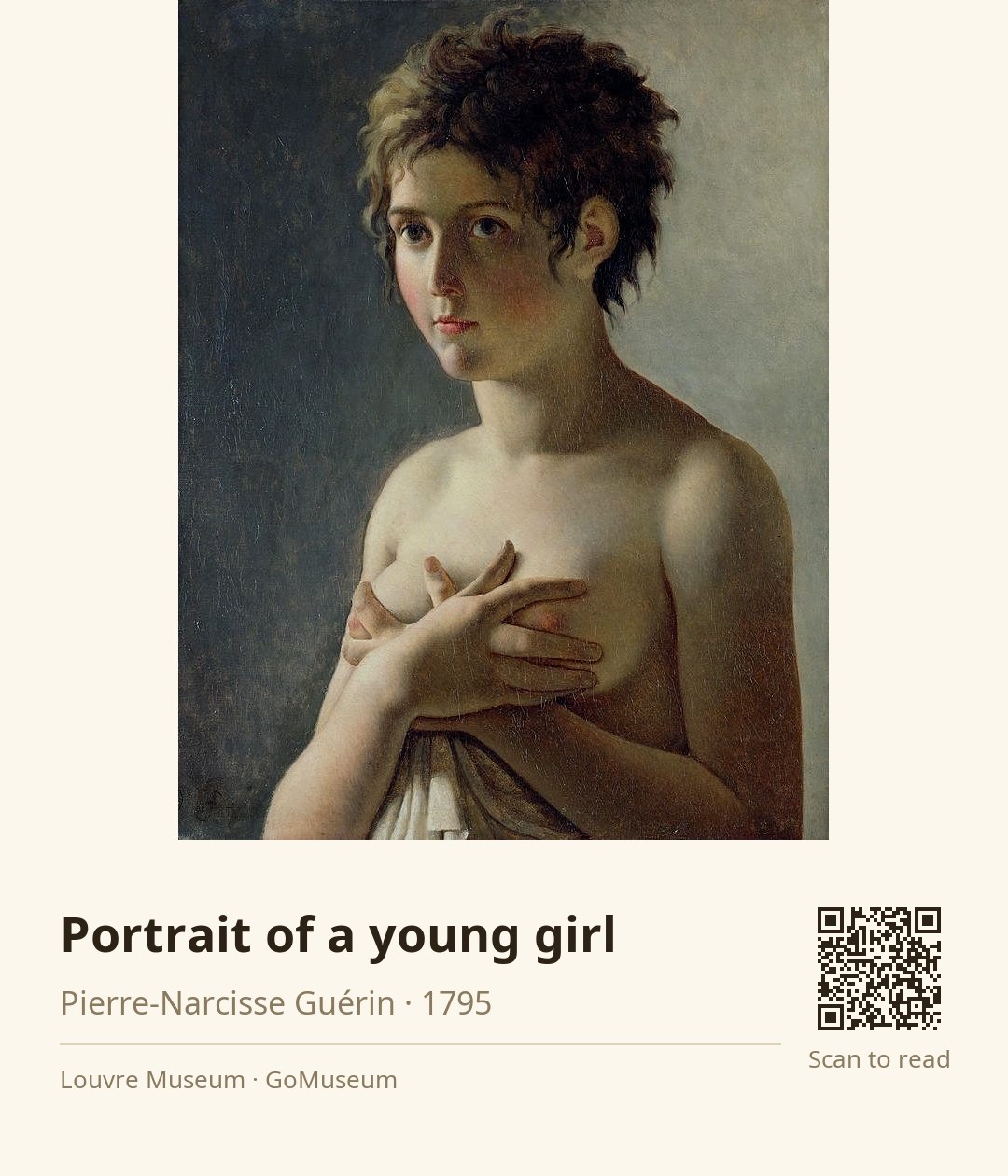
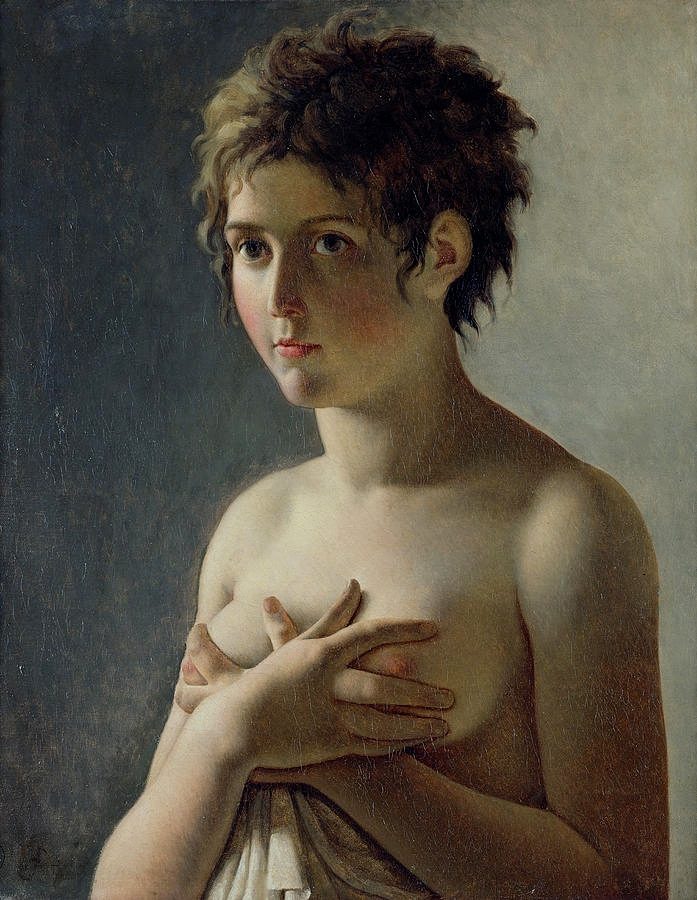
🎧 This work has audio narration — listen in the appTake a moment to really look at this captivating "Portrait of a Young Girl" by Pierre-Narcisse Guérin. Notice how the girl’s short hair, styled in the trendy Titus cut, draws your eye.
Now, focus on her expression. She gazes off to the side with an air of indifference, as if she’s both aware of and detached from the viewer. This directness is striking, making the portrait feel almost like a candid moment rather than a formal pose. It’s a bold choice for Guérin, who was known for his neoclassical style, and it invites you to ponder the girl’s thoughts and feelings.
The smooth background and measured colors enhance the girl’s presence, making her the undeniable focal point of the canvas.
As you stand here, think about how this painting reflects the cultural shifts of its time. What do you think the artist wanted to convey about youth and beauty? How does this portrait resonate with today’s ideals?
Pierre-Narcisse Guérin, born on March 13, 1774, in Paris, was a prominent French neoclassical painter whose career flourished during the tumultuous periods of the French Revolution and the Napoleonic era. As a pupil of Jean-Baptiste Regnault, Guérin won the prestigious grand prix de Rome in 1796, which propelled him into the artistic limelight. His early work, "The Return of Marcus Sextus," exhibited in 1799, resonated deeply with audiences, reflecting the emotional turmoil of the time.
Guérin's style evolved to meet the tastes of the First Empire, characterized by dramatic and dignified compositions. His notable works include "Phaedra and Hippolytus" and "Andromache and Pyrrhus," both of which garnered significant acclaim. He became a respected figure in the art community, receiving the Legion of Honour and later being appointed to the Académie des Beaux-Arts.
Despite health challenges that hindered his later work, Guérin's influence extended through his pupils, including notable artists like Eugène Delacroix and Théodore Géricault. He served as the director of the French Academy in Rome and continued to impact the art world until his death on July 6, 1833. Guérin's legacy endures, marking him as a pivotal figure in the transition of French art from neoclassicism to romanticism.
This painting was acquired by the Louvre in 1978, but its journey began much earlier. Guérin was influenced by the artistic principles of Jean-Baptiste Regnault and Jacques-Louis David, which is evident in the directness and simplicity of the composition. Interestingly, this work is among the first to depict this hairstyle, which was inspired by Roman ideals. Guérin's choice to present the girl with an indifferent gaze invites viewers to ponder her inner world, making it a striking departure from the more traditional, formal portraits of the time.
As you gaze at this painting, pay attention to Guérin's masterful brushwork and the smooth handling of oil on canvas. The background is intentionally understated, allowing the girl to emerge as the undeniable focal point. Notice how the measured color palette enhances her presence, creating a serene yet compelling atmosphere. The composition is carefully structured, with the girl’s hands covering her breasts while still revealing a hint of vulnerability. This juxtaposition of innocence and allure is a bold choice that speaks to the artist's confidence. Guérin's technique, influenced by his studies under Regnault, reflects a meticulous approach to light and shadow, which adds depth and dimension to the figure. The overall effect is one of elegance and simplicity, drawing you into the girl’s world and inviting you to contemplate her thoughts.
This painting, one of Guérin's early works, showcases a bold approach to depicting the female form, particularly through the use of the Titus hairstyle, which draws inspiration from ancient Rome. The frankness of the girl's pose and expression challenged traditional norms, paving the way for more expressive and personal portrayals in portraiture. Remember this: Guérin's work is a bridge between the classical past and the emotional depth that would characterize later movements in art.
A curious tidbit about 'Portrait of a Young Girl' is that it was used as the cover image for Mary Novik's debut novel, 'Conceit,' in its original 2007 publication. This connection between literature and visual art highlights the painting's enduring appeal and its ability to inspire narratives beyond the canvas.
The painting's enduring appeal is highlighted by its use as the cover image for Mary Novik's novel 'Conceit,' illustrating how visual art can inspire narratives beyond the canvas and influence contemporary literature.