Conversation in a Park
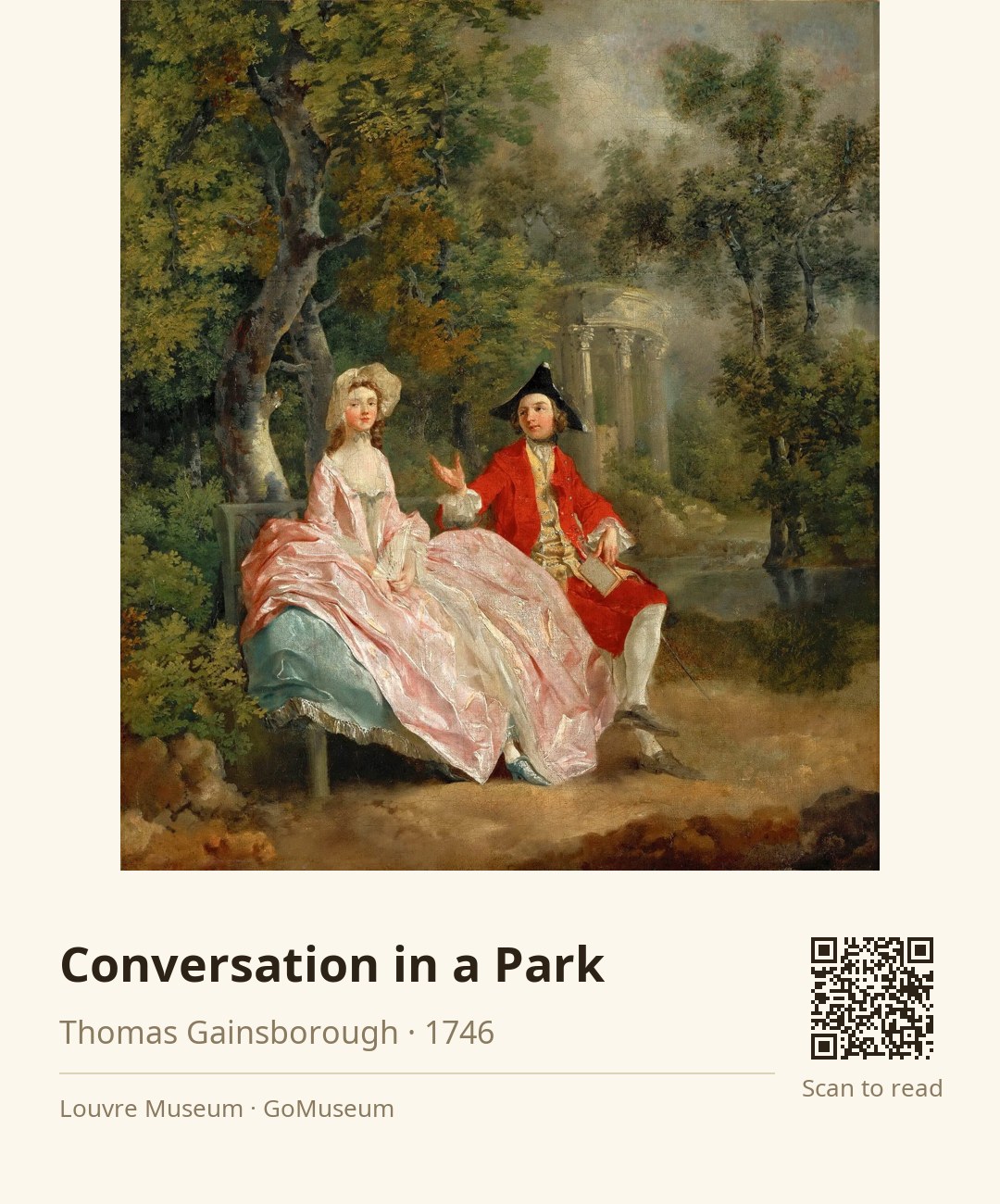
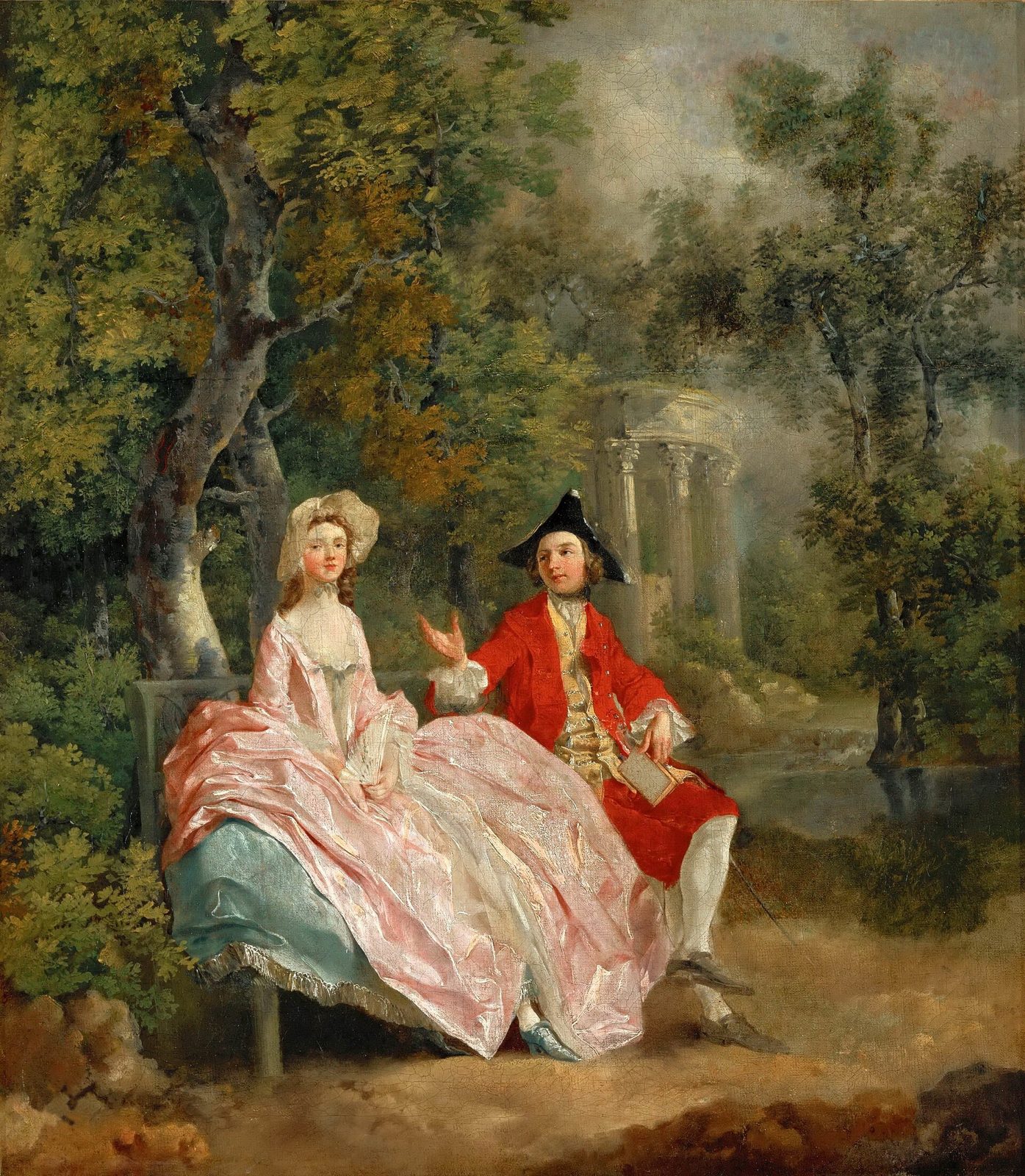
🎧 This work has audio narration — listen in the appTake a moment to really soak in the scene before you in Thomas Gainsborough's "Conversation in a Park." Notice how the couple on the bench seems to be lost in their own world, with the lush greenery framing them like a natural theater. The young woman in her flowing pink dress, holding an elegant fan, and the gentleman in a striking red coat, book in hand, suggest a moment of intimacy and connection.
These details matter because they reflect not just a romantic encounter but also Gainsborough's aspiration to capture the idealized social interactions of his time. This painting, created in 1746, is more than just a portrait; it’s a glimpse into the artist's own life, possibly featuring himself and his new wife, Margaret, as they navigate their own budding romance.
Gainsborough was known for his quick brushwork and light palette, which you can see here in the soft, dappled light filtering through the trees. He was a master of capturing the essence of his subjects, and this piece is a perfect example of his skill in blending portraiture with landscape.
As you stand here, think about the world they inhabit—an 18th-century garden, a place of leisure and conversation. What stories do you think they’re sharing? What dreams and aspirations might be unfolding in this serene moment?
Thomas Gainsborough, born on May 14, 1727, in Sudbury, Suffolk, was a pivotal English painter known for his portraits and landscapes. He emerged as a leading figure in 18th-century British art, rivaling Sir Joshua Reynolds. Gainsborough's early talent was nurtured by his family, particularly his mother, who encouraged his artistic pursuits. He trained in London under engraver Hubert Gravelot and became associated with notable artists like William Hogarth.
Despite his success as a portraitist, Gainsborough found greater joy in landscape painting, contributing to the establishment of the British landscape school alongside Richard Wilson. His works are characterized by a light palette and fluid brushwork, reflecting his desire for artistic freedom. In 1769, he became a founding member of the Royal Academy, although his relationship with it was tumultuous.
Gainsborough's later years in London saw him experiment with printmaking and gain acclaim for portraits of high society. However, he often expressed frustration with the demands of portraiture, longing for the tranquility of rural life. He passed away on August 2, 1788, leaving a legacy that solidified his place as one of the great masters of British art.
Thomas Gainsborough's 'Conversation in a Park' was painted in 1746, a pivotal year for the artist as it marked both his marriage to Margaret Burr and the creation of this enchanting piece. Commissioned during a time when Gainsborough was transitioning from landscape to portrait painting, this work reflects his aspiration to capture the social dynamics of his era. The painting was likely inspired by his own courtship experiences in Vauxhall Gardens, a popular venue for romantic encounters. After its completion, the painting found a home in the Louvre in Paris, where it has been since 1952. The reception of this work was part of a broader trend in 18th-century England, where conversation pieces became increasingly popular, showcasing intimate moments among the upper classes.
As you gaze at 'Conversation in a Park,' take a moment to appreciate Gainsborough's masterful brushwork. His technique is characterized by swift, fluid strokes that create a sense of movement and life within the scene. The dappled light filtering through the trees is not just a backdrop; it plays a crucial role in highlighting the couple's expressions and attire, enhancing their intimacy. Notice how the colors are carefully chosen—soft pinks and vibrant reds that not only complement each other but also draw your eye toward the figures. The composition is structured to guide your gaze naturally from the couple to the lush greenery surrounding them, creating a harmonious balance. The scale of the painting, being square, invites you to step closer, almost as if you're intruding on a private moment, making you feel part of their world. This careful orchestration of elements showcases Gainsborough's skill in creating a narrative that feels both personal and universal.
This painting, created in 1746, helped to popularize the genre of conversation pieces—intimate, informal group portraits that captured the social dynamics of the time. Gainsborough's approach, with its light palette and fluid brushwork, influenced not only his contemporaries but also future generations of artists who sought to blend portraiture with narrative. This work reflects Gainsborough's aspiration to elevate the status of English painting, showcasing the beauty of everyday interactions and the genteel society he aimed to portray. It's a celebration of connection, and it invites you to ponder the stories behind the smiles and gestures of its subjects.
Did you know that Gainsborough's 'Conversation in a Park' might just be a glimpse into his own life? The painting, created in 1746, is believed to feature a self-portrait of the artist alongside his new wife, Margaret. They had just tied the knot that same year! This intimate moment captured in the lush gardens of a country estate hints at the artist's aspirations and his desire to portray the society he hoped to be a part of. It’s not just a pretty picture; it’s a personal narrative woven into the fabric of 18th-century England.
Gainsborough's technique in 'Conversation in a Park' showcases his ability to create a sense of movement and life through swift, fluid brushstrokes, which were particularly effective in capturing the dappled light filtering through the trees.
The painting is believed to reflect Gainsborough's own experiences during his courtship with his wife, Margaret, as it was created in the same year they married, infusing the work with a personal touch that resonates with themes of intimacy and connection.