Brown Odalisque
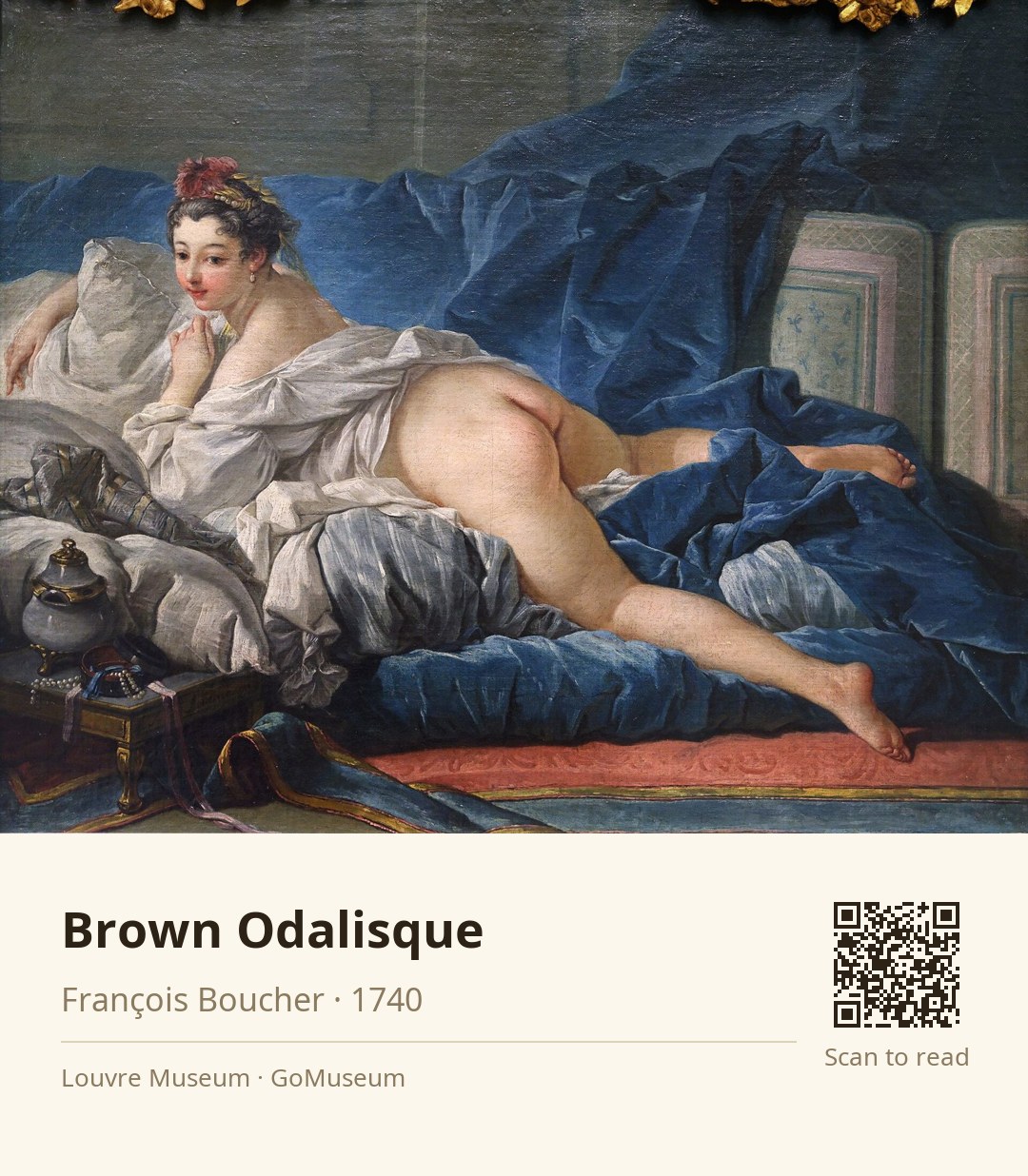
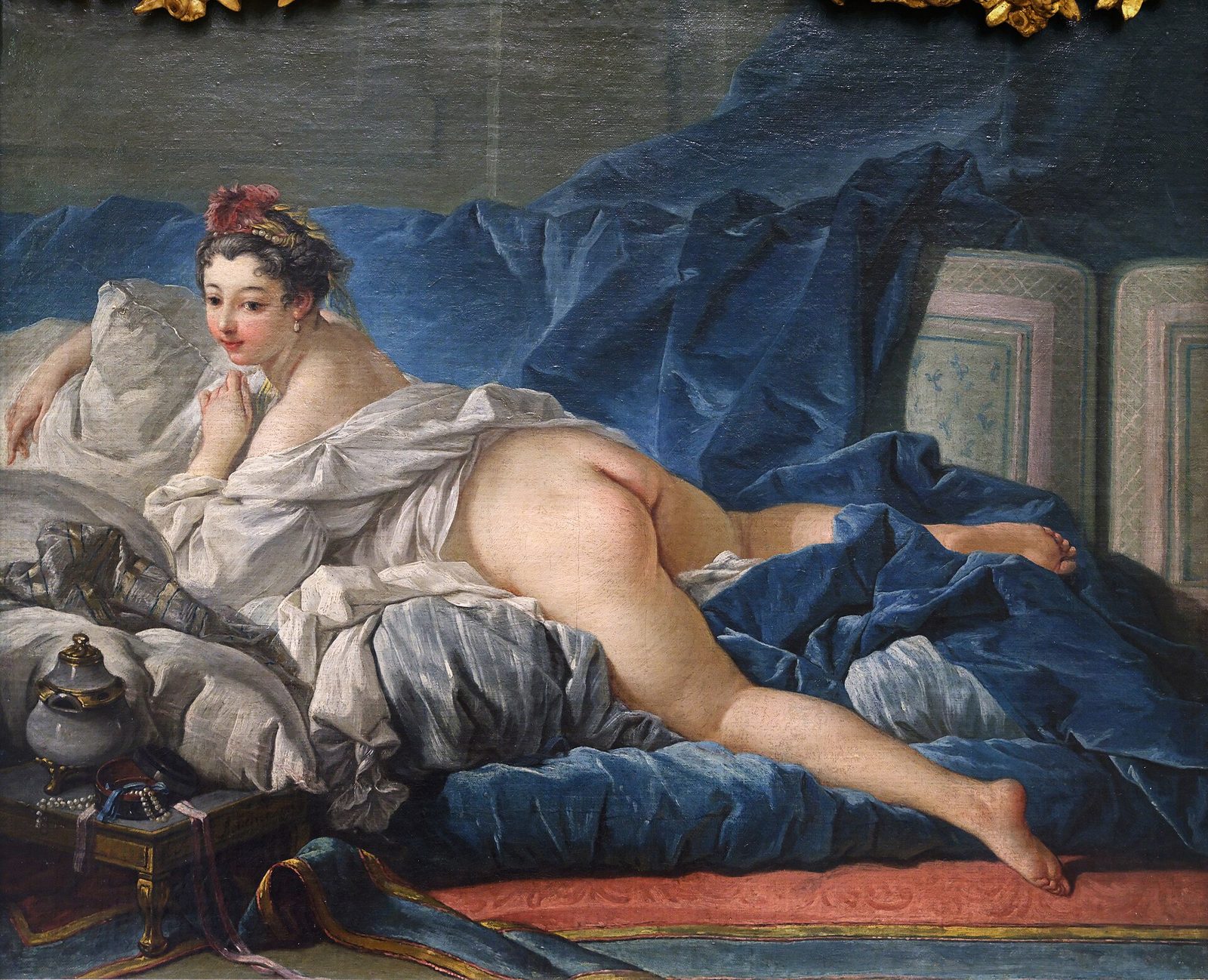
🎧 This work has audio narration — listen in the appTake a moment to really soak in the sensuality of François Boucher's "Brown Odalisque." Notice how the woman reclines, her body draped in soft fabrics, with an inviting yet coy expression that seems to dance between shyness and allure. The intricate patterns of the screen behind her and the delicate feathers in her hair add layers of exoticism that transport you to a world of opulence and intimacy.
These details matter because they encapsulate the Rococo style—rich, decorative, and unabashedly sensual. Boucher was known for his ability to blend the mythological with the personal, and here, he may be portraying not just an idealized figure but someone very real, possibly even his wife. The signature on the table hints at a personal connection, suggesting this is more than just a painting; it’s a glimpse into their private world.
As you stand here, consider: who do you think this woman is? Is she merely a muse, or does she represent something deeper in Boucher's life? Let that question linger as you take in the painting's beauty.
François Boucher, born on September 29, 1703, in Paris, was a prominent French painter and etcher known for his Rococo style. He was the son of a lesser-known painter and received early training from his father. Boucher's artistic journey began when he caught the attention of François Lemoyne, who briefly took him on as an apprentice. After winning the Grand Prix de Rome in 1720, he studied in Italy, returning to Paris to join the Académie de peinture et de sculpture.
Boucher's work is characterized by idyllic and sensual themes, often depicting mythological and pastoral scenes infused with eroticism. His close relationship with Madame de Pompadour, the mistress of King Louis XV, significantly influenced his career, as she became his patron and helped elevate his status in the art world. Boucher's paintings, such as "The Breakfast" and "The Flute Players," showcase his mastery of genre scenes and family life, contrasting with his more provocative works.
Throughout his career, Boucher also ventured into tapestry design and theatrical set design, reflecting his versatility as an artist. He became the First Painter of the King in 1765, solidifying his place in art history. Boucher's legacy endures, as he is celebrated for embodying the essence of the Rococo style, with his works influencing generations of artists. He passed away on May 30, 1770, leaving behind a rich body of work that continues to captivate audiences.
The painting's signature is engraved on a low table, hinting at a personal connection. Boucher's work was shown in various exhibitions, but it sparked controversy, particularly from critics like Denis Diderot, who accused him of exploiting his wife's image. This painting is part of a series of odalisque works, with Boucher creating multiple versions over the years. The intimate nature of the subject raised eyebrows, especially as Boucher's reputation grew, leading to debates about the propriety of such depictions in art. This painting's journey through time reflects not only Boucher's evolving style but also the shifting perceptions of art and intimacy in the 18th century.
In 'Brown Odalisque', Boucher employs a lush palette and soft brushwork that creates a sense of warmth and intimacy. The light dances across the woman's skin, highlighting the delicate folds of her drapery, while the intricate patterns of the screen behind her add depth and complexity to the composition. Notice how the artist uses a diagonal line formed by the woman's body, leading the viewer's eye across the canvas, inviting you to explore the layers of fabric and the gentle curves of her form. Boucher's technique captures not just the physical beauty of the subject but also an emotional resonance, as the viewer is drawn into a private moment. The careful arrangement of elements—like the feathers in her hair and the rich textures of the textiles—further enhances the painting's sensuality, making it a masterclass in Rococo elegance.
Did you know that Boucher's 'Brown Odalisque' might actually depict his wife? That's right! While many thought it was just a representation of a mythical figure or a generic odalisque, art historians believe the specificity in her features suggests a real person. Boucher was known to paint portraits only of those he had a close connection with, and his signature on the side table hints at an intimate relationship with the model. This revelation stirred quite the controversy back in the day, with critics like Denis Diderot accusing him of 'prostituting' his wife by showcasing her in such a vulnerable state. Imagine the scandal!
The painting sparked significant controversy, particularly from critics like Denis Diderot, who accused Boucher of exploiting his wife's image by depicting her in such a revealing manner. This criticism reflected broader societal debates about propriety and the role of women in art during the 18th century.
Boucher's relationship with his wife, Marie-Jeanne Buzeau, is believed to have deeply influenced his depiction of the odalisque, as many art historians suggest that the model is indeed her. This personal connection adds a layer of complexity to the painting, intertwining his domestic life with his artistic expression.
An engraving created by Pierre Charles Lévesque in 1765 modified the woman's head, possibly to obscure her identity or to present a more fashionable appearance for the time. This alteration may have been an attempt to distance the image from its intimate origins, reflecting changing attitudes towards such depictions.