The Infant Jesus Sleeping
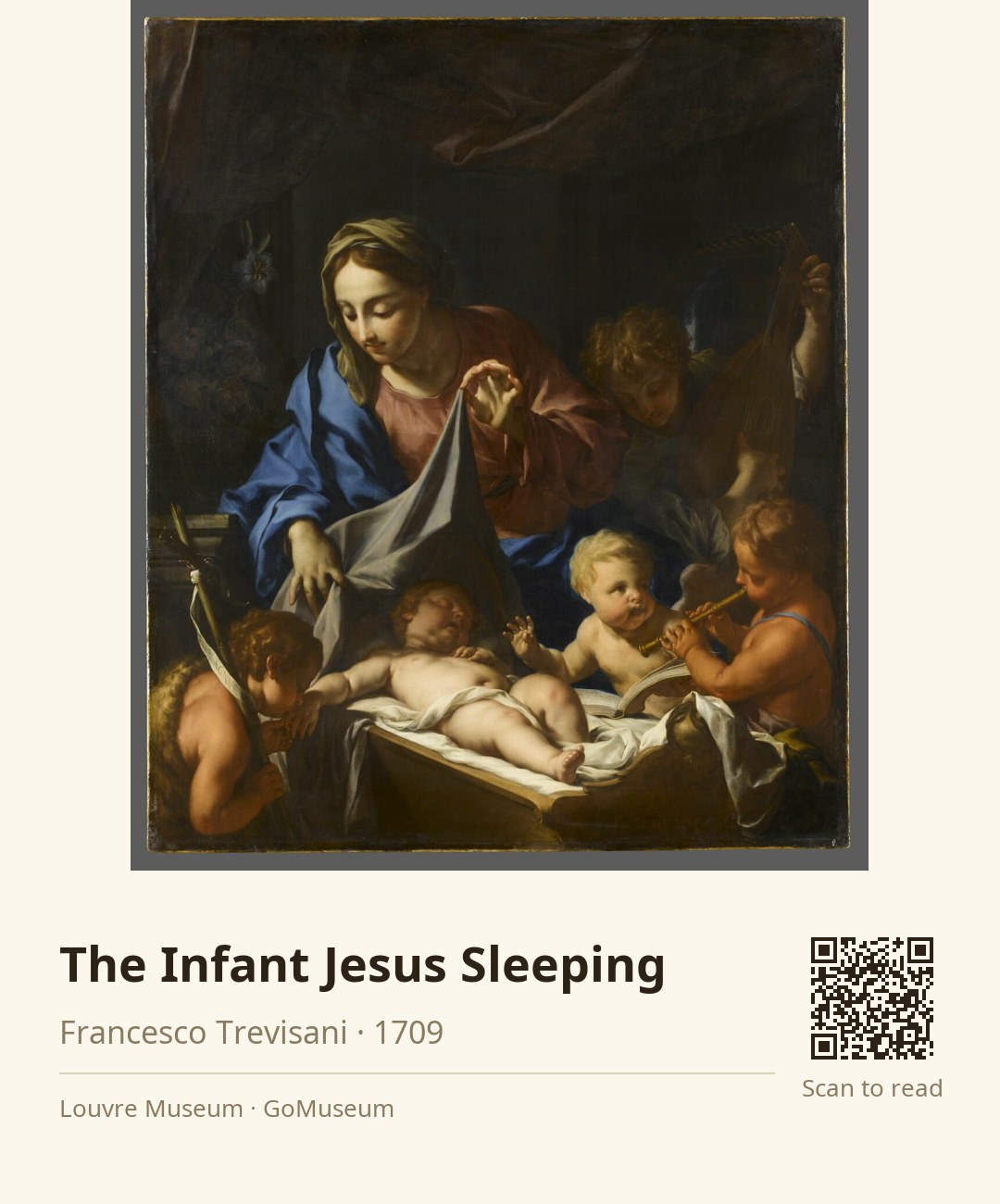
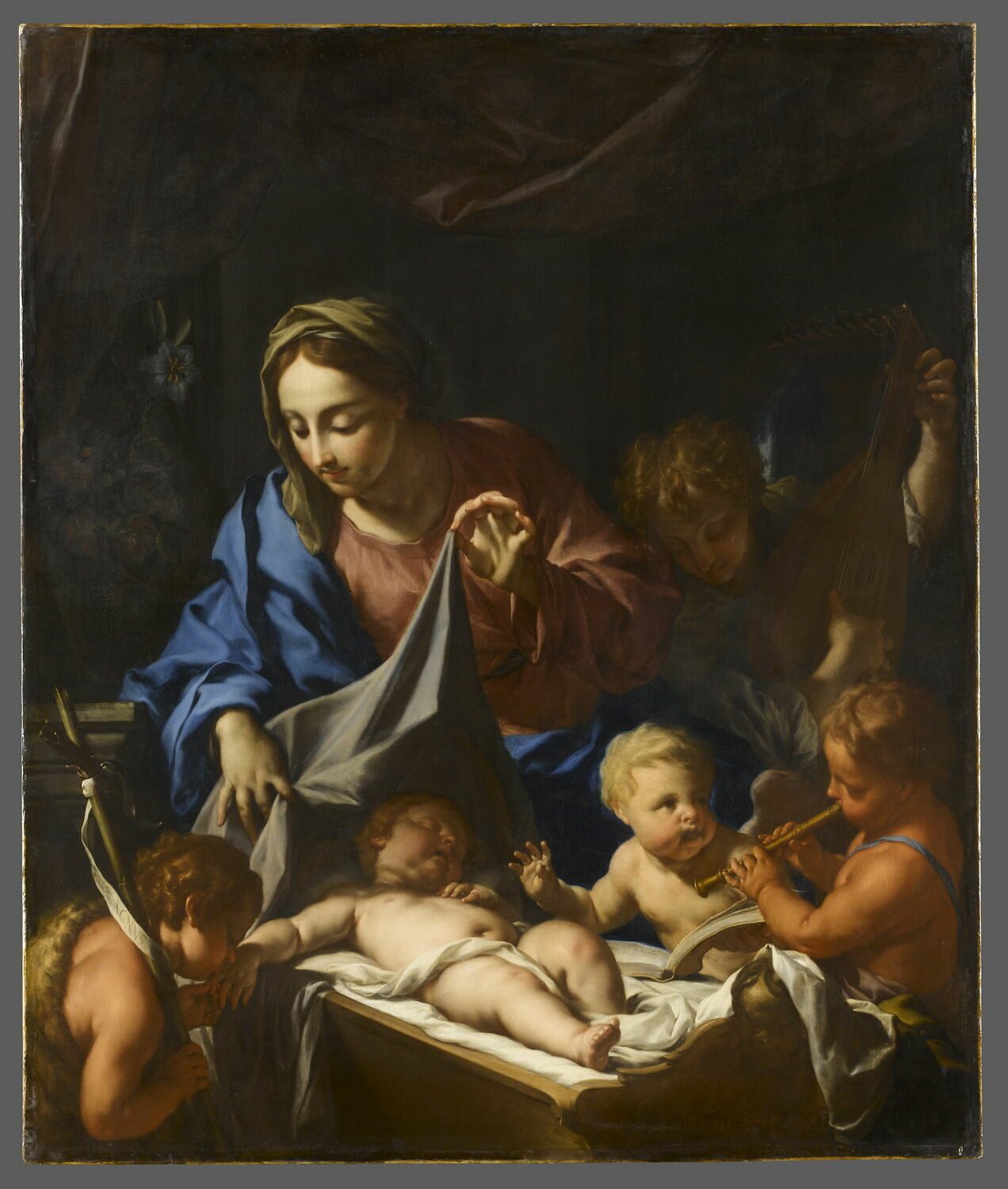
🎧 This work has audio narration — listen in the appThe sleeping Infant Jesus lies peacefully in a cradle, swathed in soft, muted tones of blue and pink, while a woman draped in similar colors gazes down with tenderness. Above the child, she holds a delicate cloth, creating a protective canopy, while two cherubs nearby add a playful element—one plays a flute, the other leans on a staff, enhancing the serene atmosphere of this intimate biblical scene.
This gentle portrayal captures not just a moment of rest, but also embodies the themes of innocence and divine love central to Christian iconography. Trevisani’s use of light and shadow creates a warm, inviting space, drawing the viewer into a sacred moment that feels both personal and universal. The presence of the cherubs suggests a heavenly endorsement of this tender scene, reinforcing the idea of the divine watching over the child.
Francesco Trevisani, born on April 9, 1656, in Capodistria, was an influential Italian painter whose career flourished in Rome during the late Baroque and early Rococo periods. Trained initially by his architect father and later under Antonio Zanchi and Joseph Heintz the Younger in Venice, Trevisani moved to Rome around 1678, where he became a prominent figure in the artistic community, particularly under the patronage of Cardinal Flavio Chigi.
His works, characterized by a blend of classicism and a softer, more sentimental style, reflect his deep ties to the Roman artistic tradition, notably influenced by Carlo Maratta. Trevisani's masterpieces, such as the frescoes in San Silvestro in Capite, showcase his ability to merge dramatic narratives with delicate compositions. His portraits, particularly of Cardinal Ottoboni, reveal a keen understanding of light and emotion, setting a standard for future portraitists.
Throughout his life, Trevisani contributed significantly to the evolution of Roman art, moving beyond Baroque excess towards a more refined aesthetic. He was a member of the Pontifical Academy of Arcadia, which further shaped his artistic vision. Trevisani's legacy endures through his innovative approach and the influence he had on subsequent generations of artists, marking him as a pivotal figure in the transition to Rococo art. He passed away on July 30, 1746, leaving behind a rich body of work that continues to be celebrated today.
The artist employs a warm, muted range of blues, pinks, and earth tones, creating a soothing atmosphere that envelops the viewer. His handling of oil paint allows for a smooth, almost velvety texture, enhancing the tender portrayal of the figures. The composition is structured to draw your eye naturally from the serene infant to the protective gaze of the woman above, aided by the gentle curves of their garments. The cherubs, with their playful expressions, add a dynamic element, contrasting with the stillness of the central figures. This careful orchestration of elements not only captures a moment of divine love but also invites you into an intimate, almost sacred space, where every brushstroke feels intentional and heartfelt.
Trevisani was influenced by Carlo Maratta, which is evident in his work, particularly in the frescoes he created for San Silvestro in Capite.
Trevisani became well known at the Accademia by the year 1712.