 Image: Coyau
The Assumption of the Virgin
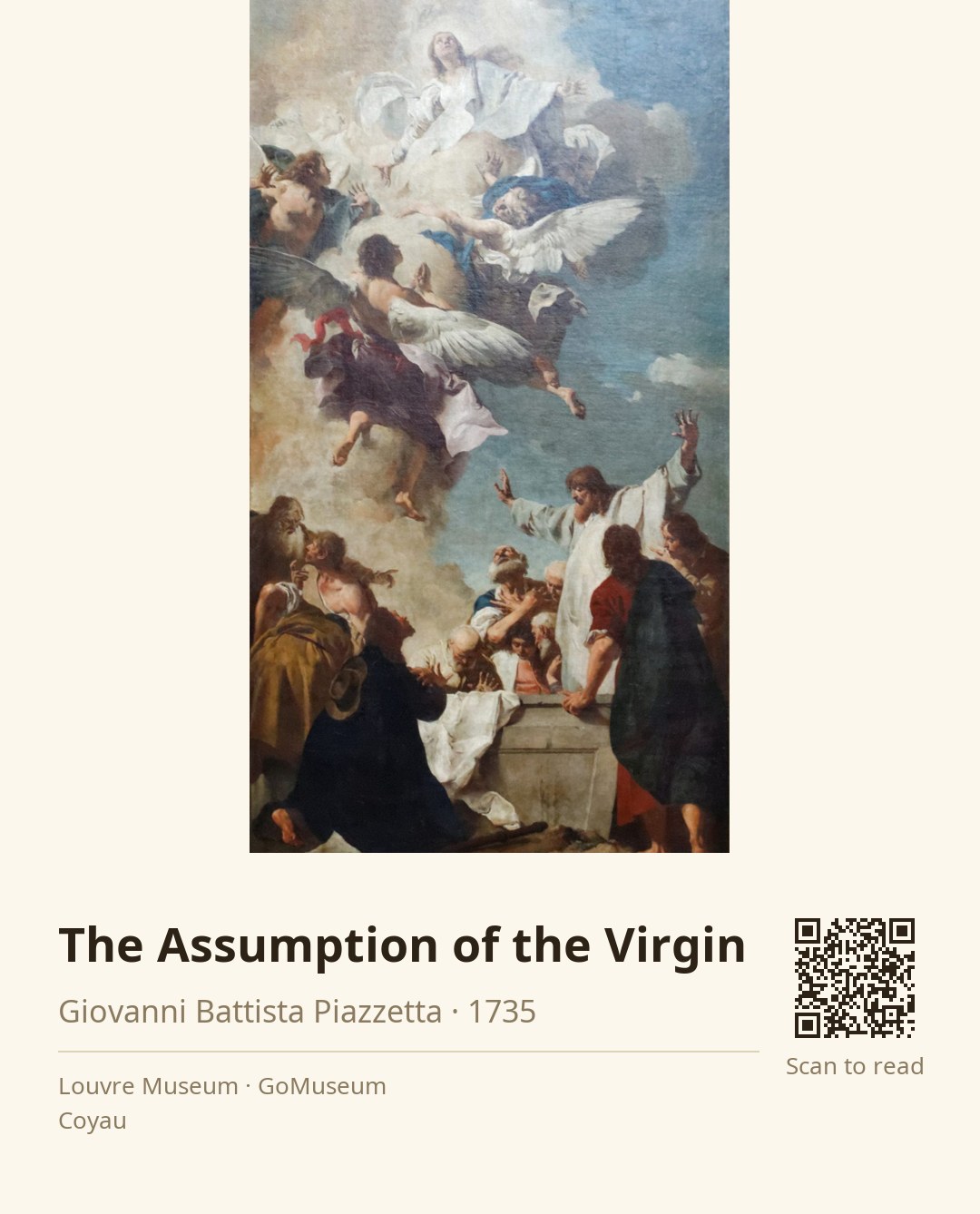
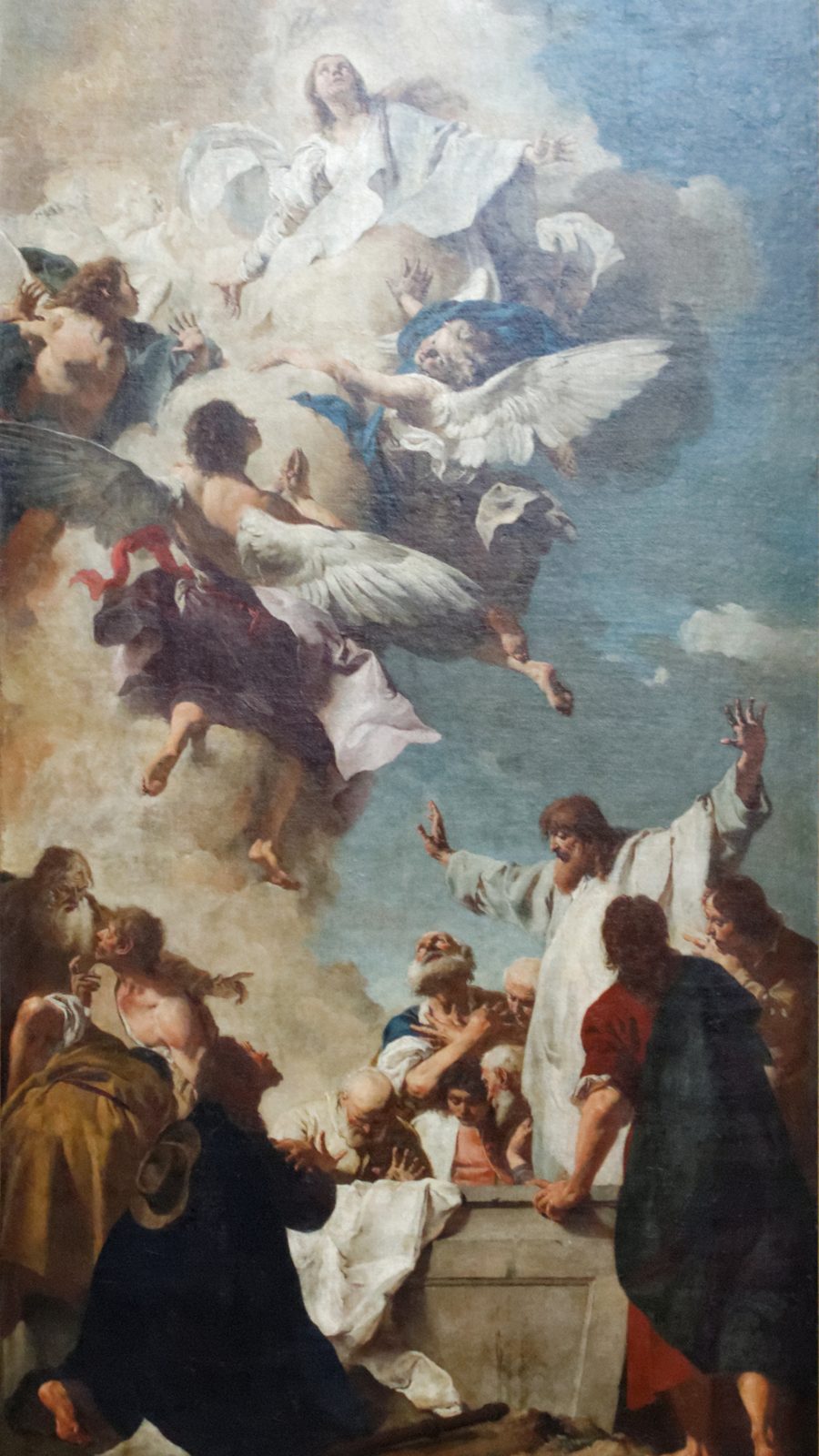
🎧 This work has audio narration — listen in the appThe figure of the Virgin Mary ascends gracefully in a swirl of clouds, her white robes illuminated against the soft blues of the sky. Surrounding her, a group of apostles gazes upward, their faces etched with awe and wonder, while dynamic angels in flowing garments stretch their arms as if to guide her ascent. This vivid portrayal captures not just a moment of divine elevation, but also the emotional intensity of the witnesses, drawing you into their shared experience of reverence.
Piazzetta’s technique shines through in the fluid brushwork that conveys movement and emotion, creating a sense of drama that is characteristic of his style. The contrast between the darker foreground and the luminous background enhances the ethereal quality of the scene, emphasizing the miraculous nature of the Virgin's assumption. This painting, created in 1735, reflects Piazzetta's mastery of color and light, influenced by the chiaroscuro of Caravaggio and the luminosity of Tiepolo, yet distinct in its intimate and contemplative approach.
Born in Venice, Piazzetta became a leading figure in the Rococo movement, celebrated for his religious subjects and genre scenes. His works often reveal a deep emotional resonance, as seen in this piece, which embodies the spiritual fervor of the era. In 1750, he was appointed the first director of the newly founded Accademia di Belle Arti di Venezia, where he dedicated his later years to teaching and influencing the next generation of artists.
Giovanni Battista Piazzetta was an influential Italian Rococo painter born in Venice in 1682 or 1683. He was the son of a sculptor, which provided him with early artistic training. Piazzetta studied under notable figures like Antonio Molinari and Giuseppe Maria Crespi, absorbing their techniques and styles. His return to Venice around 1710 marked the beginning of his recognition as a leading artist, despite his modest output and unassuming character. Unlike his contemporaries, such as Tiepolo and Ricci, who favored grandiosity, Piazzetta's work was characterized by a darker palette and intimate depictions of peasantry and religious themes. His paintings, such as "The Soothsayer," reveal a unique blend of warm colors and mysterious light, hinting at deeper narratives.
In 1750, he became the first director of the Accademia di Belle Arti di Venezia, dedicating his later years to teaching. His influence extended to many younger artists, and his innovative approach to chiaroscuro left a lasting mark on Venetian art. Piazzetta passed away in 1754, leaving behind a legacy that bridged the late-Baroque and Rococo styles, enriching the artistic landscape of his time.
In 'The Assumption of the Virgin,' Piazzetta's brushwork is fluid and dynamic, capturing the essence of movement and emotion. The way he layers paint creates a palpable sense of depth, drawing the viewer into the scene. The contrast between the darker tones in the foreground and the luminous whites and blues of the sky not only enhances the ethereal quality but also highlights the miraculous nature of the Virgin's ascent. Piazzetta's choice of a vertical composition emphasizes the upward movement, guiding the eye toward the heavenly figure of Mary. The scale of the painting, measuring over five meters in height, allows for an immersive experience, making the viewer feel almost part of the gathering of apostles. This technique reflects his mastery of light and shadow, influenced by Caravaggio, yet infused with his unique emotional depth.
One fascinating tidbit about Piazzetta's 'The Assumption of the Virgin' is that it was painted on an unusually large canvas, measuring 517 centimeters in height and 245 centimeters in width. This monumental scale was not common for religious paintings of the time and required a significant commitment of resources and space, reflecting the ambitious nature of Piazzetta's vision and the importance of the subject matter.
Piazzetta's father was a sculptor, which provided him with early training in wood carving, likely influencing his understanding of form and composition in painting.
Unlike contemporaries like Tiepolo, who focused solely on grand history and religious themes, Piazzetta explored a wider variety of subjects, including genre scenes.