 Image: Jim.kovic
Self-Portrait
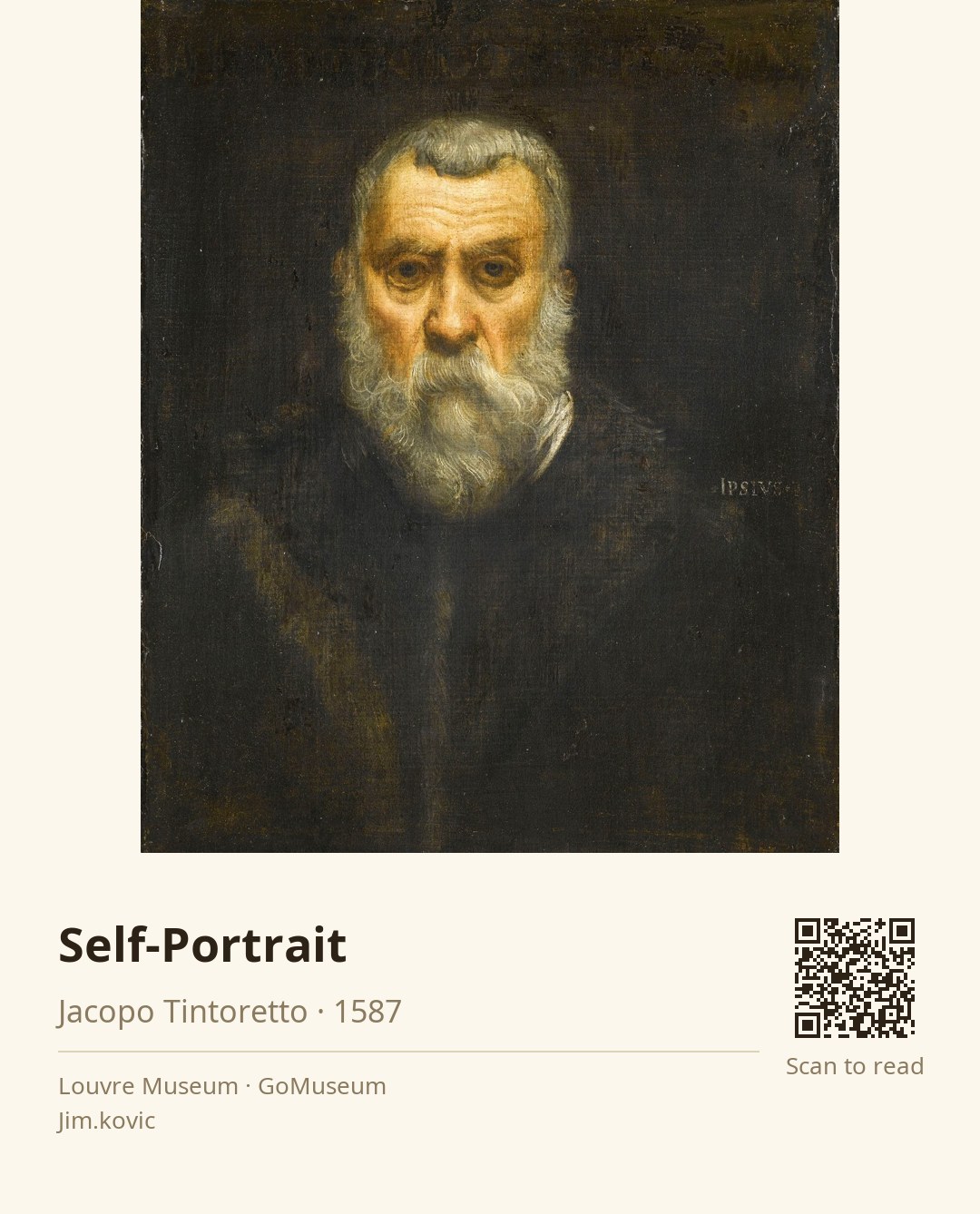
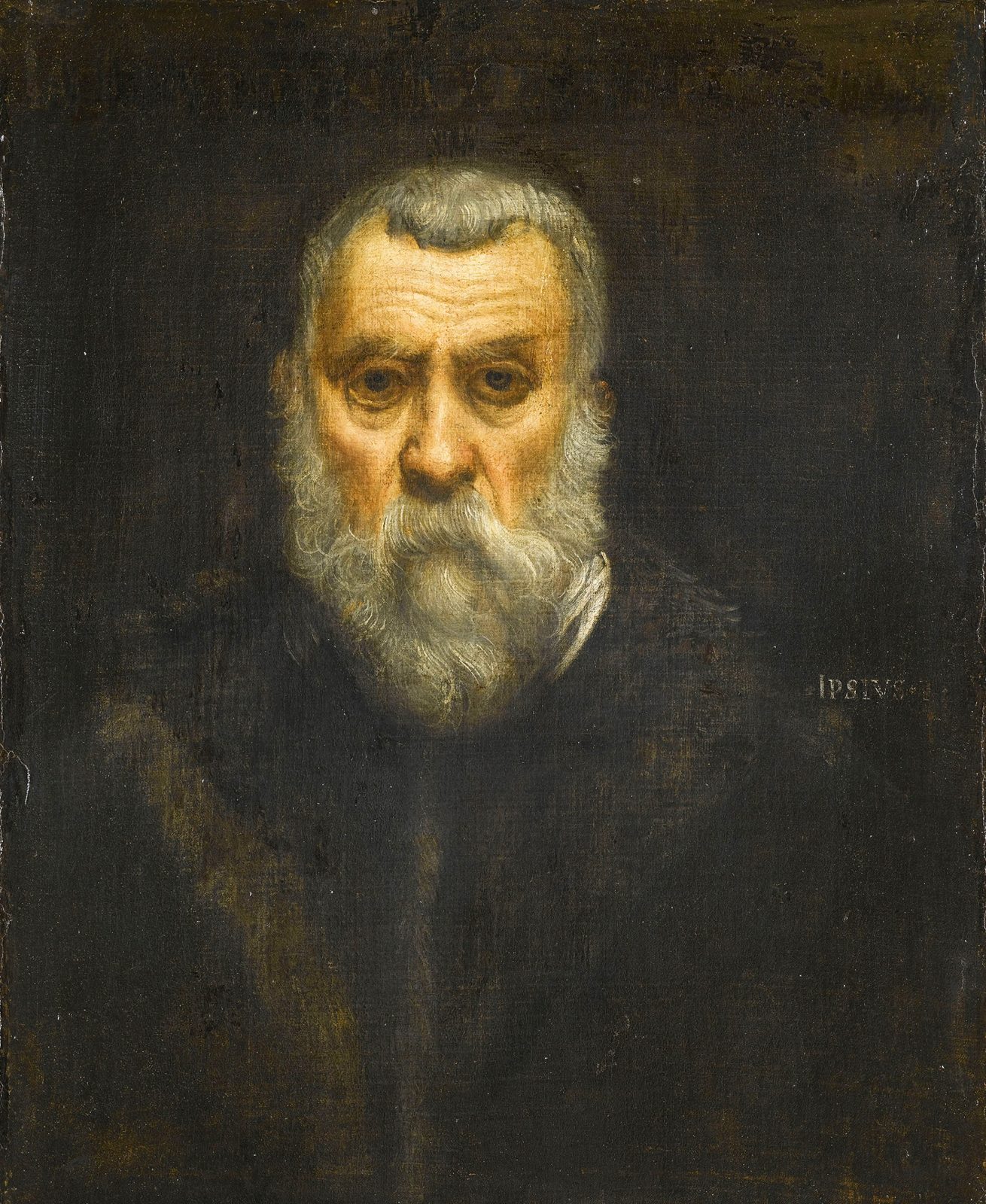
🎧 This work has audio narration — listen in the appTake a moment to really look at Tintoretto’s Self-Portrait. Notice how he’s not just presenting himself; he’s almost challenging you with that intense gaze. His eyes seem to follow you, don’t they? And check out the way he uses light and shadow—those dramatic contrasts highlight the contours of his face, giving it a sculptural quality that pulls you in.
Painted in 1587, it captures the essence of a man who was both a master of his craft and a fierce individualist. The boldness of his brushwork and the energy of his expression reflect the very spirit of the Renaissance, a time when artists were beginning to assert their identities and ideas in ways that had never been done before.
Tintoretto, known as "il Furioso" for his passionate approach to painting, was a trailblazer in the Venetian school. He didn’t just paint; he infused his works with life and movement, setting the stage for the Baroque era that followed.
As you stand here, consider this: what do you think Tintoretto wanted to convey about himself through this self-portrait? What does it say about the role of the artist in society, even today?
Jacopo Robusti, known as Tintoretto, was born in Venice in 1518 and died in 1594. He emerged from humble beginnings, the son of a dyer, which earned him the nickname meaning "little dyer." Despite a brief and tumultuous apprenticeship with Titian, Tintoretto developed a distinctive style characterized by muscular figures, dramatic gestures, and bold perspectives, embodying the Mannerist movement. His contemporaries recognized his remarkable speed and energy in painting, earning him the moniker "il Furioso."
Tintoretto's work often reflected his ambitious nature, as he sought to merge the drawing techniques of Michelangelo with the vibrant colors of Titian. He produced significant works for various Venetian institutions, including the Scuola di San Marco, where he created "The Miracle of the Slave." His innovative approach and dramatic compositions laid the groundwork for the Baroque style, influencing generations of artists. Despite facing criticism from peers, Tintoretto's legacy endures, marking him as a pivotal figure in the history of art.
This striking self-portrait by Jacopo Tintoretto was created around 1588, a time when the artist was already well-established in the Venetian art scene. Originally part of the prestigious Orleans Collection, it caught the eye of none other than Marie Antoinette, who acquired it in 1785 along with the Château de Saint-Cloud. Imagine the journey it took, from the vibrant streets of Venice to the opulent halls of a French palace! After the tumult of the French Revolution, it found its way to the Louvre, where it resides today. Remember, this isn't just a portrait—it's a window into the soul of a man who was both revered and controversial in his time.
As you gaze at Tintoretto's Self-Portrait, pay attention to the dynamic brushwork that gives life to his features. The artist employs a technique that combines rapid strokes with a keen understanding of light and shadow, creating a three-dimensional effect that feels almost sculptural. Notice how the light dramatically illuminates one side of his face while casting deep shadows on the other, enhancing the intensity of his gaze. This chiaroscuro technique not only adds depth but also evokes a sense of drama and emotion. The composition is strikingly asymmetrical, drawing your eye to his piercing eyes and the subtle details of his expression. Tintoretto's choice of a dark background further amplifies the luminosity of his face, making it the focal point of the painting. This masterful handling of paint and light is what sets Tintoretto apart, capturing not just a likeness but the very essence of his character.
Tintoretto, known for his energetic brushwork and dramatic compositions, influenced generations of artists who followed. His ability to blend emotion with technique set the stage for the Baroque movement, pushing the boundaries of how artists could express themselves. Remember, this is a work that helped redefine the role of the artist in society, turning them from mere craftsmen into celebrated individuals with their own narratives.
Imagine that! A piece of art that once belonged to a queen, now residing in the Louvre. It’s fascinating to think about the journey this painting has taken through history, from the hands of a Venetian master to the opulent halls of a French palace, and finally to the world-renowned museum in Paris. This connection to royalty adds a layer of intrigue to the artwork, doesn’t it?
The nickname 'il Furioso' reflects Tintoretto's passionate and energetic approach to painting, which set him apart from his contemporaries. His bold brushwork and dynamic compositions were both admired and criticized, showcasing his unique style that foreshadowed the Baroque era.
Tintoretto's early experiences included a brief apprenticeship with Titian, which ended poorly, leading him to self-study and develop a distinctive style. He worked alongside artisans and studied anatomy through live models, which contributed to his mastery of muscular figures and dramatic gestures.
Tintoretto's Self-Portrait was purchased for Marie Antoinette as part of the Orleans Collection in 1785, linking the artist to the French royal family. This acquisition highlights the painting's significance and its journey through history, eventually finding its home in the Louvre.