 Image: Pierre-Yves Beaudouin
Saint Cecilia Playing the Viol
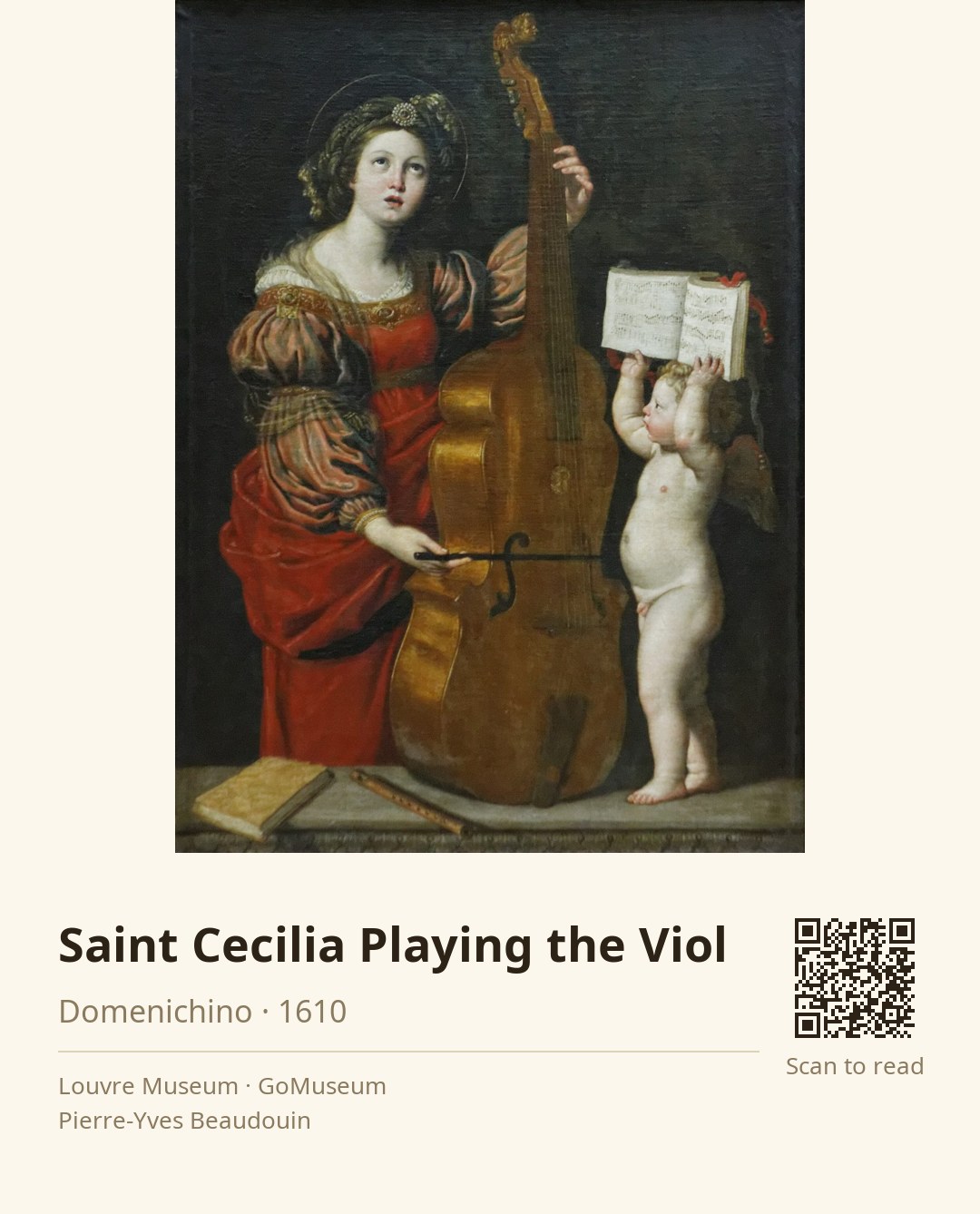
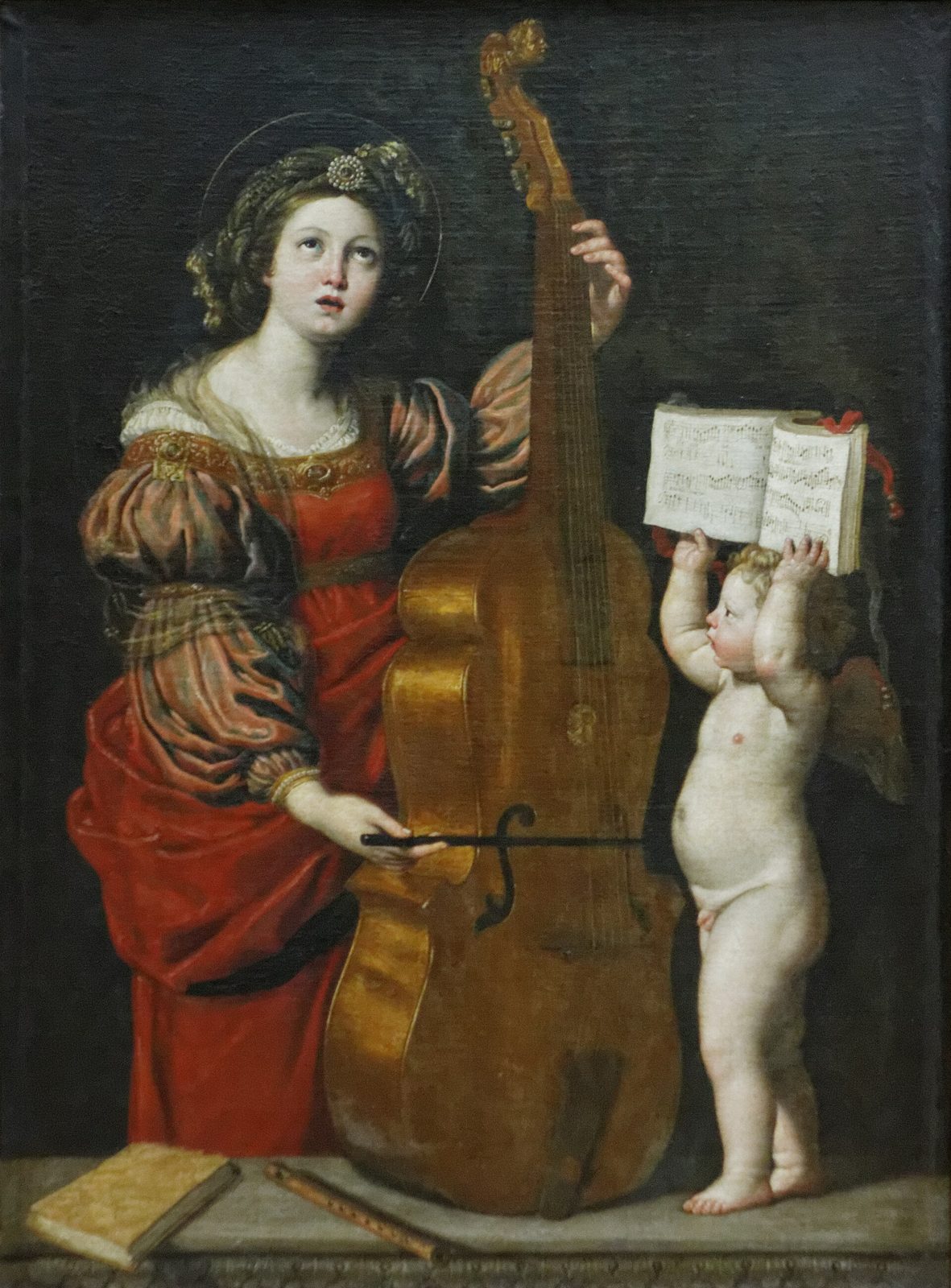
🎧 This work has audio narration — listen in the appTake a moment to gaze at this captivating painting, "Saint Cecilia Playing the Viol" by Domenichino. Notice how Saint Cecilia’s eyes are lifted toward the heavens, a serene expression on her face, as she plays the viol. The angel beside her holds a music score, almost as if inviting you to listen to the divine melody she creates.
These details matter because they encapsulate the essence of Cecilia’s character—she is not just a musician but a saint, embodying the connection between earthly art and heavenly grace. The viol, an instrument of harmony, symbolizes her role as the patroness of music, while the angel serves as a reminder of the spiritual dimension of her gift.
Domenichino painted this masterpiece in 1610, during a time when Baroque art was flourishing in Rome, reflecting the deep intertwining of faith and creativity.
As you stand here, think about the power of music in your own life. What songs lift your spirit? What melodies connect you to something greater? Let Saint Cecilia inspire you to find your own harmony.
Domenico Zampieri, known as Domenichino, was an influential Italian Baroque painter born in Bologna on October 21, 1581. The son of a shoemaker, he initially trained under Denis Calvaert before joining the Accademia degli Incamminati, where he honed his skills under the Carracci family. His small stature earned him the nickname "little Domenico," but his talent was anything but diminutive. He moved to Rome in 1602, quickly becoming a prominent figure in the artistic community, working alongside notable contemporaries like Guido Reni and Lanfranco.
Domenichino's work is characterized by a classicism that emphasizes clarity and narrative simplicity. His early masterpieces include the frescoes in the Cappella dei Santissimi Fondatori and the celebrated altarpiece, The Last Communion of St. Jerome. Despite his talent, he faced challenges in securing prestigious commissions, often overshadowed by Reni. His career flourished after the election of a Bolognese pope in 1621, leading to significant projects in Rome, including frescoes in Sant'Andrea della Valle and altarpieces in various churches.
Domenichino's legacy is marked by his contributions to the Baroque style, blending classical ideals with emotional depth. His works continue to be celebrated for their beauty and technical mastery, securing his place among the greats of the Bolognese School and the broader history of art. He passed away on April 6, 1641, in Naples, leaving behind a rich artistic heritage.
This painting, titled 'Saint Cecilia Playing the Viol,' was created by the Italian Baroque artist Domenichino in 1610. The work represents a moment of divine inspiration, as Saint Cecilia plays her instrument, seemingly oblivious to the sheet music held above her by an angel. The painting was later acquired by Louis XIV in 1662 from Everhard Jabach, marking its journey into royal possession. Today, it resides in the Louvre Museum in Paris, a testament to its enduring appeal and significance in the realm of religious art.
As you look closely at 'Saint Cecilia Playing the Viol,' notice the delicate brushwork that brings life to Cecilia's serene expression. Domenichino employed a soft, almost ethereal palette, with warm earth tones contrasting against the cooler hues of the angel's garment. This choice not only enhances the divine quality of the scene but also draws your eye to the focal point—the saint herself. The composition is carefully structured, with Cecilia's upward gaze creating a triangular flow that guides your attention through the painting. The light seems to emanate from above, illuminating her face and the viol, symbolizing the divine inspiration of music. This interplay of light and shadow, known as chiaroscuro, adds depth and drama, making the viewer feel as if they are witnessing a sacred moment.
This gentle artist, born to a shoemaker, faced a tough path in the competitive world of Baroque painting. Despite his immense talent, he often struggled to secure commissions, overshadowed by his more celebrated peers. It's a poignant reminder that even the greatest artists can face hardship and obscurity before their work is recognized.
The nickname 'Domenichino' translates to 'little Domenico' in Italian, likely referring to his short stature, which was a notable aspect of his identity and influenced how he was perceived in the art community.
Domenichino faced significant challenges in gaining recognition and commissions early in his career, which led him to develop a meticulous and careful approach to his art, ultimately contributing to the depth and clarity seen in his masterpieces.
This painting is part of a broader exploration of Saint Cecilia in Domenichino's oeuvre, as he also created frescoes depicting her life, showcasing his deep interest in her character and the themes of music and spirituality.