 Image: Sailko
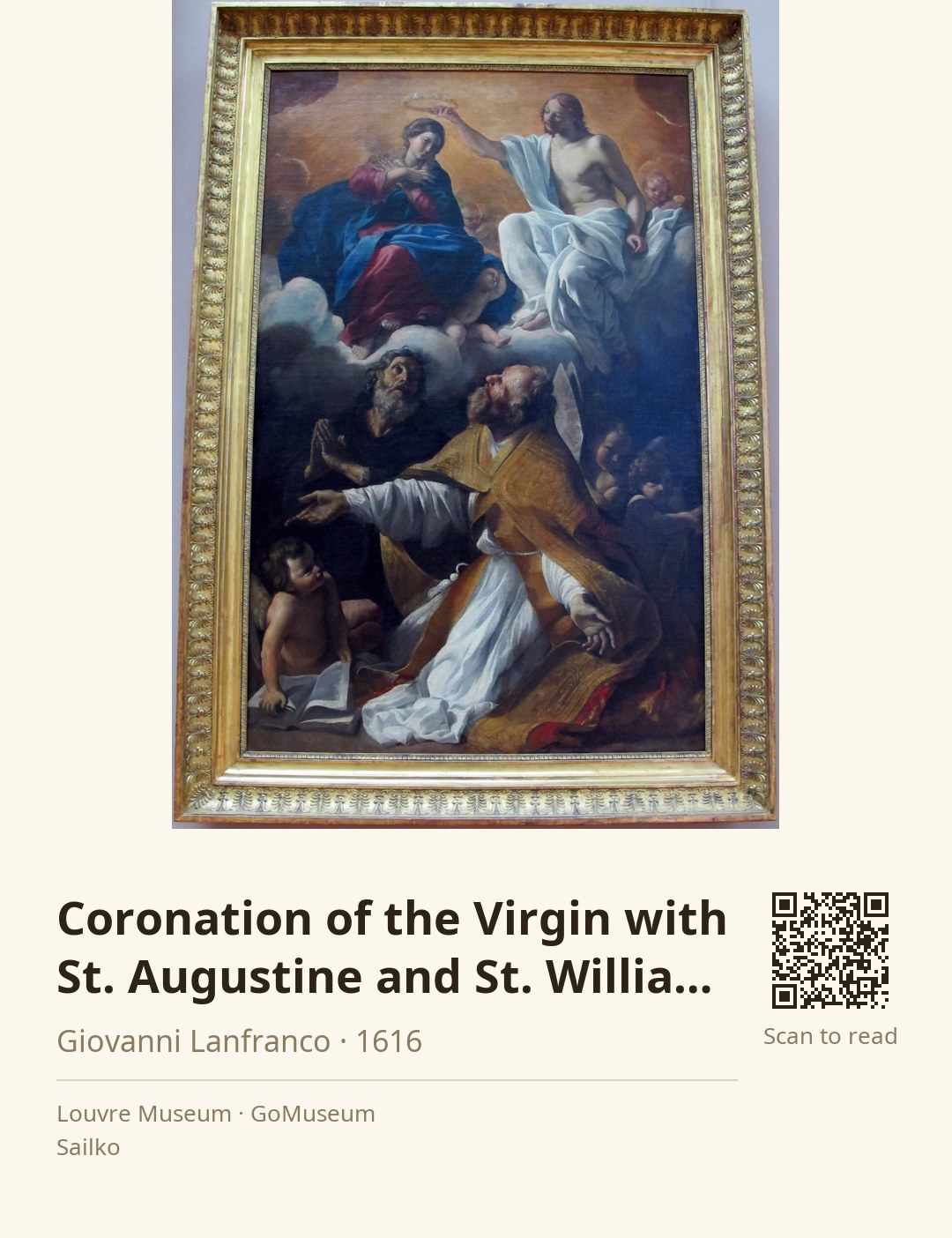
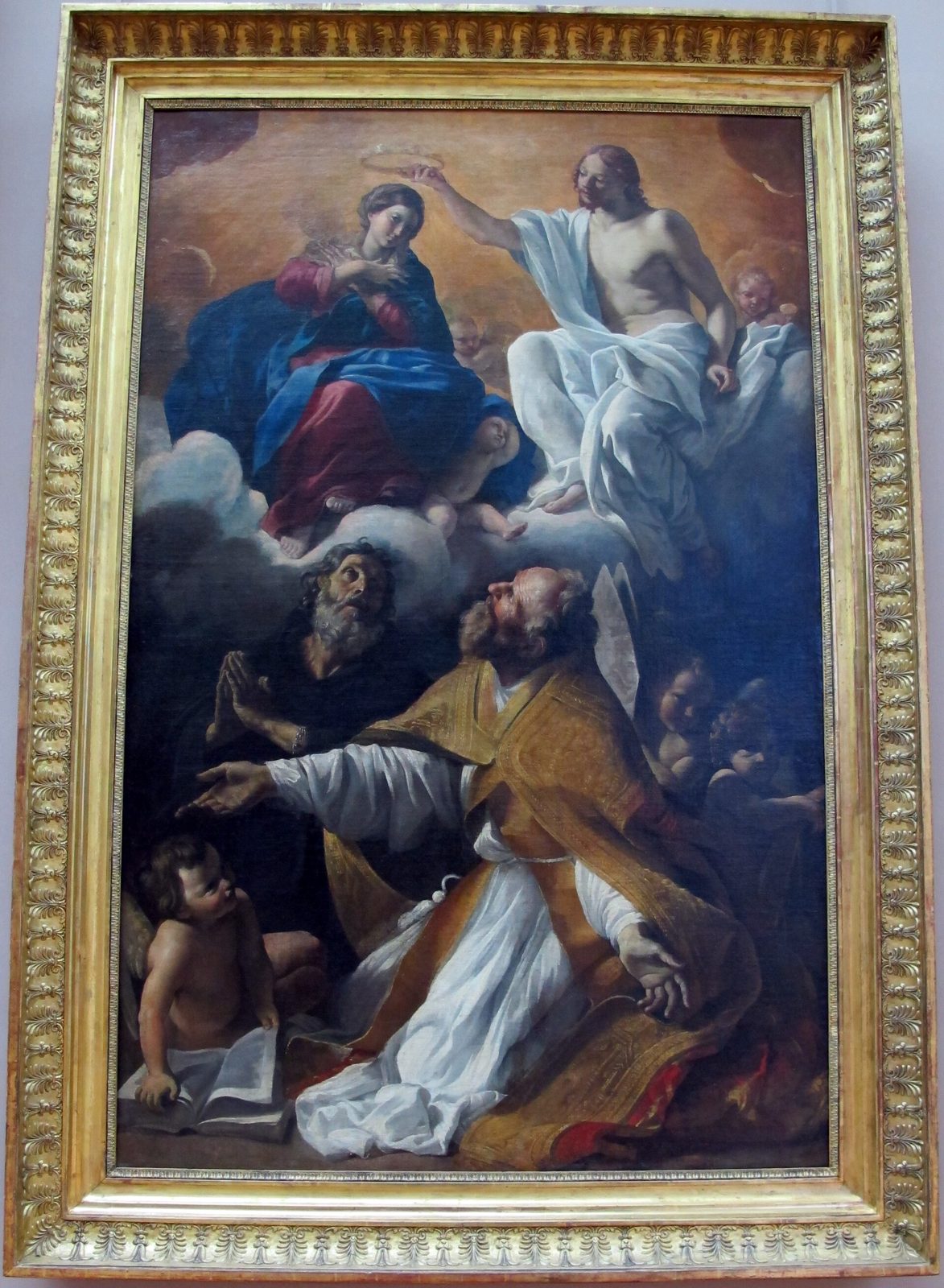
Coronation of the Virgin with St. Augustine and St. William of Aquitaine
🎧 This work has audio narration — listen in the appAs you stand before "Coronation of the Virgin with St. Augustine and St. William of Aquitaine," take a moment to really absorb the scene. Notice how the Virgin Mary is depicted, her serene expression and the delicate way her hands are raised in a gesture of acceptance. The soft, flowing drapery of her robe contrasts beautifully with the vibrant colors surrounding her.
These details are crucial because they highlight Lanfranco's mastery of light and texture, a hallmark of the Baroque style. The way the light seems to illuminate her figure draws your eye directly to her, making her the undeniable focal point of the painting. This technique not only enhances the emotional impact of the scene but also reflects the divine nature of the moment being portrayed.
Giovanni Lanfranco, the artist behind this work, was a prominent figure in the Bolognese school of painting, known for his innovative approaches to composition and perspective. Created in 1616, this piece encapsulates the spiritual fervor of the time, as artists sought to evoke deep emotional responses through their work.
As you take in this masterpiece, think about the significance of the figures depicted here. What do you feel when you see the Virgin crowned? Does it evoke a sense of peace, or perhaps a longing for something greater?
Giovanni Lanfranco was an influential Italian Baroque painter born on January 26, 1582, in Parma. He emerged from the Bolognese school, significantly shaped by Annibale Carracci's classicism. His artistic journey began as a page in the household of Count Orazio Scotti, where his talent in drawing led him to apprentice under Agostino Carracci. After Agostino's death, Lanfranco joined Annibale's workshop, contributing to notable frescoes, including those in the Galleria Farnese.
By 1605, Lanfranco had begun to secure independent commissions, creating altarpieces that showcased his evolving style, blending influences from both Carracci and Ludovico Carracci. His return to Rome in 1612 marked a period of rivalry with fellow artists like Domenichino and Guido Reni, as he sought to establish his place in the competitive Roman art scene. Lanfranco's work is characterized by a visionary approach, particularly in ceiling paintings, and he became known for his innovative fresco cycles in churches and urban buildings.
Throughout his career, Lanfranco's style evolved, reflecting a shift towards a more theatrical Baroque aesthetic. He remained active until his death on November 30, 1647, leaving a legacy as one of the prominent figures in the Baroque movement, particularly in the context of Emilian painting. His contributions to ecclesiastical art and his mastery of light and perspective solidified his place in art history.
As you gaze at this painting, pay attention to Lanfranco's brushwork, which is both fluid and dynamic. The way he layers paint creates a sense of depth and movement, particularly in the drapery of the Virgin's robe. Notice how the light cascades across her figure, illuminating her face and hands while casting softer shadows around the other figures. This technique draws your eye directly to her, establishing her as the focal point. The composition is carefully structured, with the figures arranged in a way that guides your gaze upward, mirroring the act of crowning. The vibrant colors, especially the reds and golds, evoke a sense of warmth and reverence, enhancing the emotional weight of the scene. Lanfranco's choices here are deliberate, aiming to create a connection between the viewer and the divine moment being portrayed.
Did you know that Giovanni Lanfranco, the artist behind this stunning piece, had a rather dramatic rise to fame? After the death of his mentor Agostino Carracci, Lanfranco found himself in a fierce competition for commissions in Rome. He was not just another artist; he was a master of theatricality in painting, which made him a sought-after name. This painting, created in 1616, is a testament to that burgeoning reputation, blending his classical training with a bold, dynamic style that would define the Baroque period.
Lanfranco was heavily influenced by Annibale Carracci, under whom he worked in Rome, where he absorbed techniques that would shape his Baroque style, particularly in the use of light and composition.
Yes, Lanfranco had a notable rivalry with Domenichino, another prominent painter of the time, as they competed for major fresco commissions in Rome, which often led to public accusations of plagiarism.