 Image: Sailko
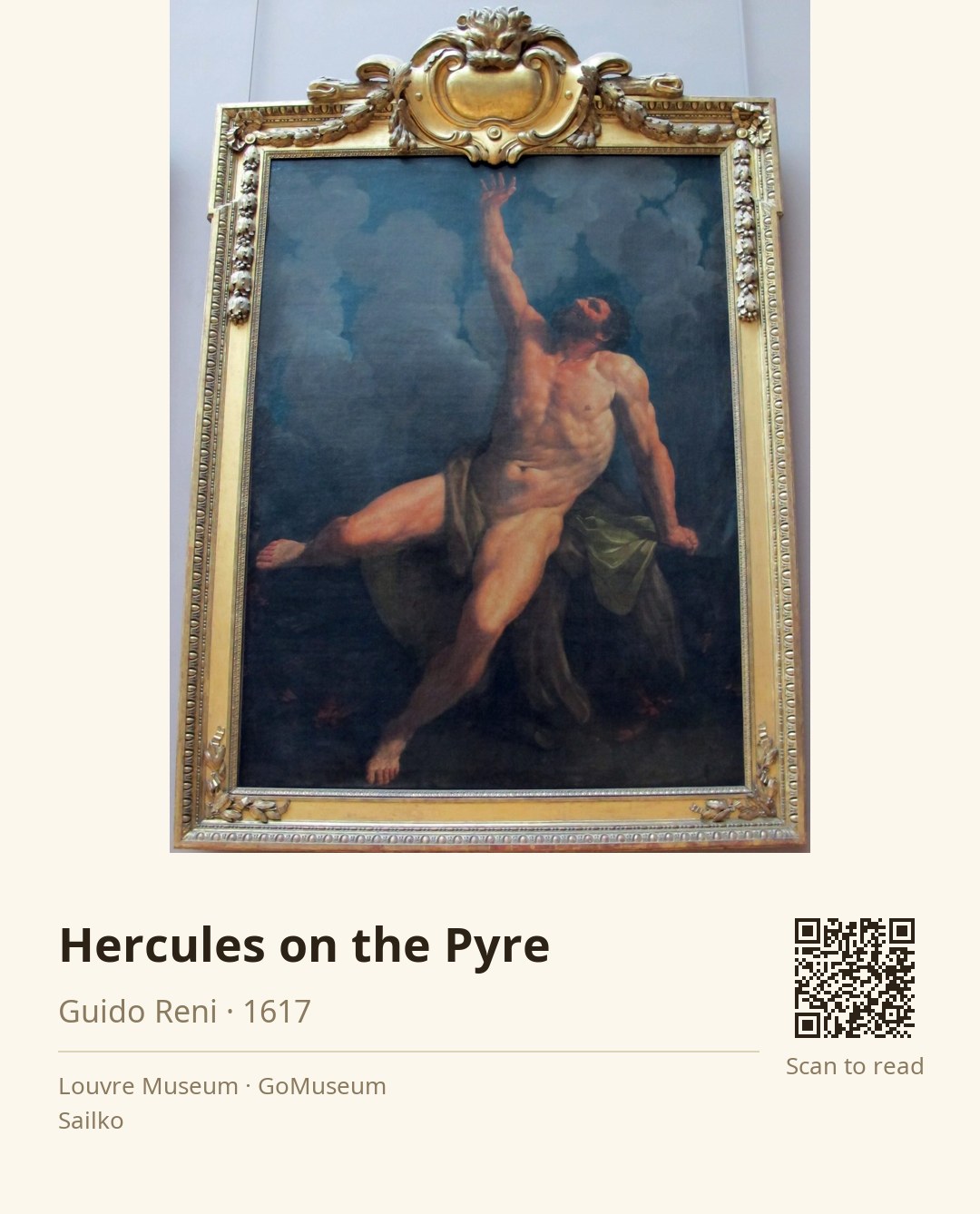
Hercules on the Pyre
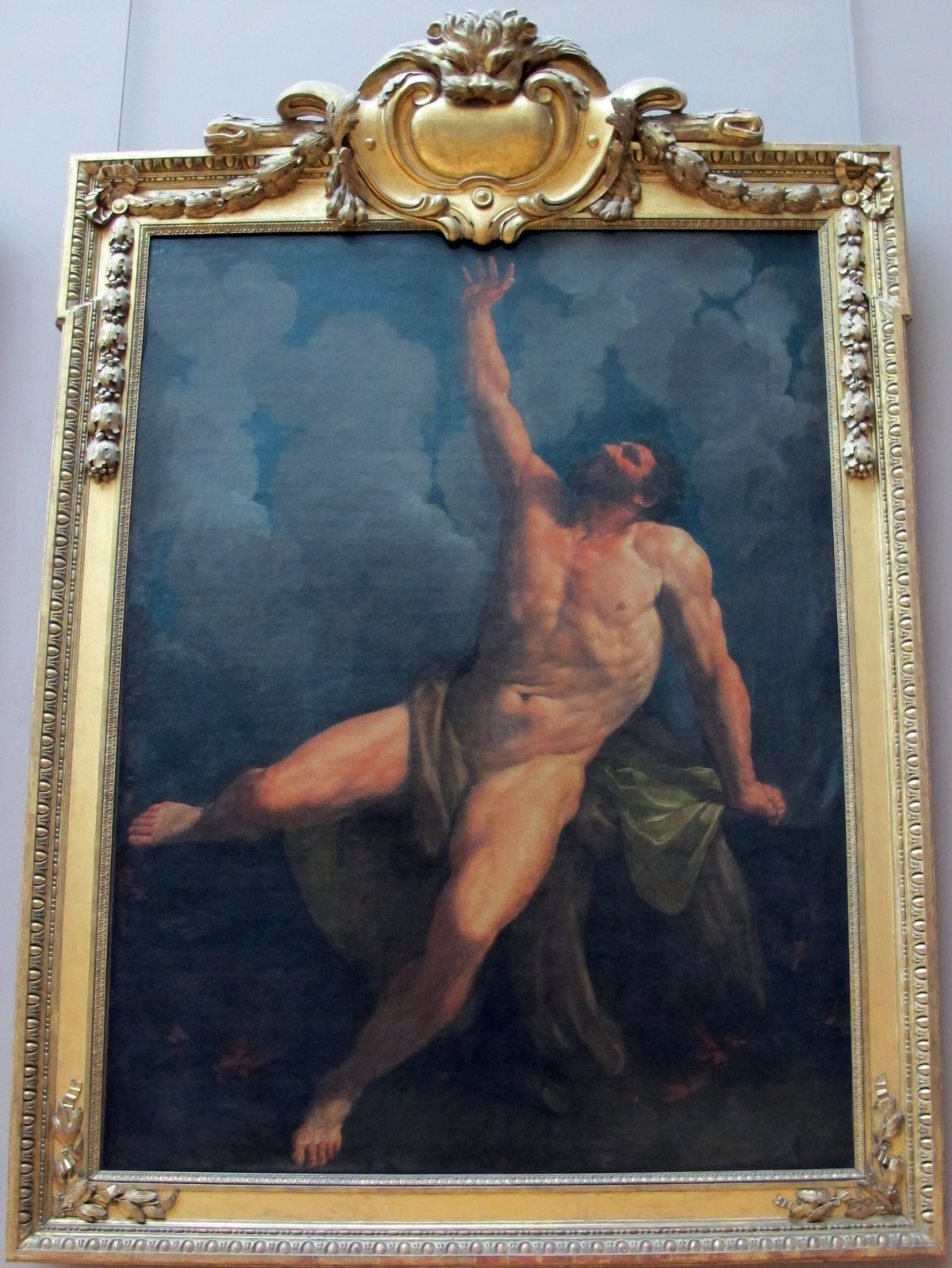
🎧 This work has audio narration — listen in the appHercules, depicted here in a moment of tragic defiance, is posed dramatically against a tumultuous backdrop of dark clouds. His left arm reaches skyward, while his head tilts back, capturing a powerful sense of struggle and resignation. The loose drapery around his waist adds movement to the scene, contrasting with the stillness of the ominous sky. Reni’s use of deep blues and grays enhances the figure's warm skin tones, creating a striking visual tension that draws the eye.
This portrayal of Hercules on the pyre is a poignant exploration of mythological themes, reflecting the hero's ultimate sacrifice and the human condition's fragility. The dynamic pose and smooth brushwork emphasize the muscularity of the figure, showcasing Reni's mastery in rendering the human form with both grace and strength. The dark clouds surrounding Hercules serve not only as a dramatic backdrop but also symbolize the weight of his fate, enhancing the emotional depth of the scene.
Guido Reni, an influential figure in the Baroque period, created this work in 1617, during a time when he was establishing himself as a leading artist in Rome and Bologna. His ability to blend classical ideals with emotional intensity set him apart, making him a pivotal figure in the development of the Bolognese School of painting.
Guido Reni, born on November 4, 1575, in Bologna, was a prominent Italian Baroque painter known for his classical style that echoed the works of contemporaries like Simon Vouet and Nicolas Poussin. The only child of musicians, Reni began his artistic journey at the tender age of nine, apprenticing under Denis Calvaert. He later joined the Accademia degli Incamminati, where he flourished alongside fellow artists, forming the core of the Bolognese School.
Reni's career blossomed in Rome, where he became a favored artist of the Borghese family, creating masterpieces such as the fresco "L'Aurora" in the Casino dell'Aurora. His work often reflected a restrained classicism, contrasting with the more vibrant styles of his peers. Reni's notable commissions included the "Archangel Michael" for the Cappuccini church, which sparked legends about his artistic choices.
After returning to Bologna around 1614, he established a successful studio, producing significant works like "Saint Dominic in Glory." Reni's influence extended beyond his lifetime, impacting the Neoclassical style and inspiring future generations, including artists like Picasso. He passed away on August 18, 1642, leaving behind a legacy as a master of Baroque painting, celebrated for his grace and technical skill.
Guido Reni's 'Hercules on the Pyre' was created in 1617, a pivotal year as Reni was solidifying his reputation in the art world. This painting was commissioned by a patron whose identity remains a mystery, but it was later acquired by notable figures including Gonzague of Mantua in 1627 and Charles I of England, who bought it in 1649. The artwork eventually passed through various hands, including the collection of Louis XIV, which speaks to its high regard and desirability.
Reni's technique in 'Hercules on the Pyre' showcases his mastery of oil painting. The smooth brushwork creates a lifelike quality, particularly in the depiction of Hercules's muscular form, which is rendered with a warm palette that contrasts dramatically against the cooler tones of the stormy sky. The composition is dynamic, with Hercules's diagonal pose drawing the viewer's eye across the canvas, while the loose drapery around his waist adds a sense of movement and fluidity. Reni's choice of deep blues and grays not only enhances the emotional weight of the scene but also serves to highlight the figure's skin tones, creating a striking visual tension that captivates the viewer. This careful handling of color and form reflects Reni's understanding of the human body and his ability to convey complex emotions through paint.
An intriguing anecdote about Reni is that he was known to sing while he painted, a practice that reflected his musical upbringing. This connection between music and painting was not just a personal quirk; it was emblematic of the Baroque era's belief in the harmony between the arts. Reni's ability to infuse his paintings with a sense of rhythm and emotion may very well have been influenced by his love for music, creating a unique synergy in his artistic expression.
Reni was known to sing while he painted, which reflected his musical background and the Baroque era's belief in the harmony between the arts.
While at the Carracci academy, Reni completed commissions for his first altarpieces, marking the beginning of his professional career.
Reni painted Saint Sebastian six times, and it became one of his most reproduced works, showcasing his popularity and the demand for his art.