Presentation at the Temple
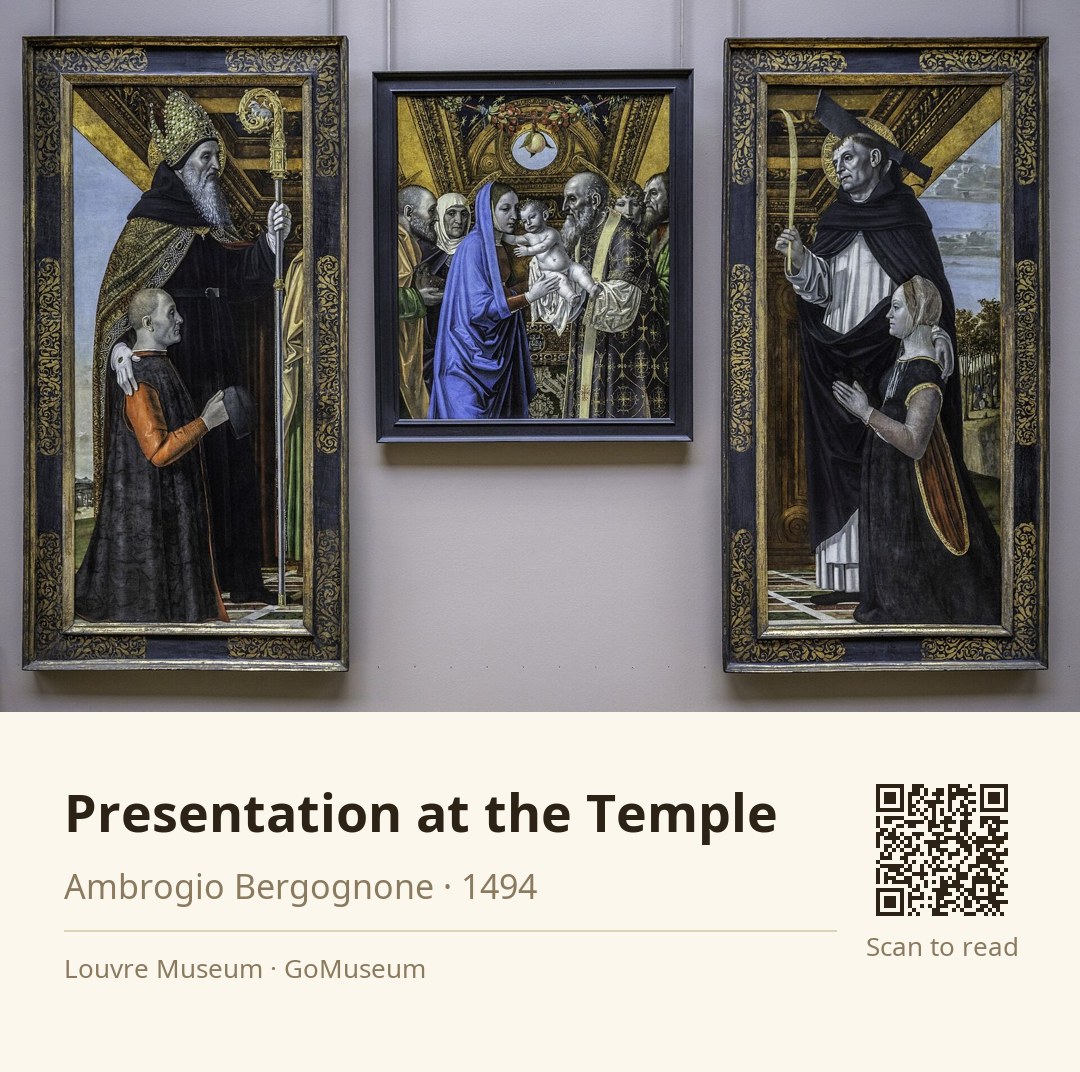
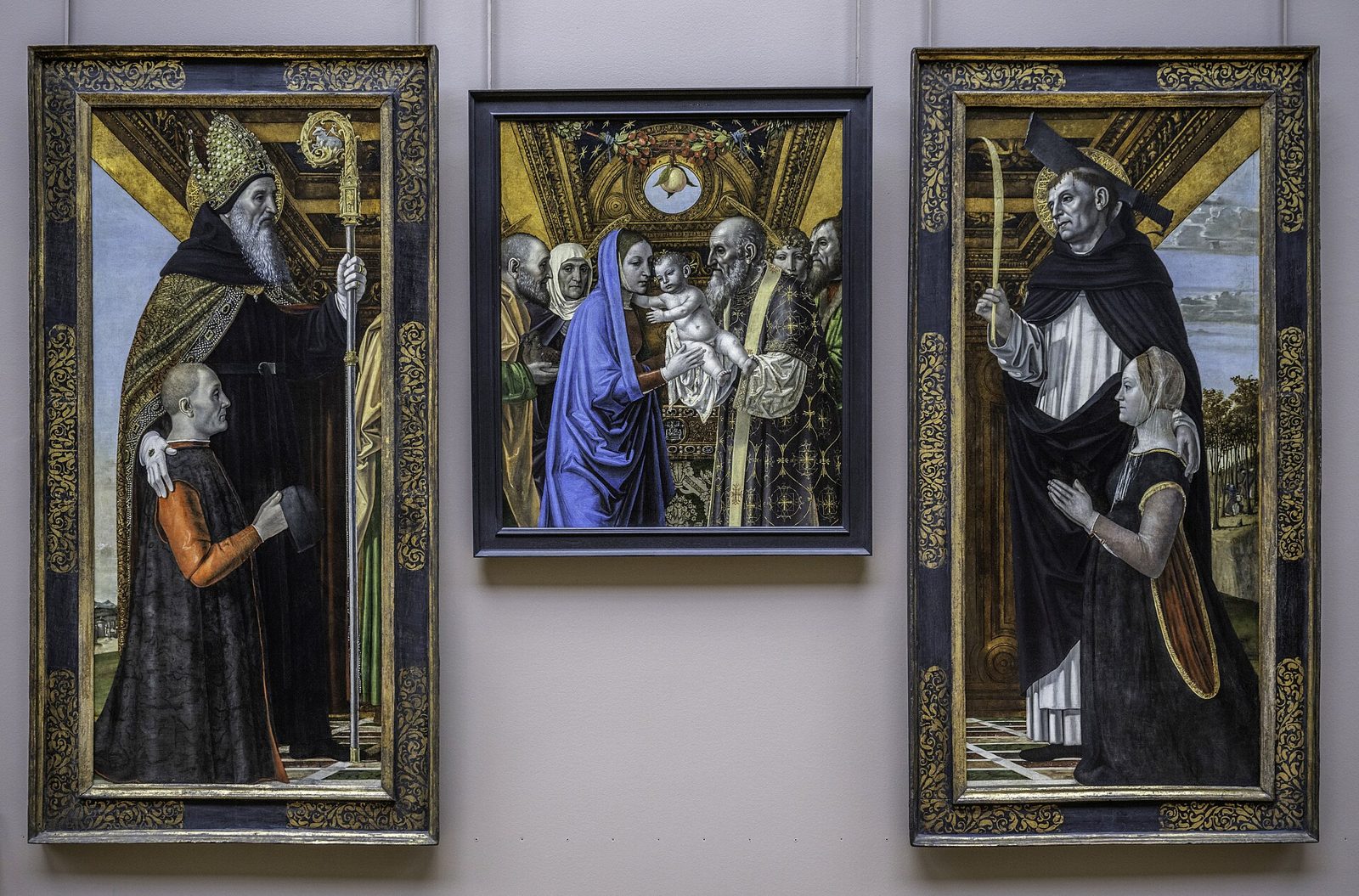
🎧 This work has audio narration — listen in the appThe woman in the blue robe cradling the child at the center of "Presentation at the Temple" captures a moment of profound significance. Surrounding her are figures adorned in ornate robes, each detail meticulously rendered, from the intricate gold accents in the background to the circular motif hovering above, suggesting a divine presence.
This scene, depicting the biblical presentation of Jesus at the Temple, emphasizes the importance of ritual and faith in the Renaissance period, reflecting the deep spiritual values of the time. The central figure's serene expression and the reverence of those around her convey a sense of sacredness, inviting viewers to contemplate the weight of this moment in Christian tradition.
Ambrogio Bergognone, an artist active in Milan during the late 15th century, created this work in 1494, a time when the influence of pre-Renaissance styles was still palpable in Lombard art.
Ambrogio Bergognone, an Italian painter of the Renaissance, was active primarily in Milan and its surroundings from around 1472 until his death in 1524. Born in Fossano, Piedmont, he is often associated with the Burgundian School, reflecting a style that aligns more closely with pre-Renaissance Lombard art than with his contemporary Leonardo da Vinci. His artistic journey began with early works, including an altarpiece at the Basilica of Sant' Eustorgio, which marked his presence in Milan's artistic community.
Bergognone's most significant contributions were made during his eight years at the Certosa di Pavia, where he collaborated with his brother Bernardino on intricate woodwork designs for choir stalls and created notable frescoes. His return to Milan saw him working on various churches, including San Satiro and the Incoronata in Lodi, where he produced a series of frescoes and altarpieces that showcased his evolving style.
Despite his lesser-known status compared to contemporaries, Bergognone's influence is recognized through his impact on later artists, particularly Bernardino Luini. His works, characterized by a blend of detailed figures and rich colors, remain significant in the study of Lombard painting, marking him as a vital figure in the transition from the late Gothic to the Renaissance.
Ambrogio Bergognone's 'Presentation at the Temple' was created in 1494, a significant year that marks a turning point in his career as he returned to Milan after years of working at the Certosa di Pavia. The work was well-received, showcasing Bergognone's ability to merge intricate detail with emotional resonance, a hallmark of his style. Over the years, the painting has passed through various hands, including notable collectors like Melzi and Mundler Otto, which speaks to its esteemed provenance.
This painting is a masterclass in oil technique, with Bergognone employing a meticulous brushwork that brings texture and depth to the figures and their ornate garments. The vibrant blue of the central figure's robe contrasts beautifully with the gold accents in the background, creating a luminous effect that draws the eye. The composition is carefully balanced, with the central panel commanding attention while the side panels complement it, each figure positioned to guide your gaze towards the mother and child. The use of light is subtle yet effective, enhancing the serene expressions on the faces of the characters. The circular motif above suggests a divine presence, cleverly integrated into the overall structure, inviting contemplation of the sacred moment being depicted. Bergognone's choice of canvas allows for a smooth finish, which he exploits to create intricate details that invite closer inspection.
Interestingly, despite being a contemporary of Leonardo da Vinci, Bergognone's style remained rooted in the pre-Renaissance traditions of Lombard art. This divergence highlights the rich tapestry of artistic expression in Milan during the late 15th century, where different influences coexisted and shaped the artistic landscape.
Bergognone is well-known for his contributions to the Certosa di Pavia, where he worked for eight years, creating various religious artworks that showcase his artistic skills.
While Leonardo da Vinci embraced the innovations of the Renaissance, Bergognone's work continued to reflect the earlier pre-Renaissance styles, highlighting the diversity of artistic expression in Milan during that time.
After returning to Milan, Bergognone spent two years working on the decoration of the church of San Satiro, contributing to its artistic development.