Man with a Glove
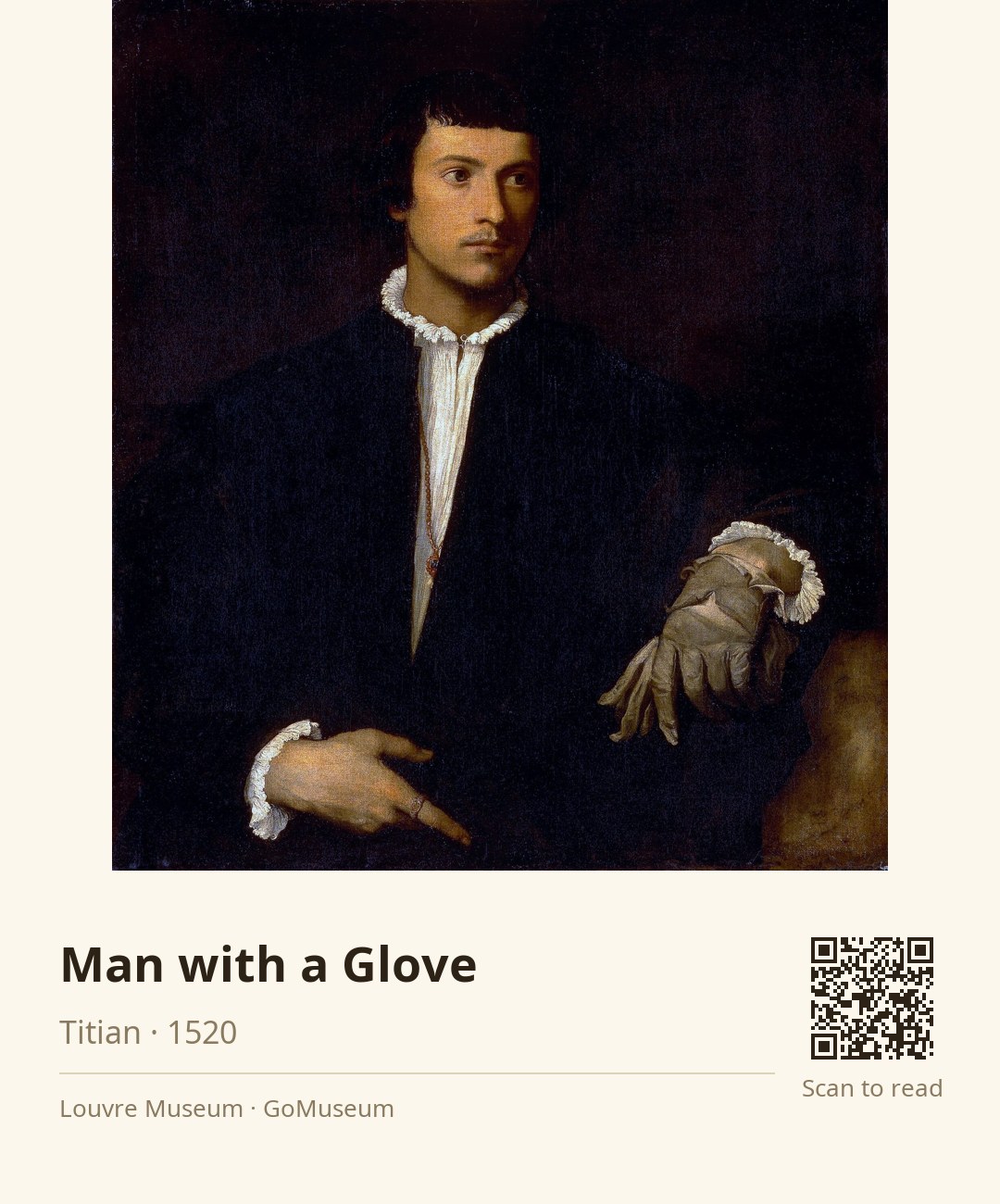
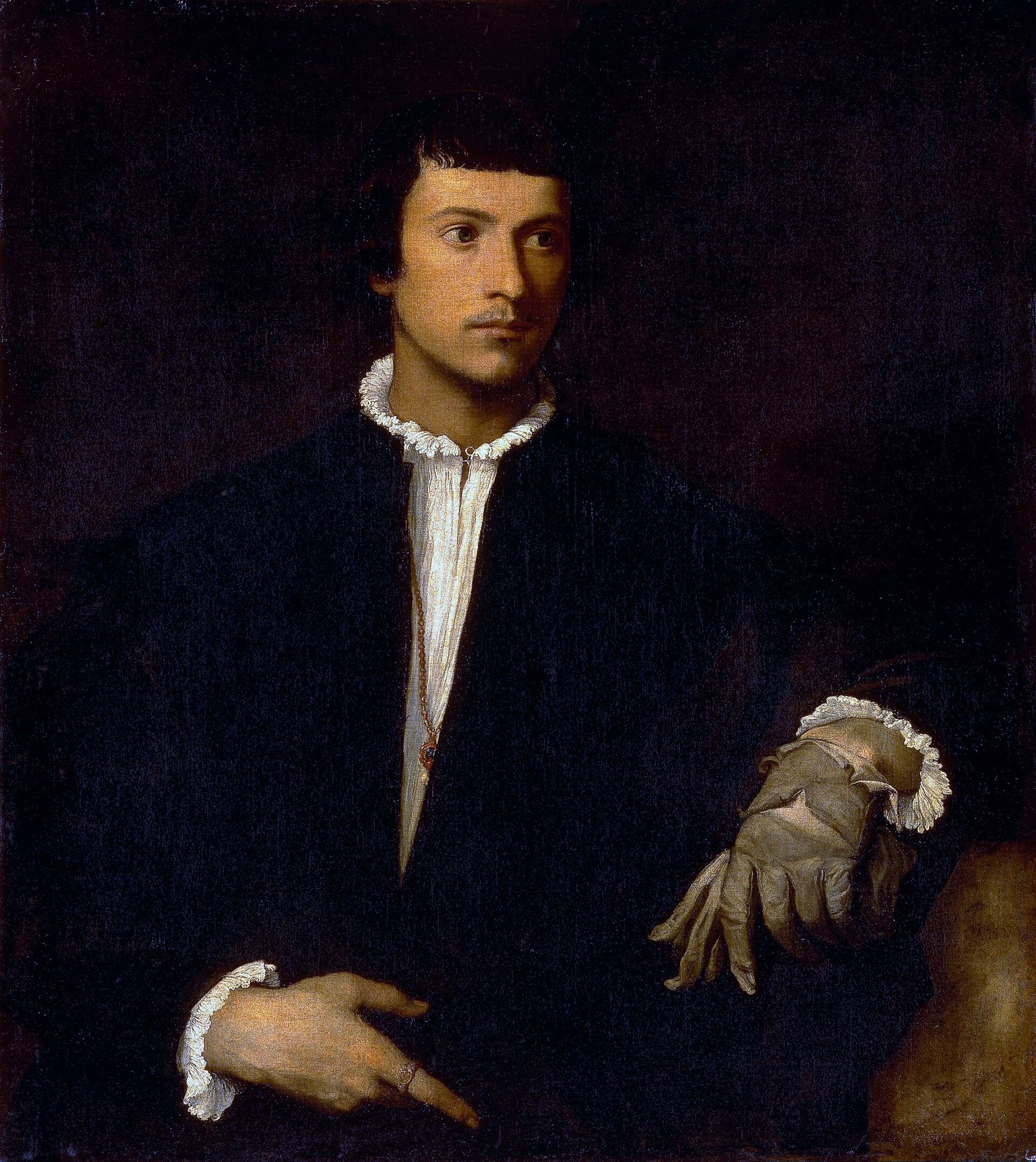
🎧 This work has audio narration — listen in the appTake a moment to really look at "Man with a Glove" by Titian. Notice how the young man’s gaze seems to drift off to the left, almost as if he’s lost in thought. His left hand, elegantly gloved, holds a second glove, a subtle nod to the fashion of his time.
The way he holds that glove suggests a certain confidence, a hint of aristocratic flair that Titian captures beautifully.
Painted around 1520, this portrait is a striking example of Titian's ability to convey personality through expression and posture. The identity of the man remains a mystery, sparking speculation about who he might have been—perhaps a member of the Gonzaga family or a Venetian gentleman.
As you stand here, think about the stories this painting has witnessed over the centuries. What do you imagine the young man is thinking? What kind of life did he lead? Let your imagination wander as you take in this captivating work.
Titian, born Tiziano Vecellio around 1488 in Pieve di Cadore, was a pivotal figure in the Italian Renaissance, particularly in Venetian painting. Renowned for his versatility, he excelled in portraits, landscapes, and mythological themes, becoming a sought-after artist among patrons, including the Habsburgs and the papacy. His innovative use of color and brushwork transformed the art of painting, liberating it from the rigid constraints of line and form that characterized earlier periods.
Titian's career began in Venice, where he trained under notable masters such as Giovanni Bellini and Giorgione. His early works reflected the influence of these artists, but he quickly developed a distinctive style that emphasized color and emotional depth. His masterpiece, "Assumption of the Virgin," showcased his ability to blend religious themes with dynamic composition, setting a new standard in Christian art.
Throughout his life, Titian's artistic evolution mirrored his personal experiences, including the loss of his wife and the challenges of his time. He became a prominent portraitist, capturing the essence of his subjects with remarkable realism. His legacy endures, influencing countless artists and solidifying his place as one of the greatest painters in Western art history. Titian passed away in 1576, leaving behind a rich body of work that continues to inspire and captivate audiences today.
The painting 'Man with a Glove' has a fascinating history that traces back to the Gonzaga family of Mantua, who originally owned it. In 1627, it was acquired by Charles I of England, a significant patron of the arts. After his execution in 1649, the painting was auctioned off and purchased by Eberhard Jabach, a banker from Cologne. It eventually found its way into the hands of Louis XIV of France, who transferred it from the Palace of Versailles to the Louvre in 1792. The identity of the young man in the portrait remains a mystery, with theories suggesting he could be Girolamo Adorno, Giambattista Malatesta, or even Ferrante Gonzaga, who was just a teenager at the time.
As you gaze at 'Man with a Glove,' pay attention to Titian's masterful brushwork and the way he handles light and color. The dark background creates a striking contrast with the figure, drawing your eye directly to the young man. Notice how the soft, almost velvety texture of his jacket contrasts with the smoothness of his gloved hand. Titian's choice to depict the figure in a three-quarters view adds depth and dimension, making him feel almost alive. The way the light subtly highlights the contours of his face and hands reveals not just his physical form but also hints at his character. The careful placement of his left arm on his knee, holding the second glove, suggests a casual confidence, while the slight tilt of his head invites you to wonder what thoughts occupy his mind. This interplay of posture and expression is what makes Titian's portraits so compelling.
Painted around 1520, this work showcases a shift towards capturing psychological depth and individuality, moving away from the more rigid, formulaic representations of earlier eras. The way Titian emphasizes the subject's gaze and hands invites viewers into a more intimate connection with the figure, a technique that would influence countless artists in the centuries to come. This painting not only reflects the sophistication of Venetian art but also marks a significant step towards modern portraiture, where the personality of the subject takes center stage.
Interestingly, 'Man with a Glove' has made its way into popular culture, appearing in various literary works. For instance, in Henry James's 1903 novel 'The Ambassadors,' the portrait is described in a way that highlights its overwhelming presence, showcasing how deeply it has resonated with viewers over time. This connection between the painting and literature illustrates its impact beyond the canvas, cementing its status as a cultural icon.
The flat black background is not just a stylistic choice; it serves to enhance the figure's presence, making the young man appear almost detached from his surroundings, which was a common technique in Titian's portraits to focus attention on the subject.
The young man's gloved hand holding a second glove symbolizes not only fashion but also his aristocratic status, as gloves were a sign of refinement and gentility in Renaissance society.