Luigi Cherubini and the Muse of Lyric Poetry
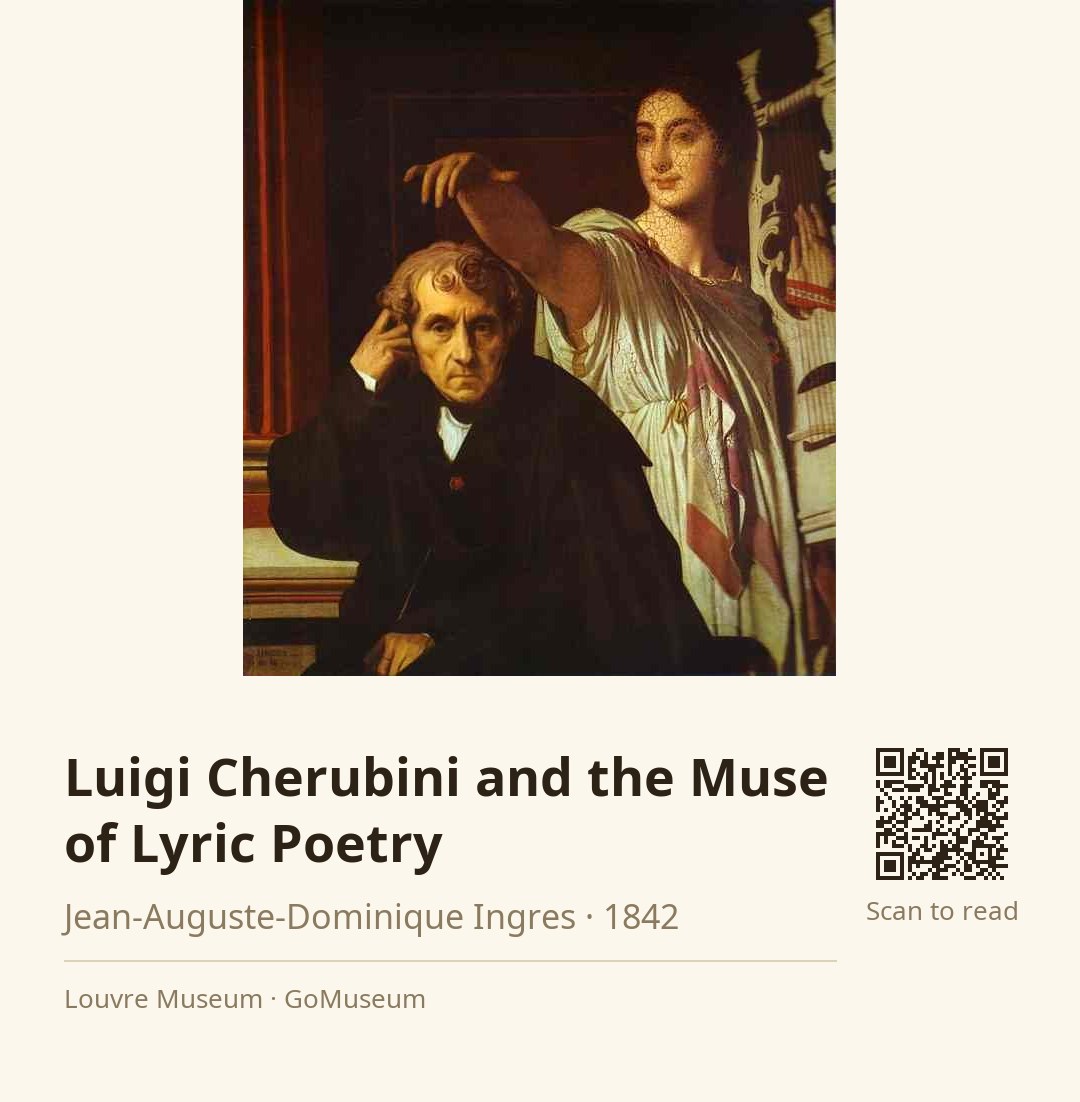
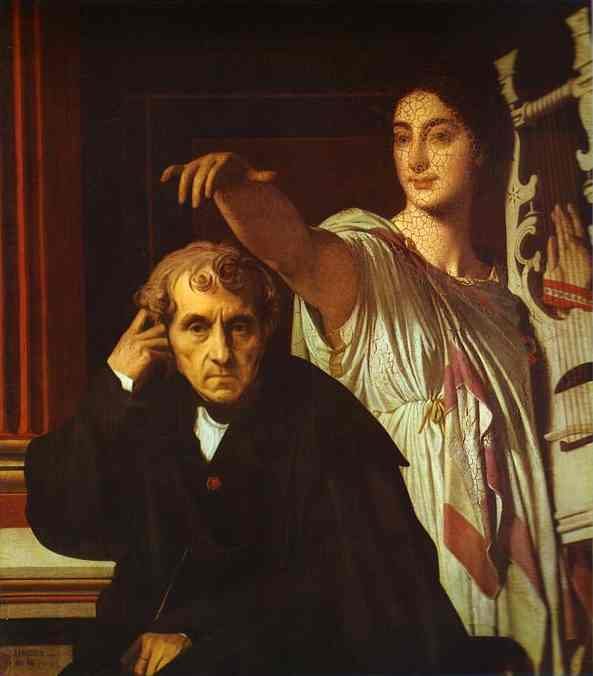
🎧 This work has audio narration — listen in the appAs you stand before "Luigi Cherubini and the Muse of Lyric Poetry," take a moment to really soak in the connection between the composer and the ethereal figure beside him. Notice how Cherubini's intense gaze seems to draw you in, while the muse, draped in flowing fabric, embodies the very essence of inspiration.
Cherubini, a pivotal figure in the world of classical music, is not just portrayed as a man but as a conduit for creativity, with the muse symbolizing the divine spark that fuels artistic expression.
Created in 1842, this painting is a product of meticulous planning—eighteen preparatory drawings went into it! Ingres even cut and reassembled Cherubini’s head from an earlier portrait, showcasing his dedication to perfection. The muse, likely painted by his pupil Henri Lehmann, adds a layer of complexity, as their differing styles create a dialogue within the artwork.
So, as you take in this piece, consider: what does inspiration look like to you?
Jean-Auguste-Dominique Ingres was a pivotal figure in French Neoclassicism, born on August 29, 1780, in Montauban. He was the son of a versatile artist, which nurtured his early artistic inclinations. Ingres studied under Jacques-Louis David in Paris, where he developed a commitment to academic traditions, aspiring to elevate history painting above all genres. His early career was marked by struggles, as critics dismissed his style as archaic, yet he persevered, achieving recognition with works like "The Vow of Louis XIII" in 1824.
His portraits, characterized by expressive distortions, became his most celebrated contributions, influencing modern artists such as Matisse and Picasso. Ingres's time in Italy, from 1806 to 1824, was crucial; he immersed himself in the study of Renaissance masters, which shaped his distinctive style. Despite facing criticism for his meticulous approach, he remained steadfast in his vision of beauty, emphasizing drawing over color.
Later in life, he returned to Paris, where he continued to create significant works, including "The Turkish Bath." Ingres's legacy endures as a bridge between classical traditions and modern art, embodying the tension between adherence to established norms and the evolving landscape of artistic expression. He passed away on January 14, 1867, leaving behind a profound impact on the art world.
In 1842, Jean-Auguste-Dominique Ingres completed 'Luigi Cherubini and the Muse of Lyric Poetry,' an allegorical portrait that would soon capture the attention of the art world. Commissioned by Louis-Philippe I, the painting was bought for a substantial 8,000 francs, a testament to its perceived value. Initially displayed at the musée du Luxembourg, it made its way to the Louvre in 1874, where it remains today. The creation of this work was no small feat; Ingres meticulously prepared for it with eighteen drawings, showcasing his dedication to detail. Interestingly, he didn't just paint Cherubini from scratch; he took the head from an earlier portrait and reassembled it onto a larger canvas, demonstrating his relentless pursuit of perfection. The muse, likely painted by his pupil Henri Lehmann, adds another layer of intrigue, as their differing styles create a fascinating dialogue within the piece.
As you gaze at 'Luigi Cherubini and the Muse of Lyric Poetry,' pay attention to Ingres' masterful brushwork and the way he handles light and color. The painting's composition is carefully structured, with Cherubini's intense gaze drawing you into the scene, while the flowing fabric of the muse contrasts beautifully with the solidity of the composer. Ingres' use of color is particularly striking; the warm tones of Cherubini's attire juxtapose with the cooler hues surrounding the muse, creating a sense of harmony and tension. Notice how the light falls on their faces, highlighting their expressions and enhancing the emotional connection between them. The scale of the figures is also noteworthy, as it emphasizes Cherubini's prominence in the composition, while the muse, though ethereal, holds her own in the narrative. This careful orchestration of elements not only showcases Ingres' technical prowess but also deepens the viewer's engagement with the themes of inspiration and creativity.
One intriguing aspect of this painting is the way Ingres repurposed his earlier work. By cutting Cherubini's head from a previous portrait and reassembling it on a new canvas, he was able to create a fresh narrative while still honoring his past creations. This technique not only showcases his innovative approach but also highlights his dedication to refining his artistic vision, making the final piece a unique blend of old and new.