The road from Sèvres to Paris
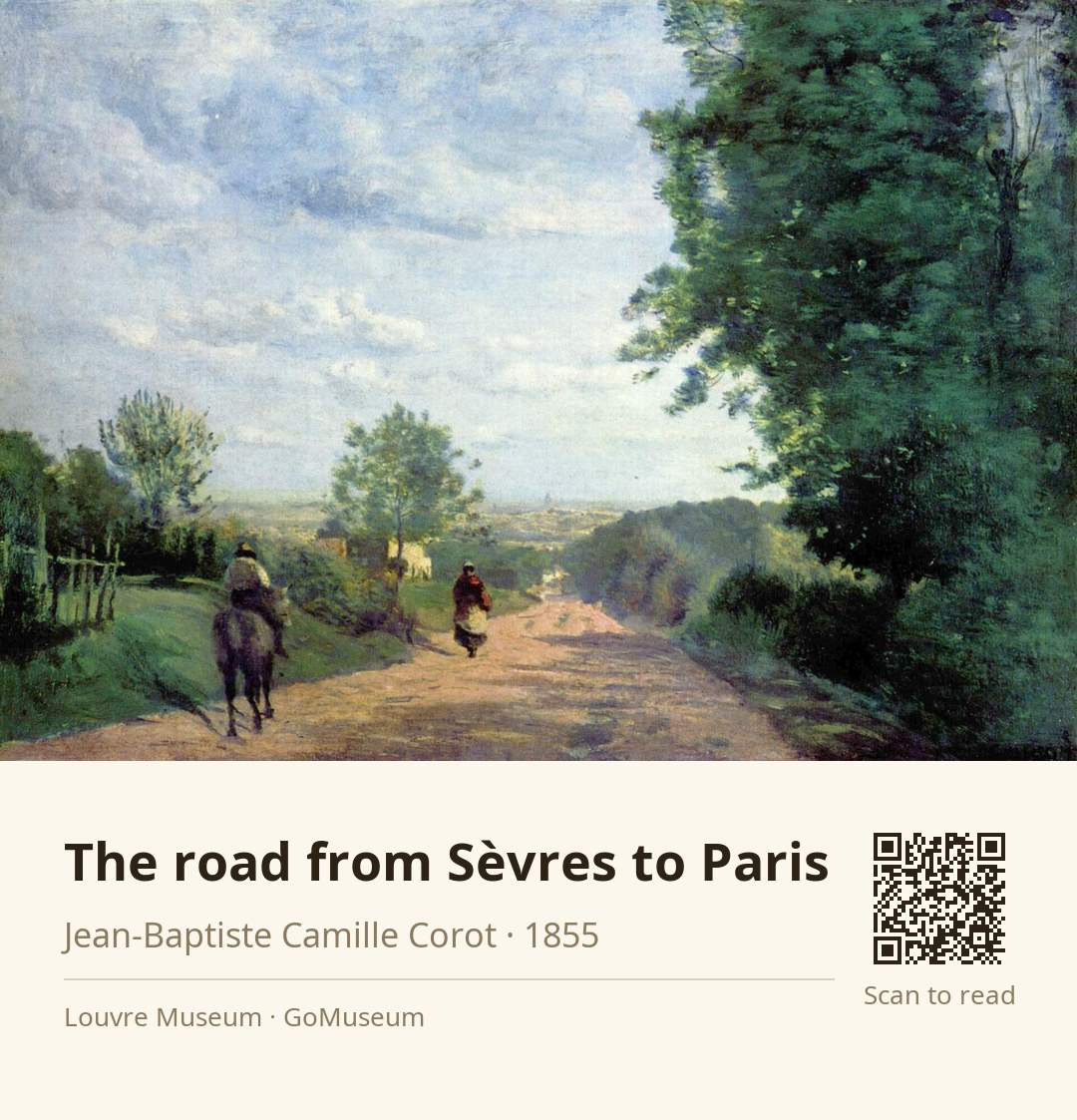
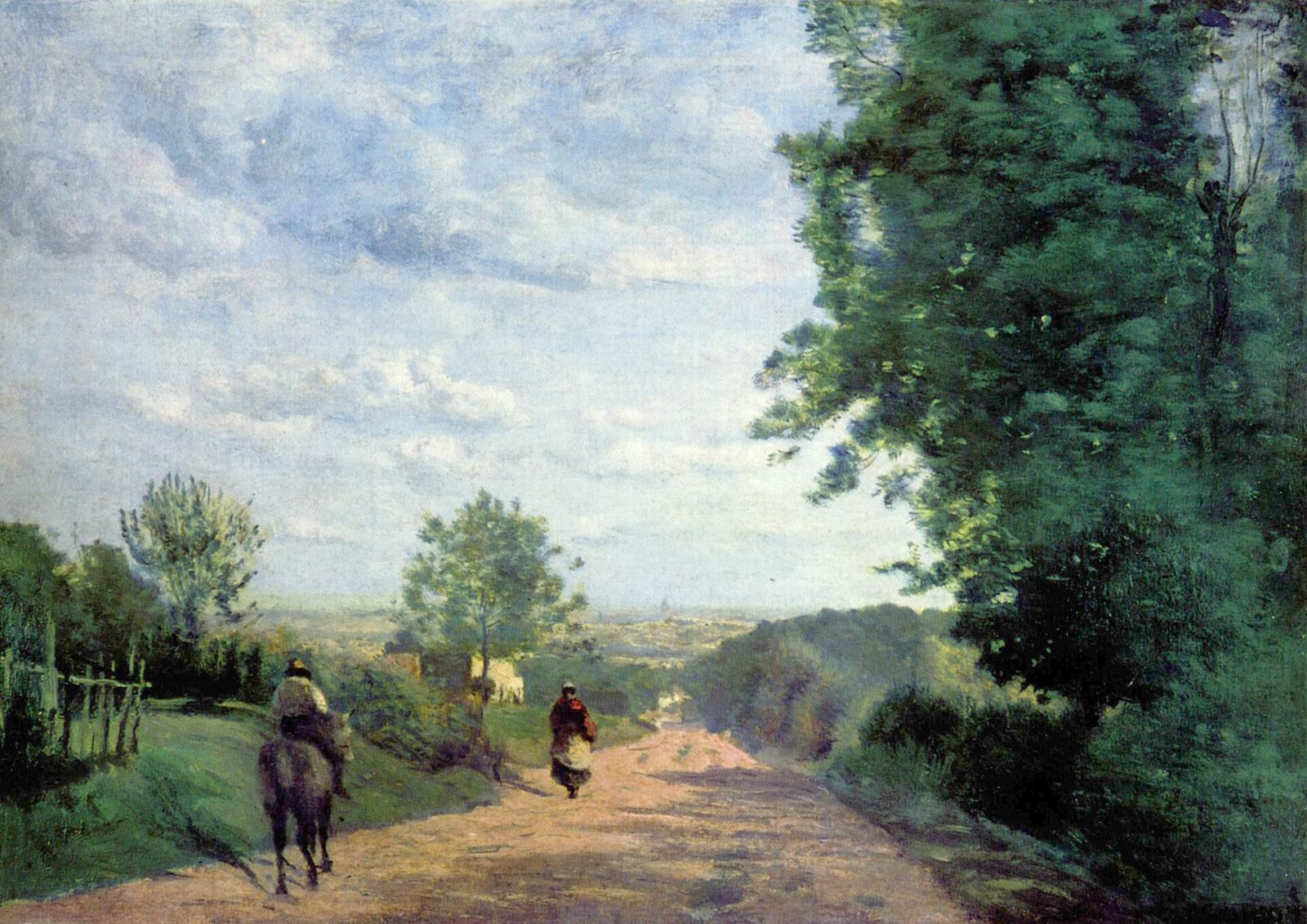
🎧 This work has audio narration — listen in the appTake a moment to really soak in the scene before you in Corot's "The Road from Sèvres to Paris." Notice how the soft, hazy light bathes the landscape, creating a dreamlike quality that invites you to step into the painting. Look closely at the way the trees frame the road, their branches reaching out like welcoming arms, guiding your eye along the path that leads to the distant city.
These details matter because they reflect Corot's mastery of light and atmosphere, which was revolutionary for his time. He wasn’t just painting a landscape; he was capturing a feeling, a moment in time that resonates with the viewer. This technique foreshadowed the Impressionist movement, which would follow just a few decades later, emphasizing the beauty of everyday scenes.
Created in 1855, this piece is not only a stunning example of Corot's work but also a glimpse into the changing landscape of France during a period of rapid urbanization. The road symbolizes the connection between the pastoral and the urban, a theme that was particularly poignant as Paris was evolving into a modern metropolis.
As you stand here, think about the journey this painting has taken—from its creation to its theft in 1998, when it vanished from the Louvre and remains missing to this day. What stories do you think it could tell if it could speak?
Jean-Baptiste-Camille Corot, born on July 16, 1796, in Paris, was a pivotal French landscape and portrait painter whose work bridged the Neo-Classical tradition and the emerging Impressionist movement. Coming from a well-off bourgeois family, he was able to pursue art without financial constraints after receiving a yearly allowance following his sister's death in 1822. Initially uninterested in art, Corot's passion ignited during nature walks with a family friend, leading him to study under Achille Etna Michallon, who encouraged outdoor painting.
Corot's early career was marked by a struggle between commercial obligations and his artistic aspirations, but he eventually dedicated himself fully to painting. He became known for his serene landscapes, often capturing the essence of light and atmosphere, which would later influence Impressionists. Despite being regarded as an amateur for much of his life, he gained recognition around 1850 and became a founding figure of the Barbizon School, emphasizing realism in nature. Corot's legacy endures as a bridge between classical ideals and modern artistic expression, making him a significant figure in art history. He passed away on February 22, 1875, leaving behind a vast and influential body of work.
Corot's painting, "The Road from Sèvres to Paris," was created in 1855 and later became part of the collection of French art collector Georges Thomy-Thierry. Upon his death, he bequeathed the painting to the Louvre Museum, where it was officially added to their collection in 1902. At that time, it was valued at 12,000 francs, a significant sum reflecting its importance. However, the painting's journey took a dramatic turn when it was stolen from the Louvre on May 3, 1998. The theft occurred during a busy afternoon, with the thief cleverly removing pegs from the frame. The museum was immediately closed, and police launched a massive search, fingerprinting the frame and glass. Despite the efforts, the painting remains missing, and the case has become a part of art theft lore, with a reward offered for its recovery. This incident prompted the Louvre to enhance its security measures, leading to a period without further thefts until a robbery in 2025.
As you gaze at "The Road from Sèvres to Paris," pay attention to Corot's masterful brushwork. The painting is characterized by soft, fluid strokes that create a sense of movement and life within the landscape. Notice how the light dances across the canvas, illuminating the trees and the path in a way that feels almost ethereal. Corot's use of color is particularly striking; the greens and browns of the foliage contrast beautifully with the warm tones of the road, inviting you to follow it into the distance. This careful composition, with the trees framing the road, not only guides your eye but also evokes a feeling of tranquility and nostalgia. The scale of the painting, while not monumental, feels expansive, drawing you into the scene and making you feel as if you could step right into that moment. Corot's technique of layering thin glazes of paint allows for a luminous quality that enhances the dreamlike atmosphere of the work.
Created in the 1850s, this work bridges the gap between the formal traditions of Neoclassicism and the burgeoning Impressionist movement. Corot's approach to light and atmosphere influenced countless artists, encouraging them to embrace the outdoors and capture fleeting moments in nature. His legacy is felt in the works of later Impressionists who sought to express their immediate experiences of the world around them, making Corot a key figure in the transition to modern art. Remember, this painting isn’t just a scene; it’s a stepping stone that reshaped how artists perceive and portray the landscape.
One of the most intriguing tales surrounding 'The Road from Sèvres to Paris' is its dramatic theft from the Louvre on May 3, 1998. Imagine this: in the bustling afternoon, a thief managed to remove the pegs from the painting's frame, slipping it away unnoticed. The museum was immediately locked down, and police scoured through hundreds of visitors, collecting fingerprints from the frame and glass. Despite the urgency and a reward posted for information, the painting has never been recovered. This audacious heist not only shocked the art world but also led to heightened security measures at the Louvre, making it a pivotal moment in the museum's history.
Corot grew up in a family of merchants, which provided him with financial stability and allowed him to pursue art without the pressure of economic hardship. This background also exposed him to various colors and textures, enhancing his aesthetic sense, which later influenced his landscape paintings.
Initially, Corot was influenced by the Neoclassical tradition, but he later embraced plein-air painting, which emphasized capturing natural light and atmosphere directly from nature. This shift not only defined his unique style but also paved the way for future Impressionist artists.