 Image: Shonagon
Boscoreale Treasure
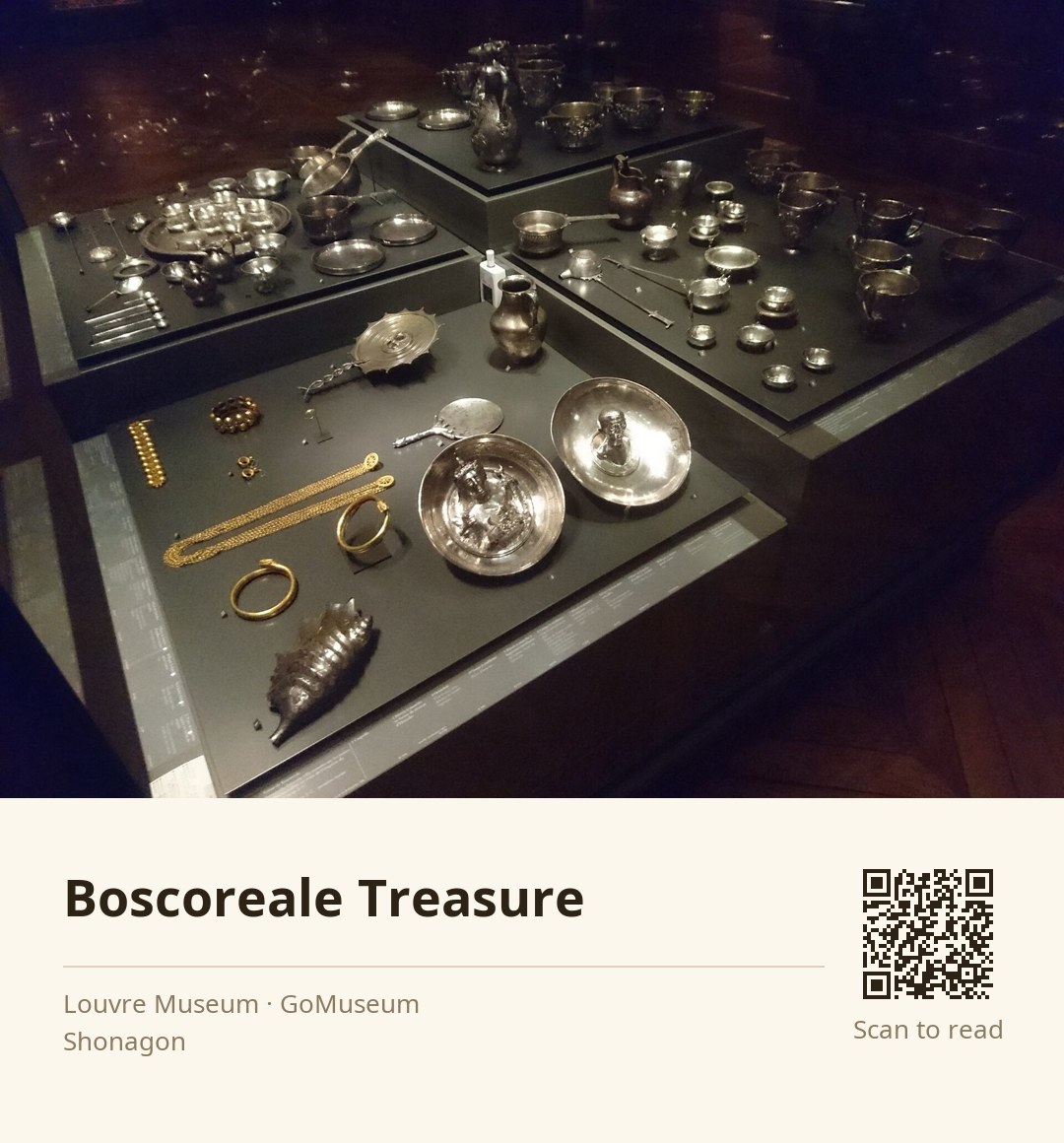
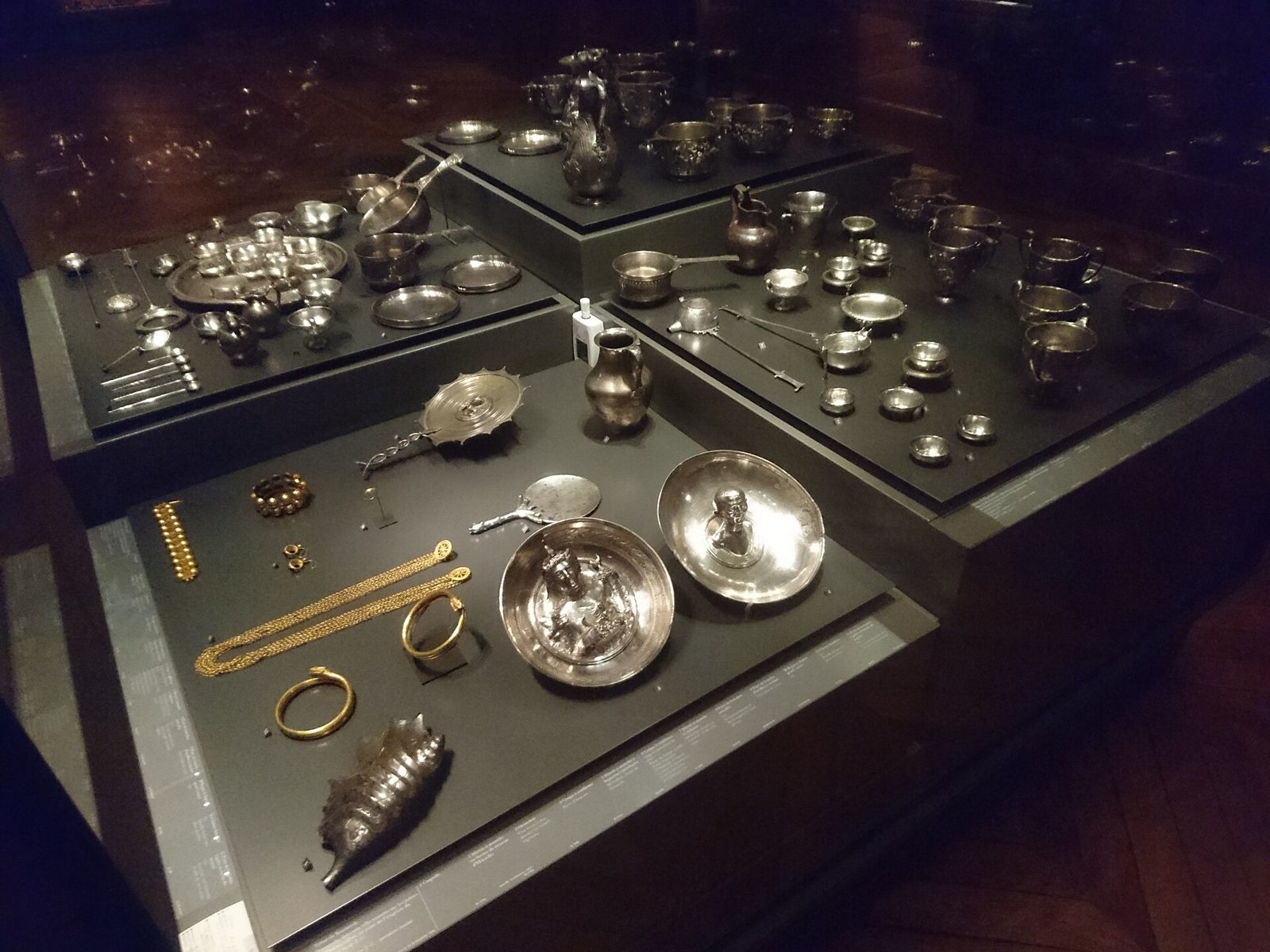
🎧 This work has audio narration — listen in the appTake a moment to really look at the Boscoreale Treasure. Imagine the glint of silver and gold, once carefully hidden away in a villa just before disaster struck. Notice the intricate designs on the silverware, especially the skyphos cups depicting powerful Roman emperors like Augustus and Tiberius. These aren’t just beautiful objects; they tell stories of triumph and authority, showcasing the artistry of Roman craftsmanship.
Why do these details matter? Each piece is a glimpse into the lives of the elite, revealing not just their wealth but their cultural values and the significance of their lineage. The name “Maxima” inscribed on some items hints at a personal connection, perhaps a woman who once cherished these treasures, now lost to time.
Discovered in the ruins of the Villa della Pisanella, this treasure was buried under volcanic ash during the eruption of Mount Vesuvius in 79 AD. It’s believed that these items were hidden away, a desperate attempt to save them from destruction.
As you stand here, think about the lives intertwined with these objects. What stories do you imagine they could tell if they could speak?
The Boscoreale Treasure was unearthed in 1895, but its story begins long before that, in the grandeur of a Roman villa buried by the catastrophic eruption of Mount Vesuvius in 79 AD. This villa, known as the Villa della Pisanella, was a rich estate located near Pompeii. Archaeologists discovered it during excavations that started in 1894, revealing a sprawling complex of residential and agricultural buildings. On April 13, 1895, a vaulted box was found in the villa's wine-pressing room, containing an astonishing collection of silverware and coins. This treasure, consisting of 109 silver pieces and a leather bag filled with gold coins, was likely hidden away by its owner, possibly a woman named Maxima, in a desperate bid to save it from the impending disaster. The items were sold off to European collectors shortly after their discovery, with Baron Edmond de Rothschild acquiring a significant portion and donating it to the Louvre in 1896. Interestingly, the Italian government had the first right of refusal but deemed the asking price too high, allowing the treasure to leave the country.
One intriguing detail about the Boscoreale Treasure is the presence of two silver cups decorated with skeletons. These cups not only showcase the artistic skill of the time but also reflect a fascinating blend of humor and mortality, depicting the skeletons of famous poets and philosophers. This unusual choice of decoration invites us to ponder the cultural attitudes towards death and legacy in ancient Rome, making these cups a striking conversation piece among the collection.
The name 'Maxima' suggests a personal connection to the treasure, possibly indicating that it belonged to a woman who cherished these items. This adds a layer of human interest to the story, hinting at the lives of those who owned and used these exquisite pieces.
Two silver cups in the treasure are uniquely decorated with skeletons of famous poets and philosophers, blending humor with themes of mortality. This choice of decoration reflects the cultural attitudes of ancient Rome towards death and legacy, making these cups particularly intriguing.