Portrait of Madame Marcotte de Sainte-Marie
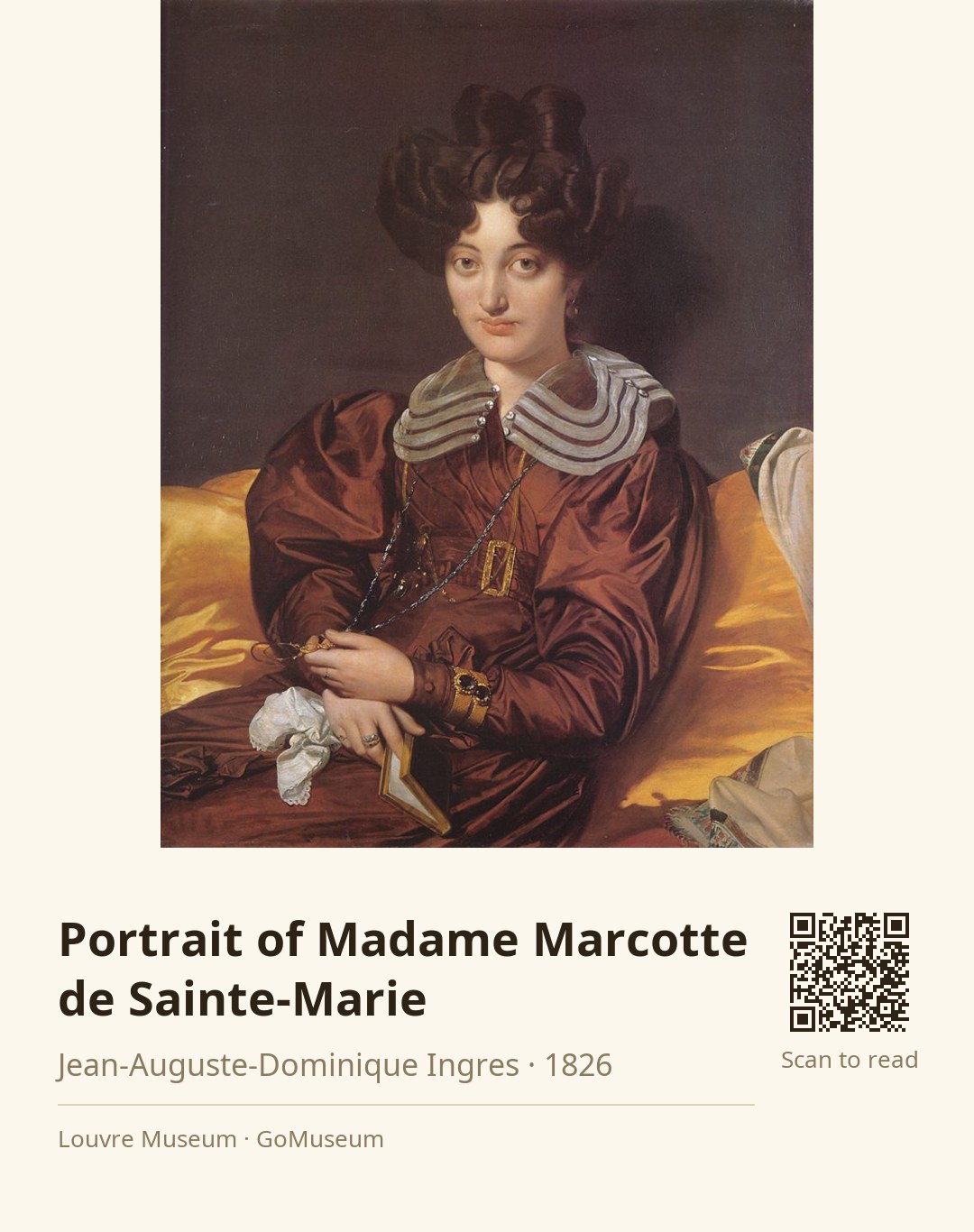
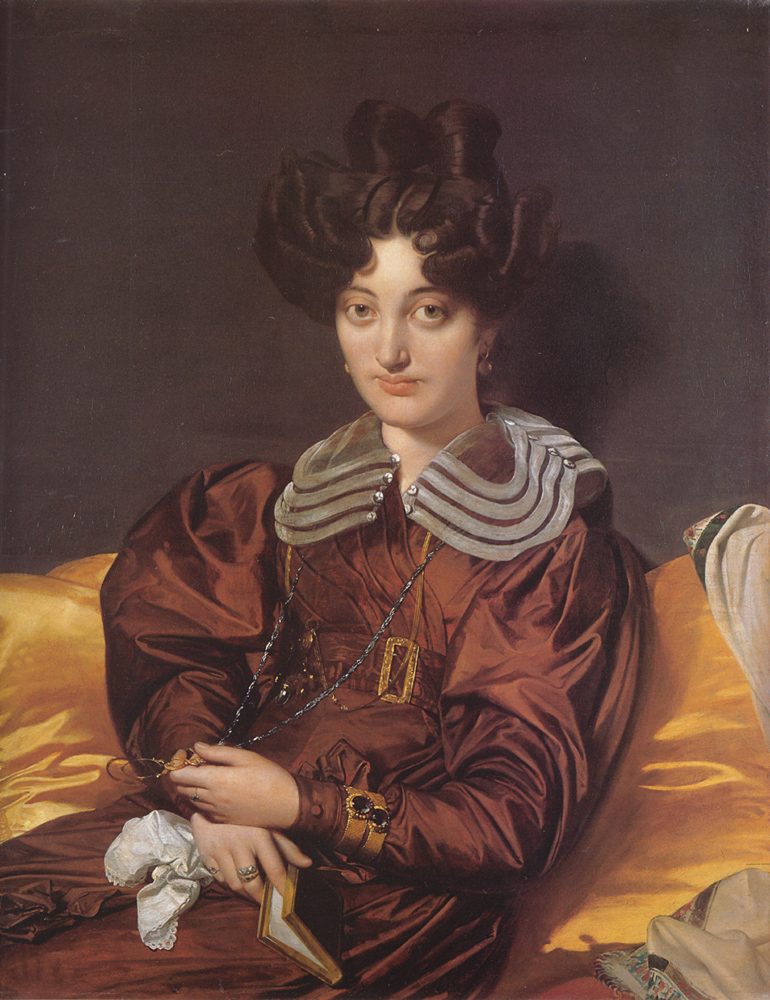
🎧 This work has audio narration — listen in the appTake a moment to really look at the Portrait of Madame Marcotte de Sainte-Marie. Notice how Ingres captures the delicate fabric of her dress, the way it seems to shimmer under the light, almost as if it’s alive. And look at her gaze—direct and confident, yet with a hint of mystery.
These details matter because they reveal Ingres's mastery of texture and form, showcasing his ability to breathe life into his subjects. The intricate folds of her gown not only reflect the fashion of the time but also symbolize her social status and the elegance of the early 19th century. Her expression invites you to ponder her thoughts, making you feel a connection with her, even centuries later.
This painting, created in 1826, is one of Ingres's earliest surviving portraits, painted shortly after he returned to Paris from Rome. It’s a significant work that marks his transition into the world of portraiture, a genre he would become renowned for, despite his initial aspirations to be a history painter.
As you stand here, consider what stories Madame Marcotte might have held. What do you think she was feeling in that moment? What secrets might her gaze reveal?
Jean-Auguste-Dominique Ingres was a pivotal figure in French Neoclassicism, born on August 29, 1780, in Montauban. He was the son of a versatile artist, which nurtured his early artistic inclinations. Ingres studied under Jacques-Louis David in Paris, where he developed a commitment to academic traditions, aspiring to elevate history painting above all genres. His early career was marked by struggles, as critics dismissed his style as archaic, yet he persevered, achieving recognition with works like "The Vow of Louis XIII" in 1824.
His portraits, characterized by expressive distortions, became his most celebrated contributions, influencing modern artists such as Matisse and Picasso. Ingres's time in Italy, from 1806 to 1824, was crucial; he immersed himself in the study of Renaissance masters, which shaped his distinctive style. Despite facing criticism for his meticulous approach, he remained steadfast in his vision of beauty, emphasizing drawing over color.
Later in life, he returned to Paris, where he continued to create significant works, including "The Turkish Bath." Ingres's legacy endures as a bridge between classical traditions and modern art, embodying the tension between adherence to established norms and the evolving landscape of artistic expression. He passed away on January 14, 1867, leaving behind a profound impact on the art world.
The Portrait of Madame Marcotte de Sainte-Marie was painted in 1826 by Jean-Auguste-Dominique Ingres, a pivotal moment in his artistic journey. This piece was commissioned by Suzanne Clarisse de Salvaing de Boissieu, who was the wife of Marin Marcotte de Sainte-Marie. Ingres exhibited this portrait at the Paris Salon in 1827, where it garnered attention as one of his earliest surviving works in the genre of portraiture. Its reception marked a significant step in Ingres's career, as he transitioned from aspiring history painter to a recognized portrait artist. After Suzanne's passing, the painting remained in her family, eventually passing to her son Henri in 1862 and then to his children in 1916. It wasn't until 1923 that the Louvre acquired it through the art collector David David-Weill, where it now resides, continuing to captivate viewers with its elegance and depth.
As you gaze at the Portrait of Madame Marcotte de Sainte-Marie, take a moment to appreciate Ingres's meticulous brushwork. The way he layers paint creates a shimmering effect on the fabric of her gown, almost as if it's alive. Notice the delicate interplay of light and shadow; Ingres expertly uses chiaroscuro to give depth and dimension to her figure. The composition is structured with a careful balance, drawing your eye to her confident gaze while the intricate folds of her dress cascade around her. The scale of the painting allows for a close examination of details, from the subtle highlights on the fabric to the nuanced expressions on her face. Each brushstroke feels intentional, revealing Ingres's dedication to capturing not just the likeness of his subject, but her essence.
This painting not only reflects Ingres' return to Paris after his formative years in Rome but also marks a significant moment in his career, as it was one of the few portraits of women he created during this period. Ingres' meticulous attention to detail and his ability to capture the essence of his subjects influenced generations of artists, paving the way for modern portraiture. His expressive distortions of form and space would later resonate with the likes of Matisse and Picasso, making this work a crucial link in the chain of art history.
A curious tidbit about the Portrait of Madame Marcotte de Sainte-Marie is that Ingres created several studies for this work, which are now housed in the Louvre and a gallery in Montauban. These preparatory sketches reveal his process and the evolution of his ideas before he committed them to the canvas, showcasing the artist's dedication to perfecting his vision.
This painting is notable as one of the few portraits of women that Ingres produced shortly after returning to Paris from Rome, marking a significant moment in his transition from aspiring history painter to a recognized portrait artist.
After Suzanne Marcotte de Sainte-Marie passed away, the painting remained in her family, being inherited by her son Henri in 1862 and then passed down to his children in 1916 before it was acquired by the Louvre in 1923.
Ingres created several preparatory studies for the Portrait of Madame Marcotte, which are now housed in the Louvre and a gallery in Montauban, providing insight into his artistic process and the evolution of his ideas before finalizing the painting.