Helena Fourment with a Carriage
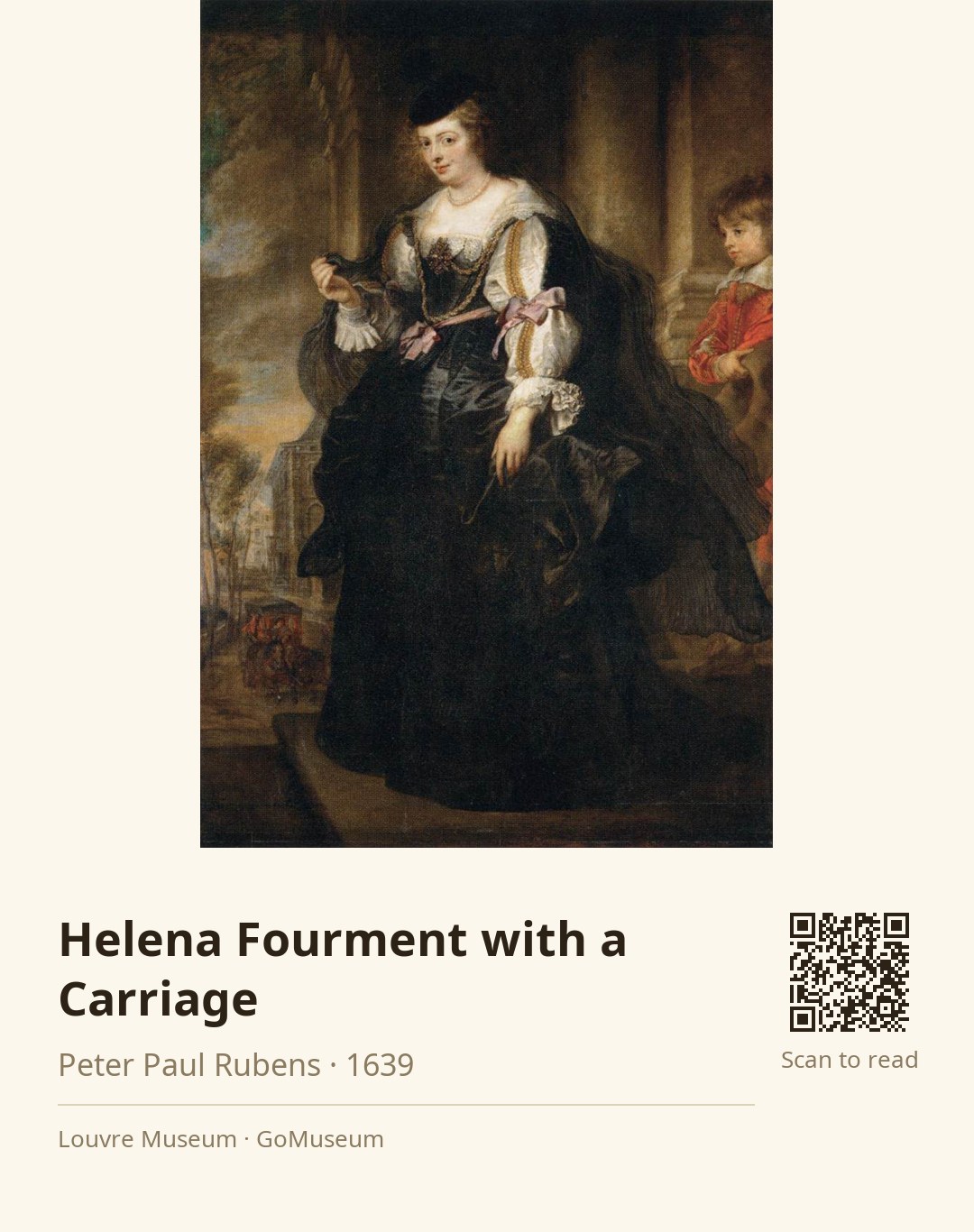
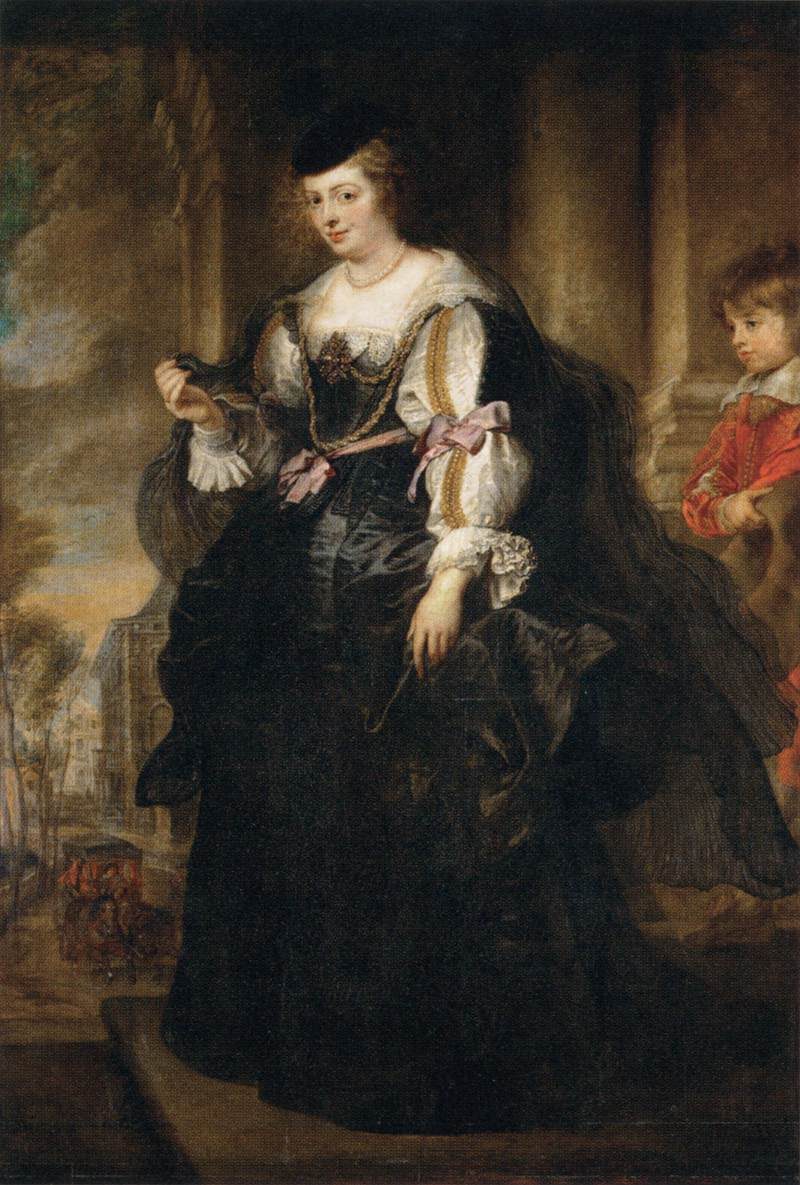
🎧 This work has audio narration — listen in the appTake a moment to really look at "Helena Fourment with a Carriage." Notice how the vibrant colors leap off the canvas, especially the rich black satin of Helena's gown contrasted against the bright red of her son Frans's outfit. This striking color play isn’t just for show; it highlights the wealth and status of the family during a time when such attire signified nobility.
Now, consider the scene: Helena is stepping out of a grand palace, the carriage approaching with a sense of urgency. This isn’t just a moment captured in time; it reflects the dynamic life of the 17th-century elite. Rubens, known for his dramatic compositions, uses this movement to suggest a narrative—perhaps a journey or an important event about to unfold.
Painted in 1639, this portrait of Rubens's second wife captures not only her beauty but also the intimate bond between mother and child, a theme that resonates deeply in his work. It’s a glimpse into their life, showcasing the love and familial connection that transcends time.
As you take in this artwork, think about the stories it could tell. What do you imagine Helena and Frans were discussing as they prepared to leave the palace?
Sir Peter Paul Rubens was a Flemish artist and diplomat born on June 28, 1577, in Siegen, Germany. He is celebrated as a leading figure of the Flemish Baroque tradition, renowned for his dynamic compositions that intertwine classical and Christian themes. Rubens's work is characterized by vibrant color, movement, and sensuality, aligning with the dramatic style of the Counter-Reformation. His prolific output includes altarpieces, portraits, landscapes, and history paintings, with a catalog of over 1,400 works.
Raised in Antwerp after fleeing religious persecution, Rubens was a well-educated humanist and skilled diplomat, knighted by both Philip IV of Spain and Charles I of England. He managed a large workshop that produced art for European nobility and collectors, and he was also an influential art dealer. Rubens's designs extended beyond painting; he created tapestries, prints, and even contributed to architectural projects.
His legacy endures in the art world, where he is recognized for his mastery of color and form, and his ability to convey emotion and drama. Rubens's impact on Baroque art is profound, making him a pivotal figure in the evolution of Western art history. He passed away on May 30, 1640, leaving behind a rich artistic heritage that continues to inspire.
The painting 'Helena Fourment with a Carriage' was created by Peter Paul Rubens in 1639, during a vibrant period of his life. Commissioned possibly by the city of Brussels, it was gifted to John Churchill, the 1st Duke of Marlborough, in 1706. For much of the 18th century, it resided in Blenheim Palace, a fitting home for such a prestigious work. In 1884, it entered the collection of Alphonse de Rothschild in Paris, where it remained until 1977 when it was transferred to the French state as part of an inheritance tax settlement. Today, it proudly resides in the Louvre Museum, a testament to its enduring appeal and significance in art history.
The brushwork feels both dynamic and fluid, capturing the essence of movement as Helena steps out of the palace. Notice how the rich black satin of her gown contrasts with the vibrant red of her son Frans's outfit, a choice that not only highlights their status but also creates a visual dialogue between the figures. The composition is structured to draw your eye from the foreground, where the characters stand, to the carriage approaching in the background, creating a sense of urgency. The use of light is particularly striking; it bathes Helena in a soft glow, emphasizing her beauty and the intimate bond with her child. This interplay of color, light, and movement is what gives the painting its emotional depth.
This painting reflects the artist's shift towards intimate portrayals, influencing countless portraitists who followed. By capturing his wife and son in such a dynamic composition, Rubens challenged the conventions of static portraiture, inviting viewers to feel the warmth of familial bonds. This work not only solidified his legacy as a master of movement and color but also set a precedent for future artists to explore the interplay of personal life and artistic expression, making it a pivotal moment in the evolution of portrait painting.
Did you know that this painting, 'Helena Fourment with a Carriage,' was gifted to John Churchill, the 1st Duke of Marlborough, in 1706? It’s fascinating to think that a piece of art like this, created in 1639, made its way into the hands of such a prominent figure in British history. Imagine the conversations it must have witnessed at Blenheim Palace, where it resided for over a century before eventually becoming part of the Louvre's collection in 1977. This painting has traveled through time and history, connecting different eras and cultures.
This portrait not only showcases his second wife, Helena, but also symbolizes the intimacy of their family life, as it captures a moment shared with their son, Frans, highlighting Rubens's role as a devoted husband and father.
After being gifted to John Churchill, 1st Duke of Marlborough, it spent much of the 18th century at Blenheim Palace before entering the collection of Alphonse de Rothschild in Paris, illustrating its esteemed status and the high-profile ownership it garnered over the years.