Nymph and Satyr
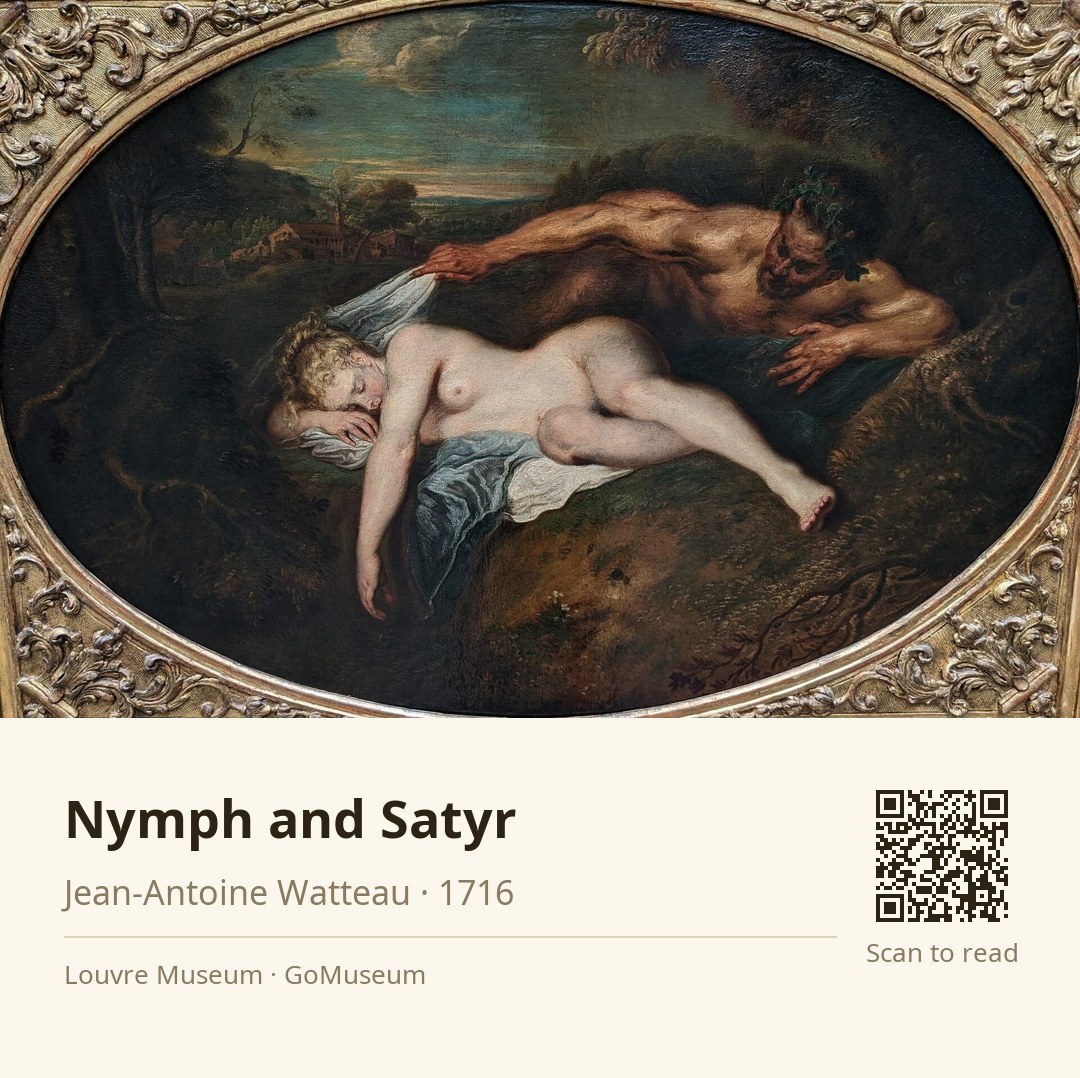
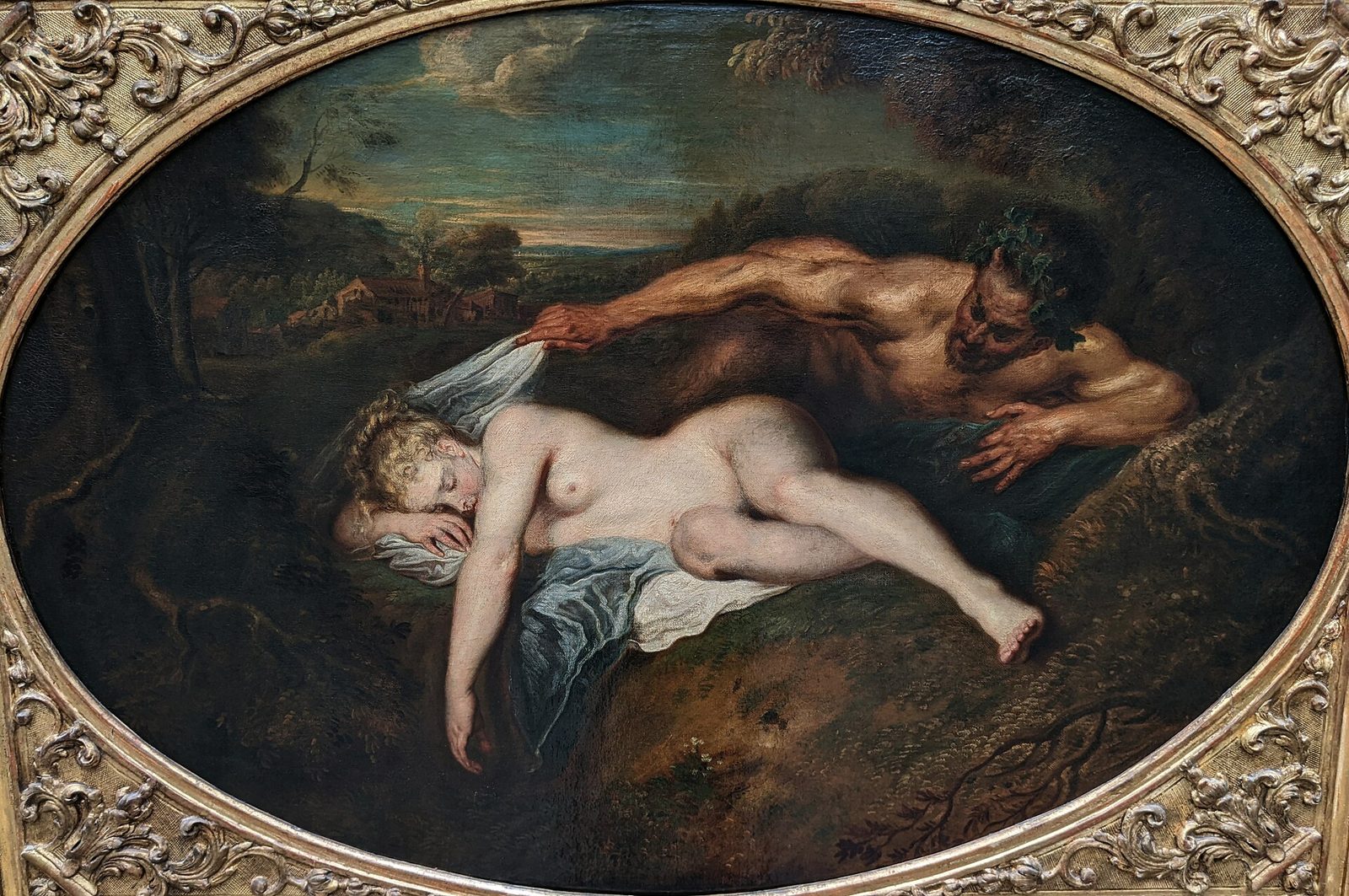
🎧 This work has audio narration — listen in the appTake a moment to really look at "Nymph and Satyr." Notice how the soft, pale colors of the sleeping nymph, Antiope, stand out against the darker, earthy tones surrounding her. Her delicate form seems almost ethereal, while the satyr, with his muscular body and grapevine crown, looms over her with a palpable intensity.
These contrasting details matter because they highlight the tension between innocence and desire. Watteau captures a moment of vulnerability, where the beauty of the nymph is juxtaposed with the satyr's lustful gaze, inviting us to ponder the complexities of attraction and power in mythology.
This piece, originally intended for a doorway, draws you into a world of myth and emotion, where every brushstroke tells a story.
As you stand here, think about the myths that have shaped our understanding of love and desire. What emotions does this scene evoke for you?
Jean-Antoine Watteau, born in Valenciennes in 1684, was a pivotal French painter whose brief but impactful career transformed the Baroque style into the more playful Rococo. He is renowned for pioneering the genre of fêtes galantes, which depicted charming, idyllic scenes infused with theatricality, often inspired by the commedia dell'arte. Watteau's early life was marked by a tumultuous family environment, which likely influenced his introspective nature and artistic sensibilities.
After moving to Paris in 1702, he honed his skills under various influences, notably Claude Gillot and Claude Audran III, before establishing his unique style characterized by vibrant colors and fluid movement. His masterpieces, including "Pilgrimage to Cythera" and "Pierrot," reflect his fascination with love and leisure, capturing the essence of 18th-century French society.
Despite his struggles for recognition, Watteau achieved success during his lifetime, becoming a full member of the Académie Royale in 1717. His legacy endures through his extensive body of work, which continues to inspire artists and collectors alike, solidifying his place in art history as a master of color and emotion. Watteau passed away in 1721, leaving behind a rich artistic heritage that would influence generations to come.
It was intended to be placed over a doorway, a common practice at the time for artworks that were meant to be both decorative and narrative. After Crozat's death, the painting found its way into the collection of Louis La Caze, who bequeathed it to the Musée du Louvre in 1869. Its reception was mixed initially, as it straddled the line between mythological representation and the emerging Rococo style, which favored playful and sensual themes. Today, it hangs in the Louvre, where it continues to draw attention for its intricate interplay of light and shadow, and the tension between its characters.
Notice how the soft, pale hues of Antiope's skin contrast sharply with the darker, earthy tones of the satyr. This contrast not only highlights the nymph's ethereal beauty but also emphasizes the satyr's more primal, shadowy presence. The oval shape of the painting creates a sense of intimacy, drawing the viewer's eye into the scene. The composition is carefully structured; Antiope's body forms a horizontal line, while her bent legs and the satyr's propped-up position create a dynamic verticality. This interplay of shapes, along with the gentle curves of their bodies, invites the viewer to explore the emotional tension between innocence and desire, making the scene feel alive and charged.
This context is fascinating because it suggests that Watteau was not only focused on creating a standalone artwork but also on how it would interact with the space around it, inviting viewers to engage with the scene as they entered a room. This practical function adds another layer to our understanding of the work, highlighting how art was often integrated into daily life in the 18th century.
The oval shape of 'Nymph and Satyr' was not just a stylistic choice; it was intended to create a sense of intimacy, drawing viewers into the scene as if they were part of the moment being depicted. This shape also allows for a dynamic composition that enhances the emotional tension between the characters.
Watteau's upbringing in a family with a tumultuous background, including a father known for brawling, likely influenced his introspective nature and sensitivity, which are reflected in the emotional depth of his works. His early exposure to street performers and the commedia dell'arte also shaped his fascination with theatricality and human emotion.
Pierre Crozat was a significant patron and collector who provided Watteau with a supportive environment to flourish as an artist. Living in Crozat's residence allowed Watteau to immerse himself in a community of artists and access a wealth of artistic inspiration, including works by Rubens and Venetian masters.