The Countess del Carpio, Marquesa de La Solana
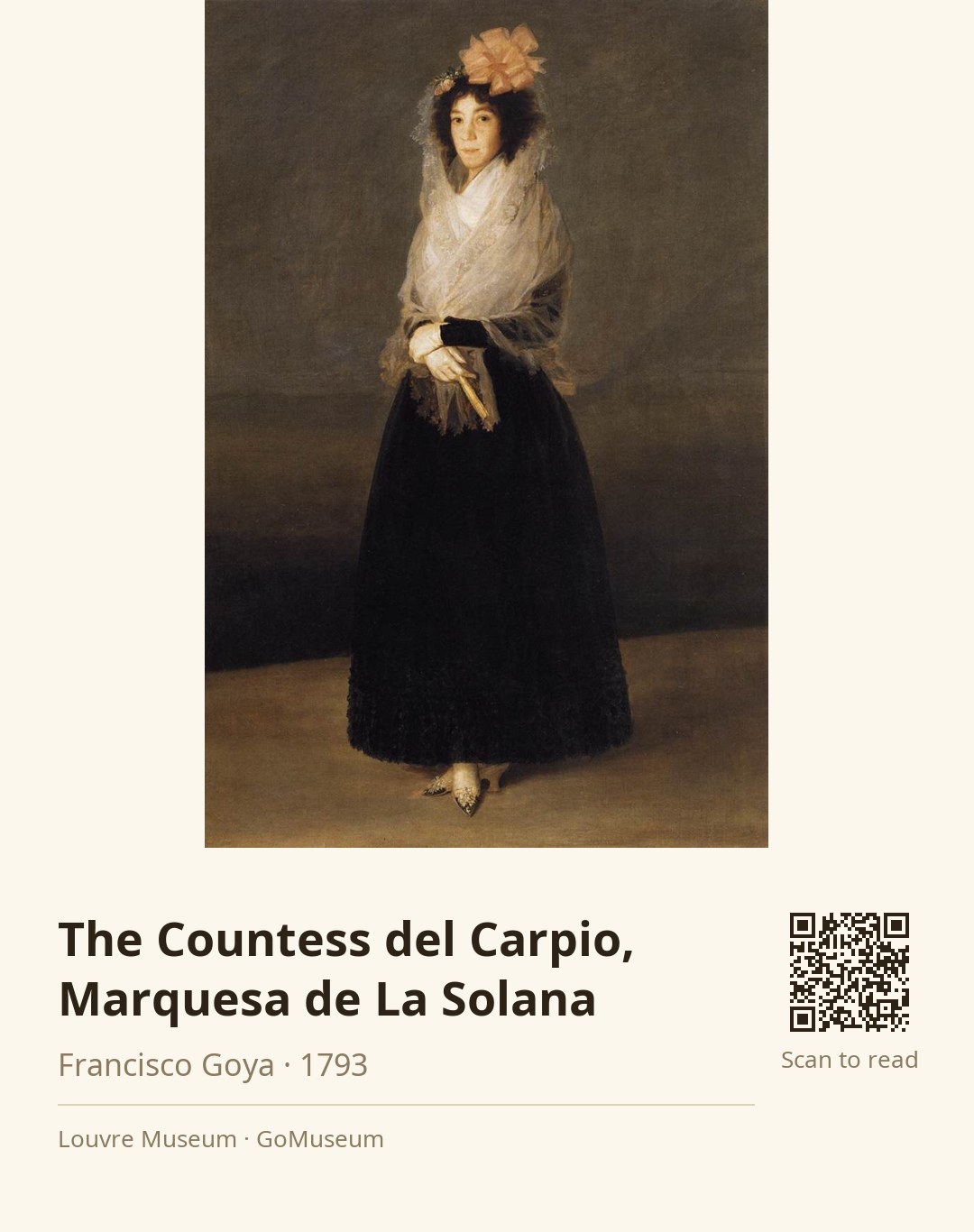
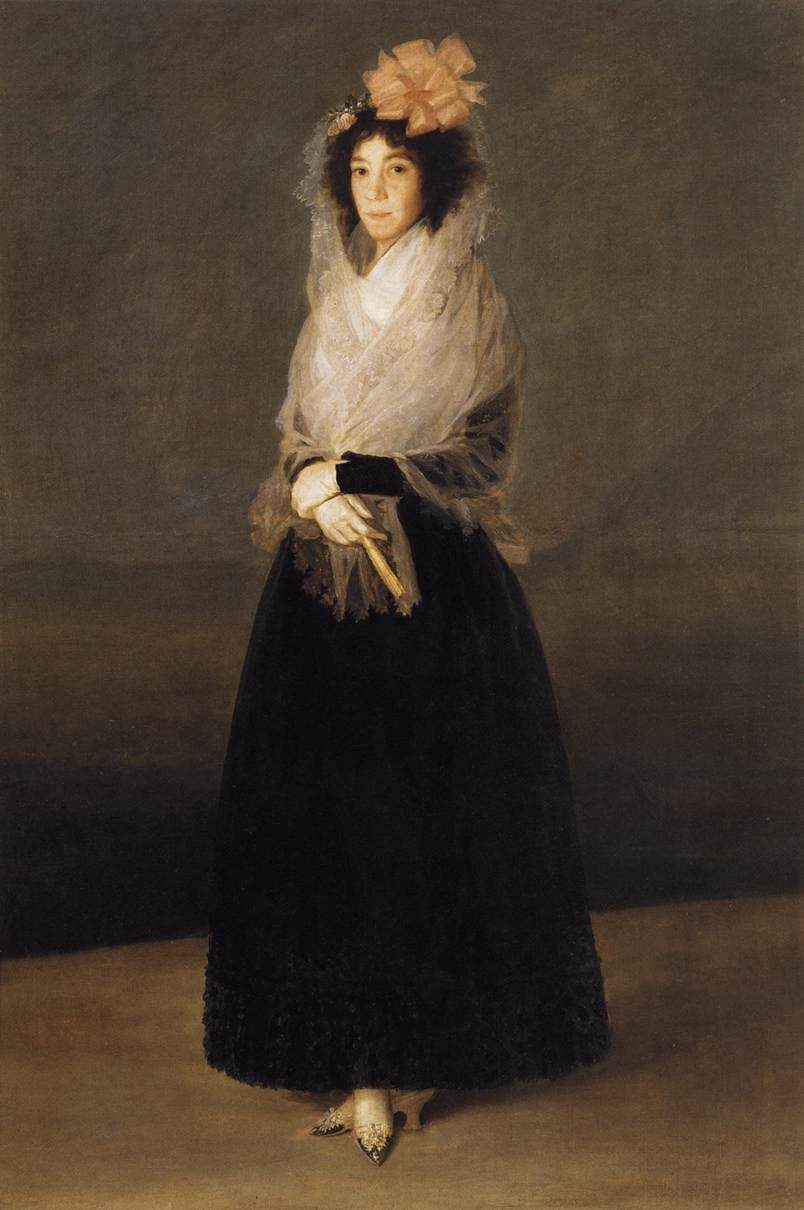
🎧 This work has audio narration — listen in the appTake a moment to really look at "The Countess del Carpio, Marquesa de La Solana" by Francisco Goya. Notice how the marquise stands confidently, draped in a delicate black dress, her pale face a striking contrast against the soft, neutral background. Her crossed hands and feet suggest a poised acceptance of her fate, while the fan in her right hand adds a touch of elegance.
These details matter because they reveal a profound interplay between beauty and mortality.
Goya, a close friend of the marquise, was already a celebrated artist among the Spanish elite, and this painting reflects the Enlightenment ideals they both shared.
As you stand here, consider what it means to confront mortality with grace. What thoughts does this evoke for you about the fleeting nature of life?
Francisco José de Goya y Lucientes, born on March 30, 1746, in Fuendetodos, Spain, emerged as a pivotal figure in the transition from the Old Masters to modern art. Goya's early life was marked by a middle-class upbringing, and he began his artistic education at the age of 14. His career flourished as he became a court painter, producing portraits of Spanish nobility and engaging with Rococo styles. However, a severe illness in 1793 left him deaf, profoundly impacting his artistic vision, leading to darker themes in his work.
Goya's later pieces, including the haunting "Disasters of War" series and the "Black Paintings," reflect his disillusionment with society and the tumult of his times, particularly during the Napoleonic Wars. His art often explored themes of madness, corruption, and the human condition, positioning him as a precursor to modern artistic movements. Goya's legacy endures as he is celebrated for his innovative techniques and profound emotional depth, influencing generations of artists and earning his place as a cornerstone of Western art history. He passed away in Bordeaux on April 16, 1828, leaving behind a body of work that continues to resonate.
The marquise, a close friend of Goya, was acutely aware of her declining health, believing she was nearing death due to illness. The painting was later donated to the Louvre in 1953 by Carlos de Beistegui, ensuring its preservation and continued appreciation. The reception of Goya's work during this period was marked by admiration, as he captured not just the likeness of his subjects but their essence, creating a silent dialogue that resonates with viewers even today.
Goya's technique in this portrait is masterful, characterized by a delicate interplay of light and shadow that enhances the marquise's pallor, hinting at her illness while simultaneously showcasing her dignity. Notice how the brushwork feels both confident and intimate, allowing the viewer to connect with her gaze. The neutral background, inspired by the tradition of Diego Velázquez, serves to isolate the figure, drawing your attention to her expression and posture. The composition is carefully structured, with her crossed hands and feet suggesting a poised acceptance of her fate. The fan in her hand adds a layer of elegance, while the soft, flowing lines of her dress contrast with the starkness of her condition, creating a tension that invites contemplation. Goya’s choice of color and light not only highlights her beauty but also evokes a sense of melancholy, making the viewer acutely aware of the fragility of life.
Painted in 1795, at a time when Goya was already a celebrated figure among the Spanish aristocracy, this work reflects the shift towards more personal and emotional portrayals in portraiture. The marquise's dignified yet vulnerable expression speaks volumes about her acceptance of mortality, a theme that resonates deeply in Goya's later, darker works. Remember this: Goya was not just painting a person; he was capturing the essence of a moment in time, blending personal narrative with broader social commentary, which would echo through the ages.
Did you know that the Marquise de la Solana, who sits elegantly in this portrait, was not just a subject but also a close friend of Goya? In fact, she was a writer and playwright, deeply involved in the liberal ideas of the Spanish Enlightenment. This painting was created when she was just 38 years old and already facing a terminal illness. Goya captured her poised dignity, even as she prepared for her impending death. It's a striking reminder of how art can immortalize not just appearances, but the very essence of a person's spirit in their final moments.
The portrait of the Marquise de La Solana has been appropriated by contemporary artists, such as Herman Braun-Vega, who reimagined her in a modern context, highlighting ongoing social issues like class disparity in Peru.