 Image: Unknown authorUnknown author · ArkéoTopia · ArkéoTopia · ArkéoTopia
Judgment of Paris
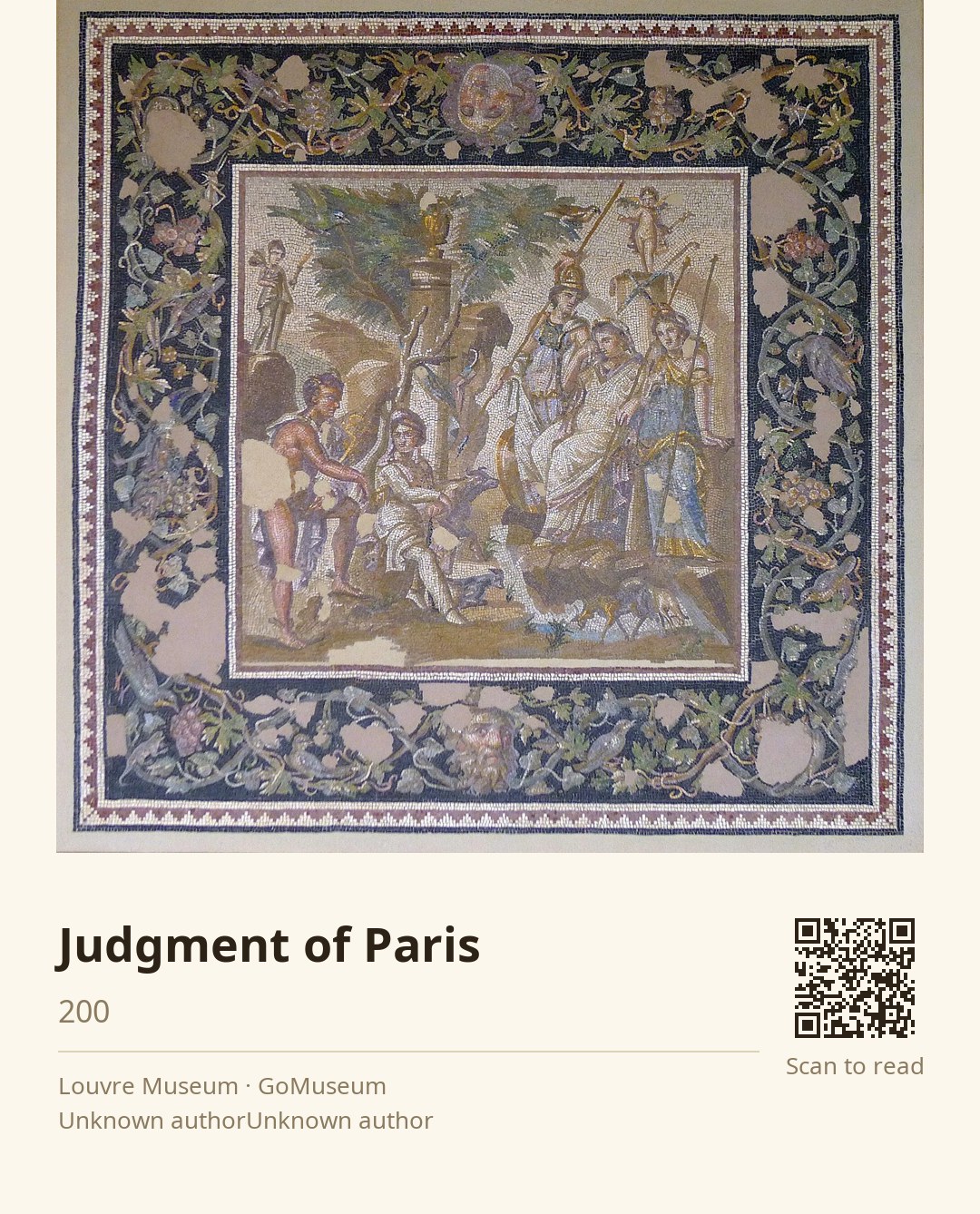
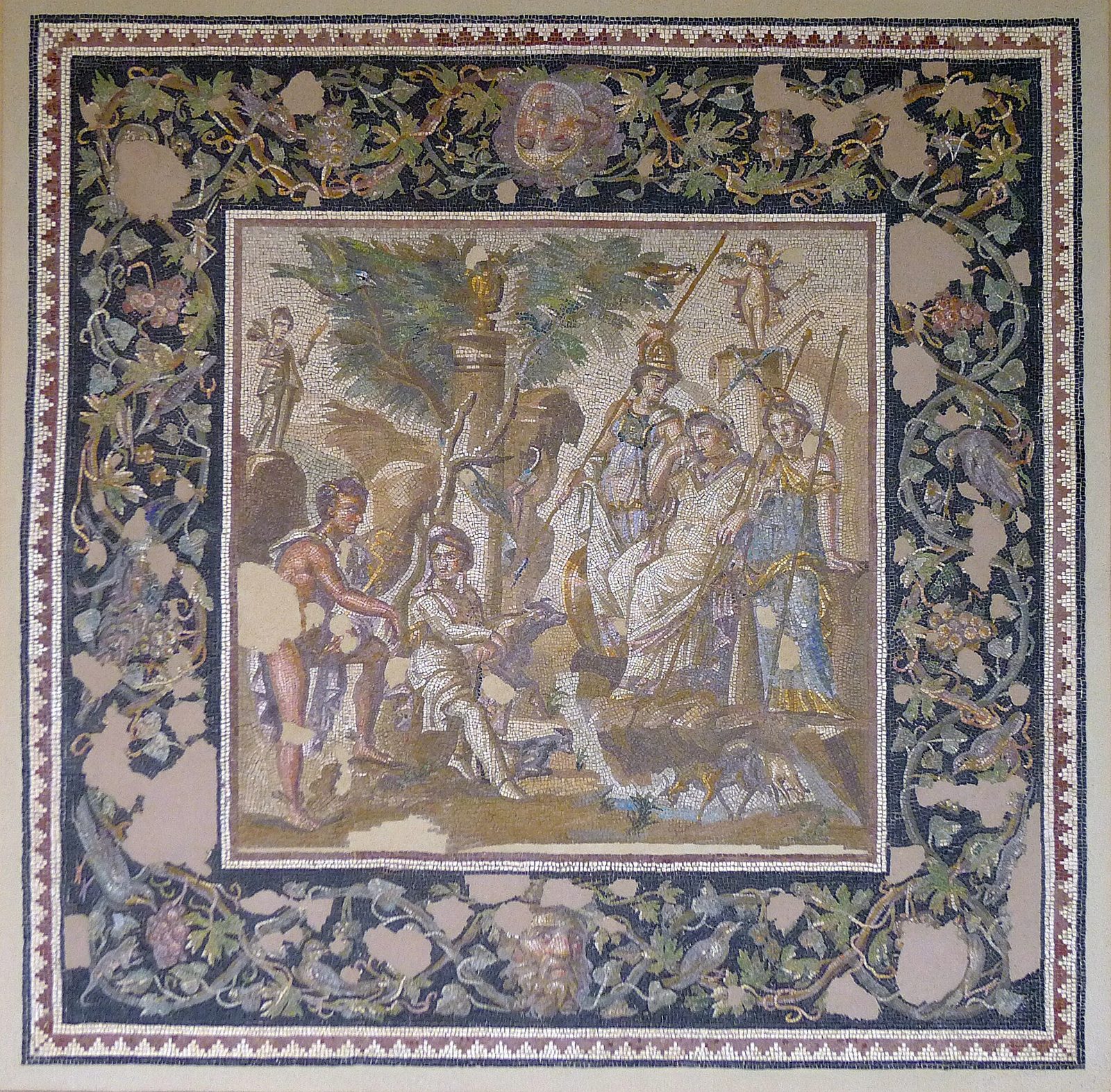
🎧 This work has audio narration — listen in the appTake a moment to really soak in the scene before you. This is the "Judgment of Paris," a stunning mosaic from the early second century, and it’s bursting with drama. Look closely at Paris, seated in the center, his expression caught between awe and uncertainty as he faces the three goddesses vying for his verdict. Notice how Hera, Athena, and Aphrodite are arranged to the right, each radiating their own unique allure.
Now, pay attention to the details—the way the light dances across their garments, creating a sense of movement and life. This interplay of light and shadow is not just for show; it adds depth and emotion, drawing you into the tension of the moment. The artist’s skill here invites you to feel the weight of Paris’s choice, a decision that would ultimately spark the legendary Trojan War.
Discovered in Antioch in 1932, this mosaic was once part of a grand dining room floor, a fitting backdrop for the weighty themes of beauty and desire that permeate ancient stories. It’s one of the few surviving examples of this popular theme, connecting you to a world where gods and mortals intertwined.
As you step back, consider this: What would you choose if you were in Paris’s shoes? Which goddess would capture your heart?
Take a closer look at the intricate craftsmanship of this mosaic. Notice how the colors shift and blend, almost as if the figures are alive, their garments flowing with movement. This wasn't just art; it was a labor of love, requiring immense skill and patience to achieve such detail.
Imagine this mosaic underfoot in a grand dining room, where guests gathered to feast and discuss the weighty matters of beauty and desire. It wasn’t merely decorative; it served as a conversation starter, a visual feast that engaged the senses while guests savored their meals. The themes depicted here would have resonated deeply with the diners, reflecting their own values and aspirations in a world where gods and mortals were intertwined.
This early second-century masterpiece showcases a popular mythological theme that resonated deeply with ancient audiences, influencing countless artists and storytellers. The way it captures the tension of beauty and choice among the goddesses Hera, Athena, and Aphrodite has inspired similar narratives in art and literature for centuries. Its intricate design and the impressionistic interplay of light and shadow, noted by archaeologist Doro Levi, set a standard for future mosaics and paintings, making it a cornerstone of decorative arts that continues to be studied and admired today.
While the theme was popular in ancient times, with many wall paintings found in places like Pompeii, the survival of such mosaics is rare. This particular piece not only showcases artistic skill but also offers a glimpse into the cultural conversations of its time, making it a true treasure of antiquity.
The floral pattern framing the mosaic prominently features vine leaves, which may symbolize fertility and abundance, adding a layer of meaning to the scene of beauty and desire.
The mosaic's location in a grand dining room suggests that such artworks were integral to the dining experience, serving not only as decoration but also as a catalyst for conversation about themes like beauty and desire among guests.
The inclusion of Hermes, who is often a messenger of the gods, and Eros, the god of love, indicates that the narrative of the mosaic extends beyond mere beauty, hinting at the deeper implications of love and choice in the context of the story.