 Image: Shonagon
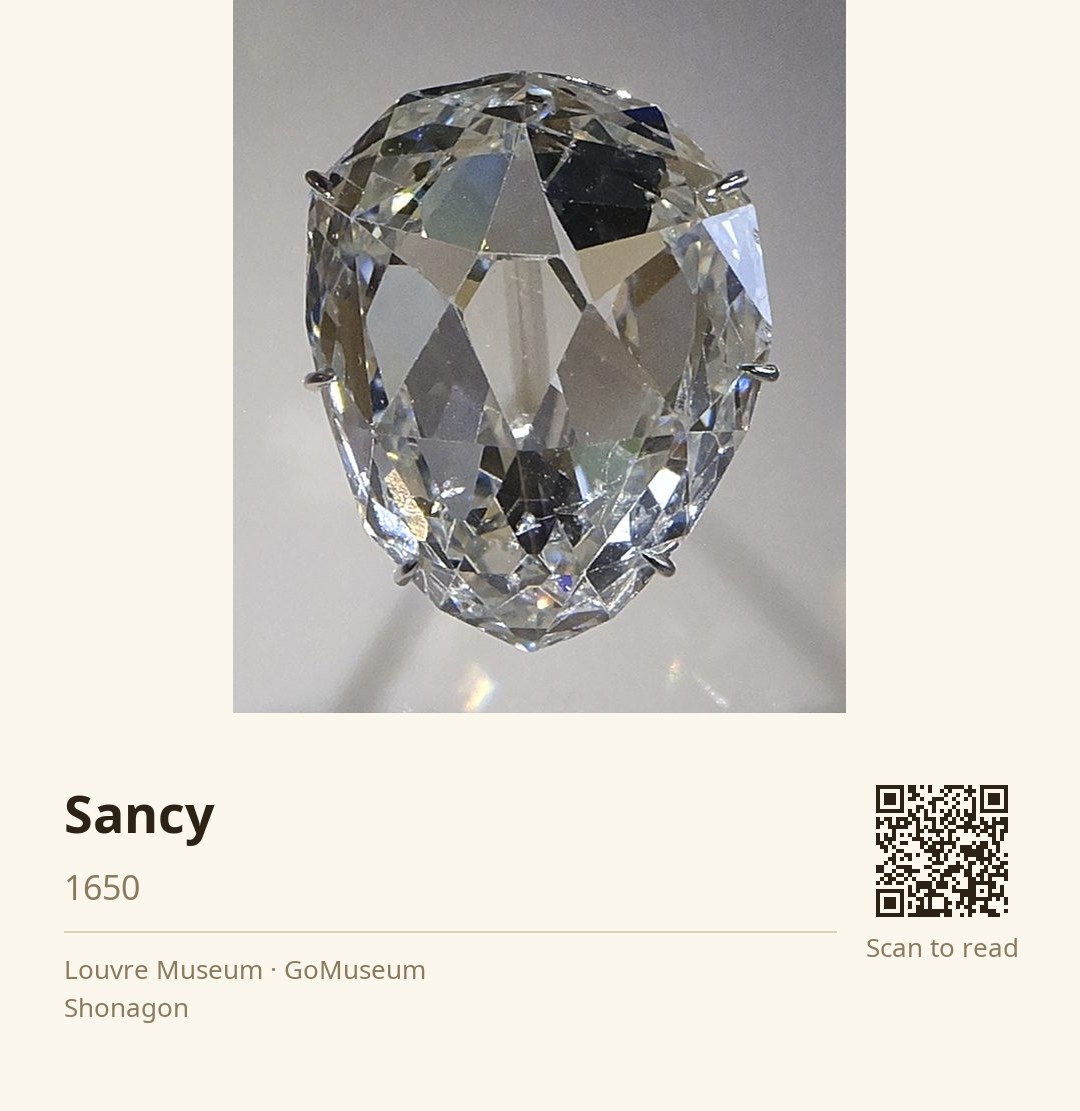
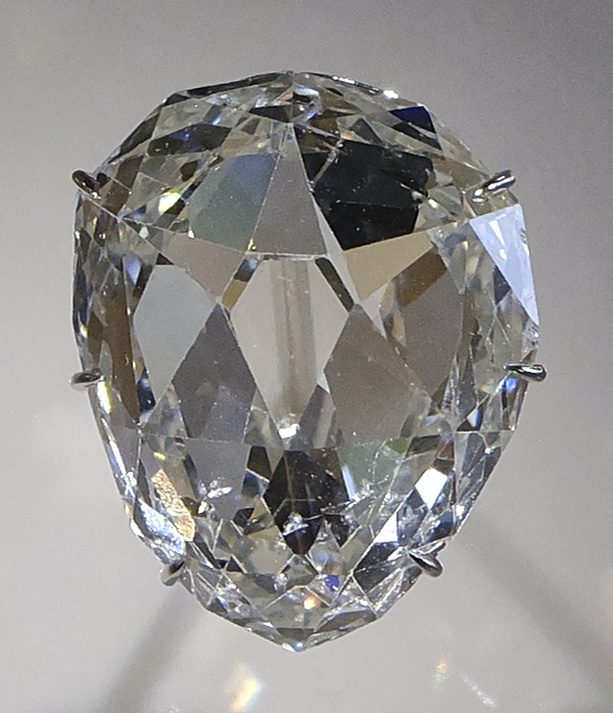
As you stand before the Sancy, let your eyes wander over its unique shield shape. Notice how it seems to shimmer with a pale yellow hue, unlike any diamond you’ve seen before. This isn’t just a pretty stone; it’s a piece of history, weighing in at 55.23 carats and boasting a cut that reflects its Indian origins, which was quite unusual for its time.
What’s fascinating is that the Sancy has traveled through the hands of royalty and nobility, from Mughal emperors to European kings. Each owner added to its story, but its journey is marked by intrigue and loss. For instance, it was once lost in battle by Charles the Bold, only to resurface in the courts of France and England, where it adorned the caps of kings trying to hide their baldness or served as collateral for armies.
This diamond was once part of the Crown Jewels, and its fate took a dramatic turn during the French Revolution when it vanished amidst the chaos. It’s a reminder of how treasures can slip through our fingers, much like the fleeting moments of power and wealth they represent.
So, as you gaze at the Sancy, think about the lives it has touched and the secrets it holds. What stories do you imagine it could tell if it could speak?
The Sancy diamond, originally known as the Balle de Flandres, has a storied history that stretches back to the late 14th century. It was part of the dowry of Valentina Visconti when she married Louis I, Duke of Orléans, in 1398. Over the years, its ownership changed hands through a series of dramatic events, including its loss by Charles the Bold during the Battle of Grandson in 1476. After this, it passed to King Manuel I of Portugal and eventually to Nicolas de Harlay, seigneur de Sancy, who became a prominent figure in the French court. The diamond was later sold to King James VI and I of England in 1605, where it was integrated into the Mirror of Great Britain. After a series of royal owners, including Charles I, it was sold to Cardinal Mazarin in 1657. The Sancy's fate took a turn during the French Revolution when it vanished from the royal treasury, only to resurface in the 19th century, changing hands multiple times before being acquired by William Waldorf Astor.
One intriguing anecdote involves Nicolas de Sancy's desperate search for a messenger who was believed to have stolen the diamond. After the messenger was found murdered, it was discovered that the Sancy had been swallowed whole, hidden within the man's stomach.
The Sancy diamond is unique in that it comprises two back-to-back crowns, lacking the typical pavilion found in most diamonds, which gives it a distinctive shield shape.
The diamond is believed to have been named after Nicolas de Harlay, seigneur de Sancy, who was a prominent figure in the French court and sold the diamond to King James VI and I of England in 1605.
Nicolas de Sancy once conducted a desperate search for a messenger who he believed had stolen the diamond, only to discover later that the messenger had been murdered and the diamond was found hidden in his stomach.