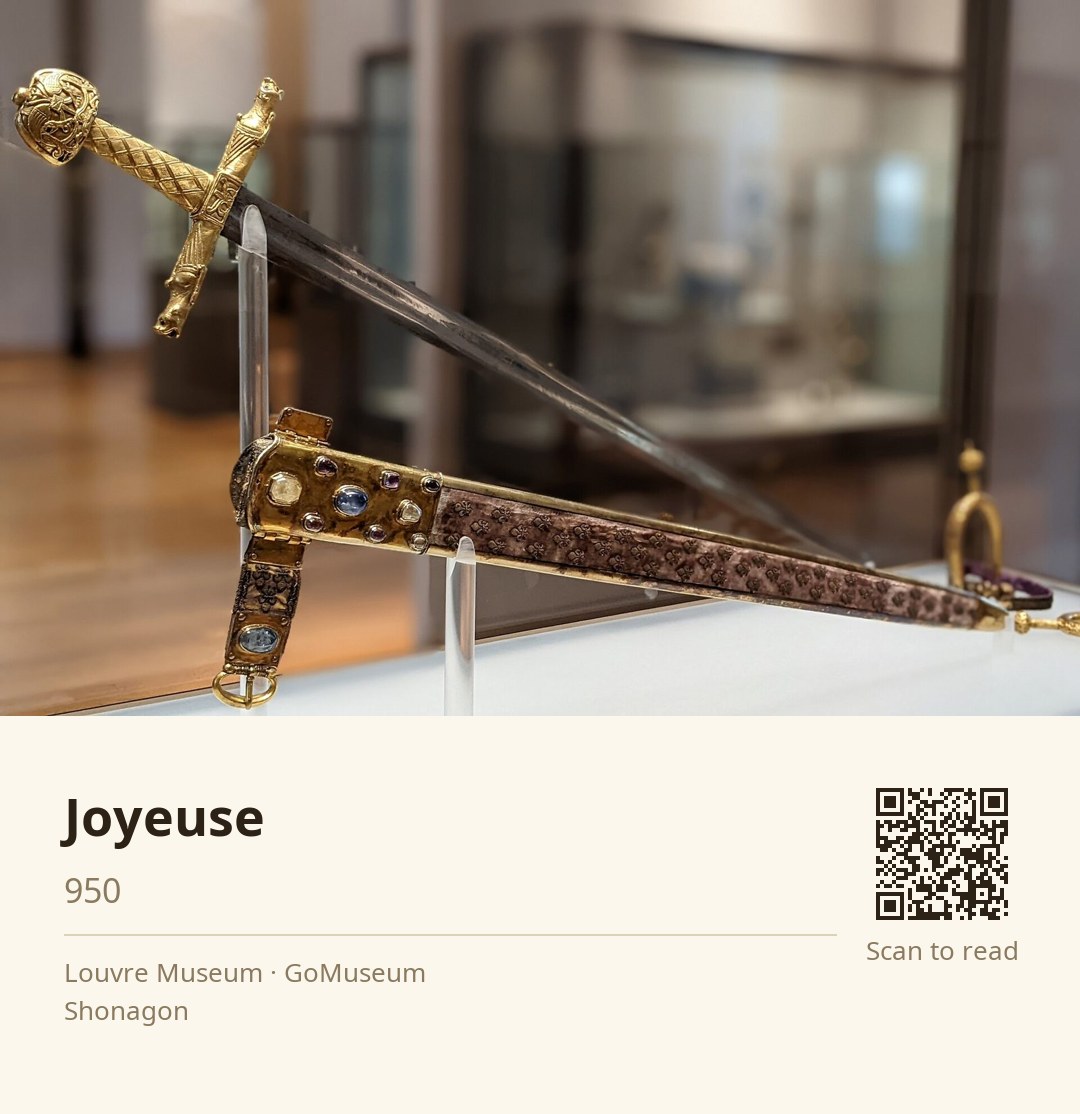
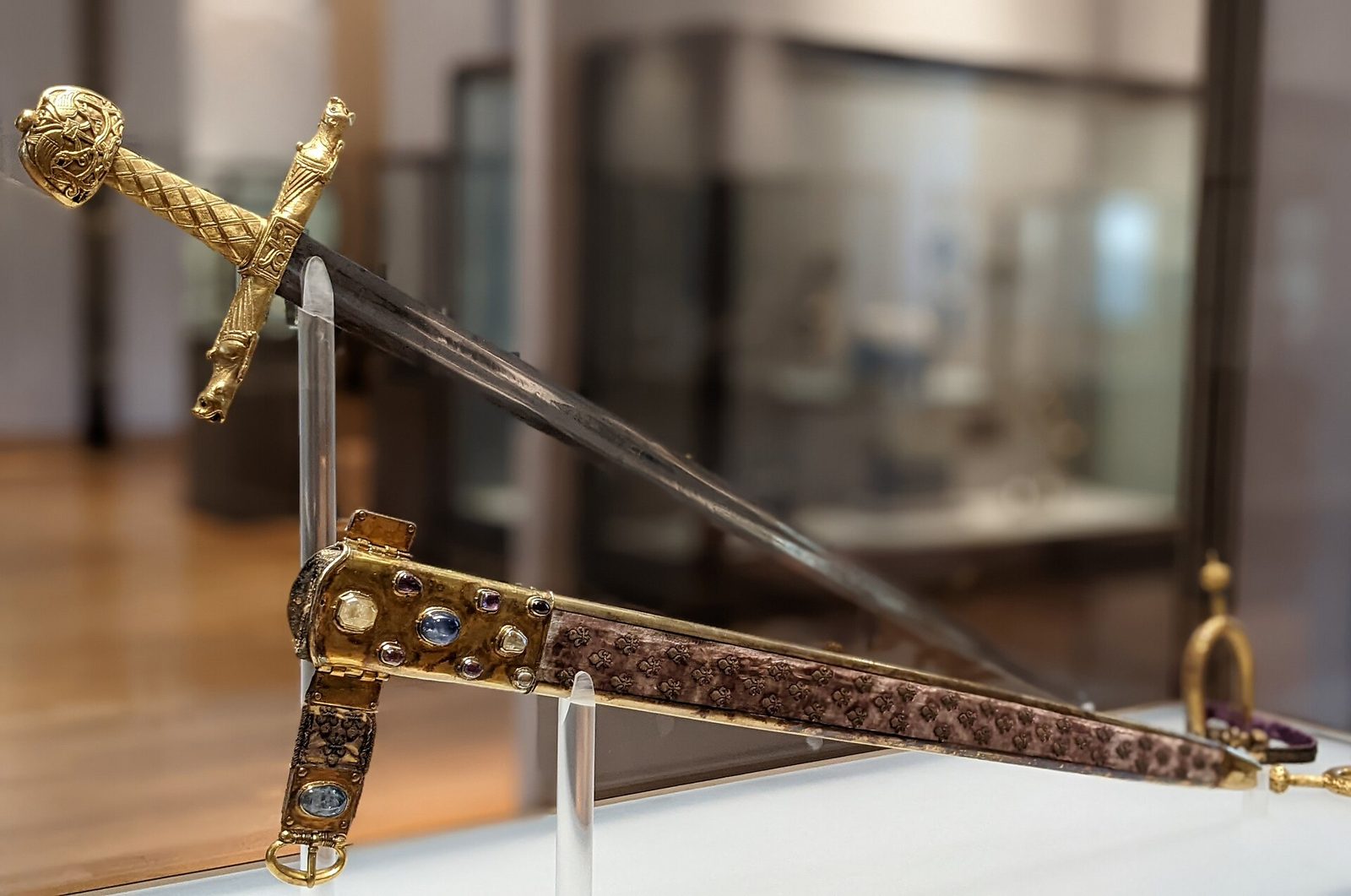
 Image: Shonagon
Take a moment to gaze at Joyeuse, the legendary sword of Charlemagne. Notice the intricate design of the hilt, adorned with motifs that evoke both power and grace. Look closely at the pommel—it's said to contain a fragment of the Holy Lance, a relic that not only gives the sword its name, meaning "joyous," but also imbues it with a sense of divine protection.
This detail is significant because it ties the sword to the very essence of Charlemagne’s reign, blending the sacred with the martial. The belief that this sword could cure blindness and inspire courage in battle reflects the medieval mindset, where faith and valor were intertwined.
Crafted around 950, Joyeuse is not just a weapon; it symbolizes the unity of the Frankish Empire and the divine right of kings. It was used in royal coronations, linking the past to the present in a tradition that continues to resonate today.
As you stand here, consider what it means for a sword to carry such weighty legends. How does the idea of a weapon infused with holiness shape your understanding of power and leadership?
Joyeuse, the legendary sword of Charlemagne, has a rich and complex history that intertwines myth and reality. The sword's hilt supposedly contains a fragment of the Holy Lance, which adds to its mystique. Joyeuse was used in French royal coronations starting in the 13th century, symbolizing the divine right of kings. It was believed to have been gifted to Charlemagne during his time in Spain, with various legends attributing its origin to different sources. The sword's journey through history includes its preservation in the Louvre, where it remains a testament to the intertwining of faith and power in medieval Europe.
Joyeuse is more than just a legendary sword; it represents the very essence of medieval power and authority. Wielded by Charlemagne, it became a symbol of kingship, influencing not only the narratives of chivalry and heroism in literature but also the ceremonial practices of French royalty. Used in coronation ceremonies since the 13th century, Joyeuse embodies the intertwining of myth and monarchy, serving as a tangible link between the past and the present. Its legacy is felt in the way it shaped the perception of kingship, where the sword was not just a weapon but a sacred relic, believed to carry the divine favor of the Holy Lance. Remember, every time a king was crowned, Joyeuse was there, a silent witness to the weight of history and the dreams of a nation.
One intriguing anecdote about Joyeuse is its connection to the city of Joyeuse in Ardèche, France. According to legend, the city was named after the sword itself.
According to legend, the city of Joyeuse in Ardèche was named after the sword itself. It is said that after Joyeuse was lost on a battlefield, a lieutenant of Charlemagne found it and was granted a fief, which he named Joyeuse in gratitude.
Joyeuse was used in French royal coronations starting in the 13th century, symbolizing the divine right of kings. Notably, Napoleon Bonaparte had the sword modified for his own coronation in 1804, showcasing its enduring significance in French history.
Various legends suggest that Joyeuse was crafted by Galant (Wayland Smith) or gifted to Charlemagne by the Emperor of Constantinople. Additionally, some tales claim that Charlemagne received the sword from King Galafre of Toledo, with differing accounts on its name and origins across medieval literature.