 Image: 三猎 · Darafsh · Darafsh · Unknown authorUnknown author
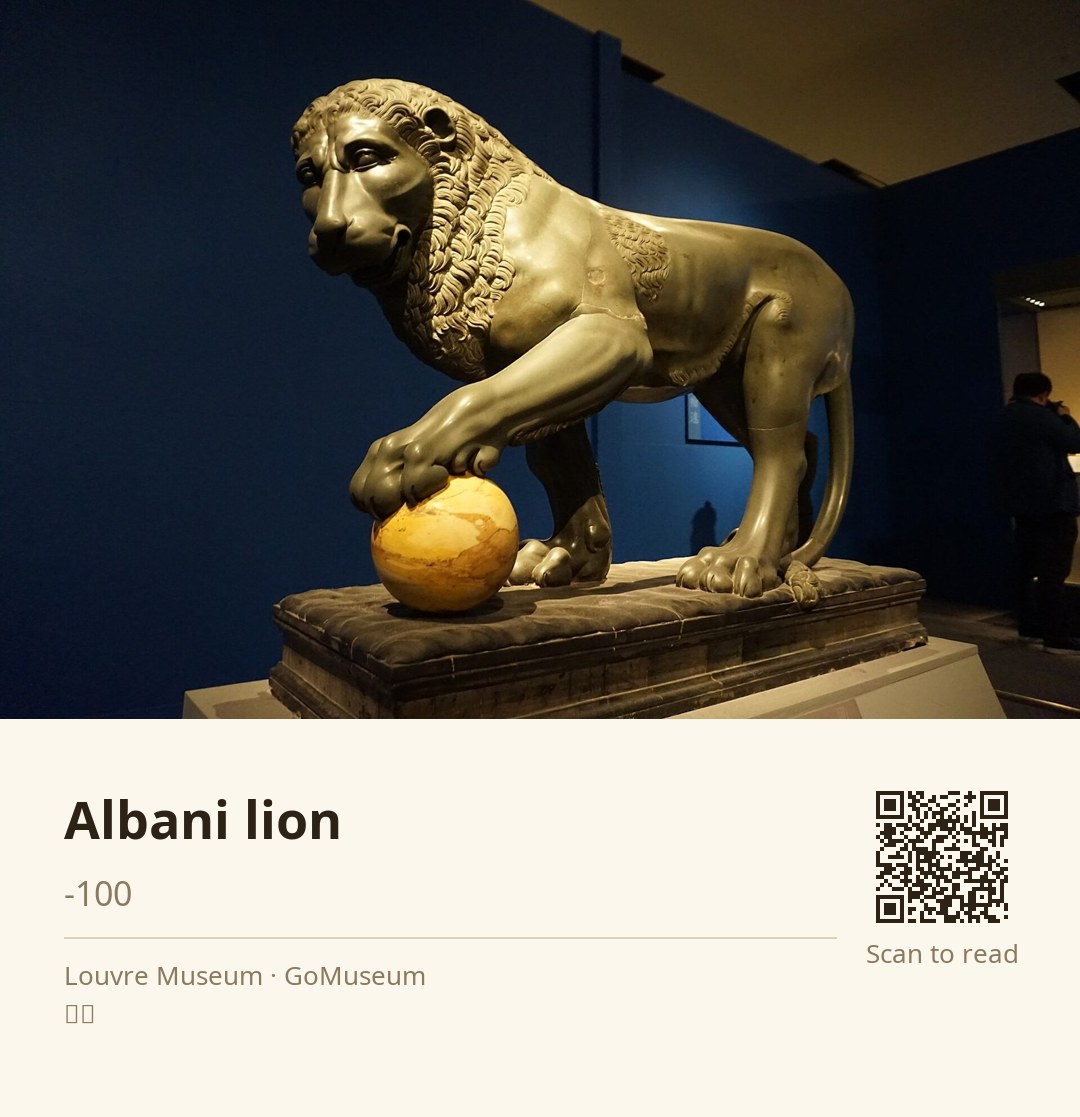
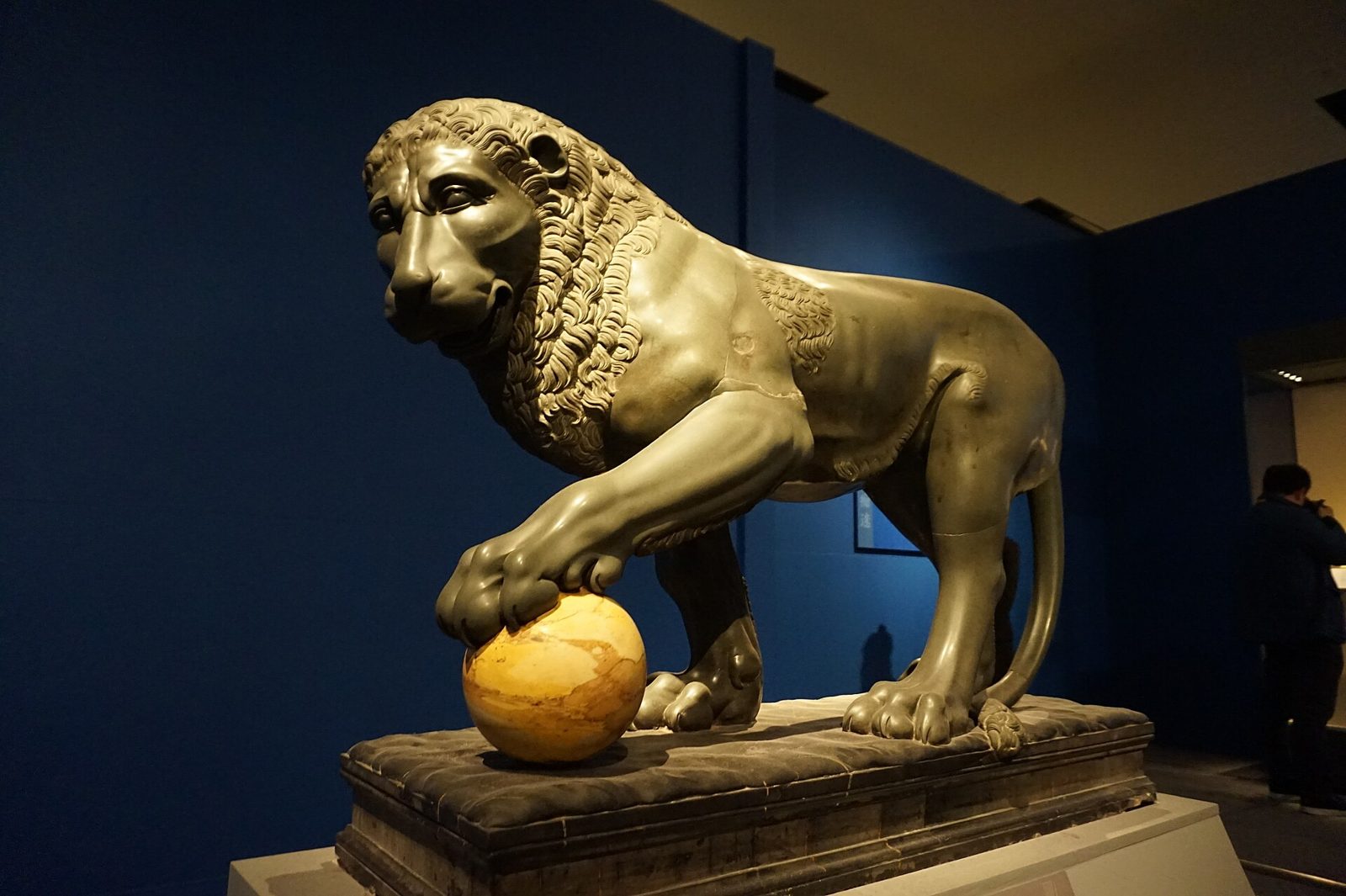
Take a moment to really look at the Albani lion. Notice how the green basalt glimmers under the light, giving it a life-like quality that almost makes it seem ready to leap from its pedestal. Now, focus on that striking yellow marble sphere resting beneath its paw. Isn’t it fascinating how this contrast draws your eye and adds a layer of intrigue to the piece?
Crafted in the first century, it’s likely a reproduction of an earlier Greek bronze statue, showcasing how the Romans admired and emulated Greek artistry. The choice of basalt, a material often used for such reproductions, speaks to the Roman desire to connect with the grandeur of Greek civilization while making it their own.
Originally part of the Albani Collection, amassed by a cardinal in Rome, this sculpture has traveled through time and space to find its home in the Louvre. As you stand here, think about the countless eyes that have gazed upon this lion over the centuries. What stories do you think it could tell if it could speak?
Take a closer look at the texture of the green basalt. You might notice how the artist skillfully carved the lion's powerful muscles, capturing a sense of movement and vitality. The choice of basalt, a dense volcanic rock, allowed for fine detailing, while its dark hue adds a dramatic flair. The contrasting yellow marble sphere under the lion's paw isn’t just decorative; it’s a deliberate choice that highlights the lion's dominance. The smoothness of the marble juxtaposes the ruggedness of the basalt, creating a visual dialogue that draws your eye and invites you to ponder the relationship between the two materials.
It is believed to be a reproduction of an earlier Greek bronze statue, reflecting the Romans' desire to connect with the artistic grandeur of their predecessors. Originally part of the prestigious Albani Collection, amassed by Cardinal Albani in his Villa Albani in Rome, this sculpture has witnessed centuries of history. After the cardinal's death, the collection was dispersed, and the lion eventually found its way to the Louvre, where it continues to captivate visitors. Imagine the many hands that have touched it and the stories it has silently observed over the years.
This was quite common in the first century AD, as artists often turned to basalt to recreate the elegance of bronze. Imagine the artisans of that time, meticulously carving this lion, not just as a piece of art, but as a connection to the grandeur of Greek culture. And under one of its powerful paws rests a yellow marble sphere, adding a touch of luxury and intrigue to this majestic creature.