Madonna and Child
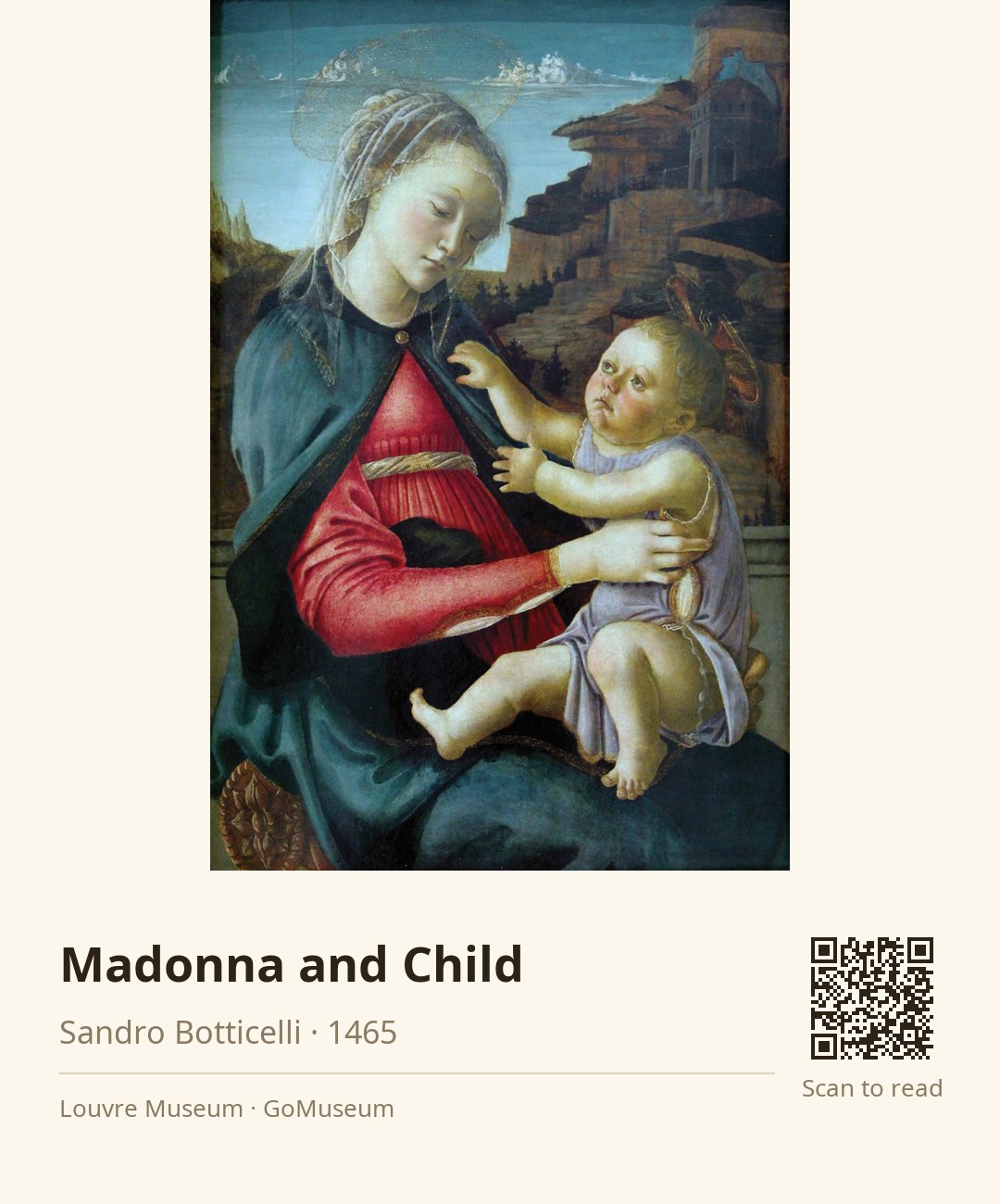
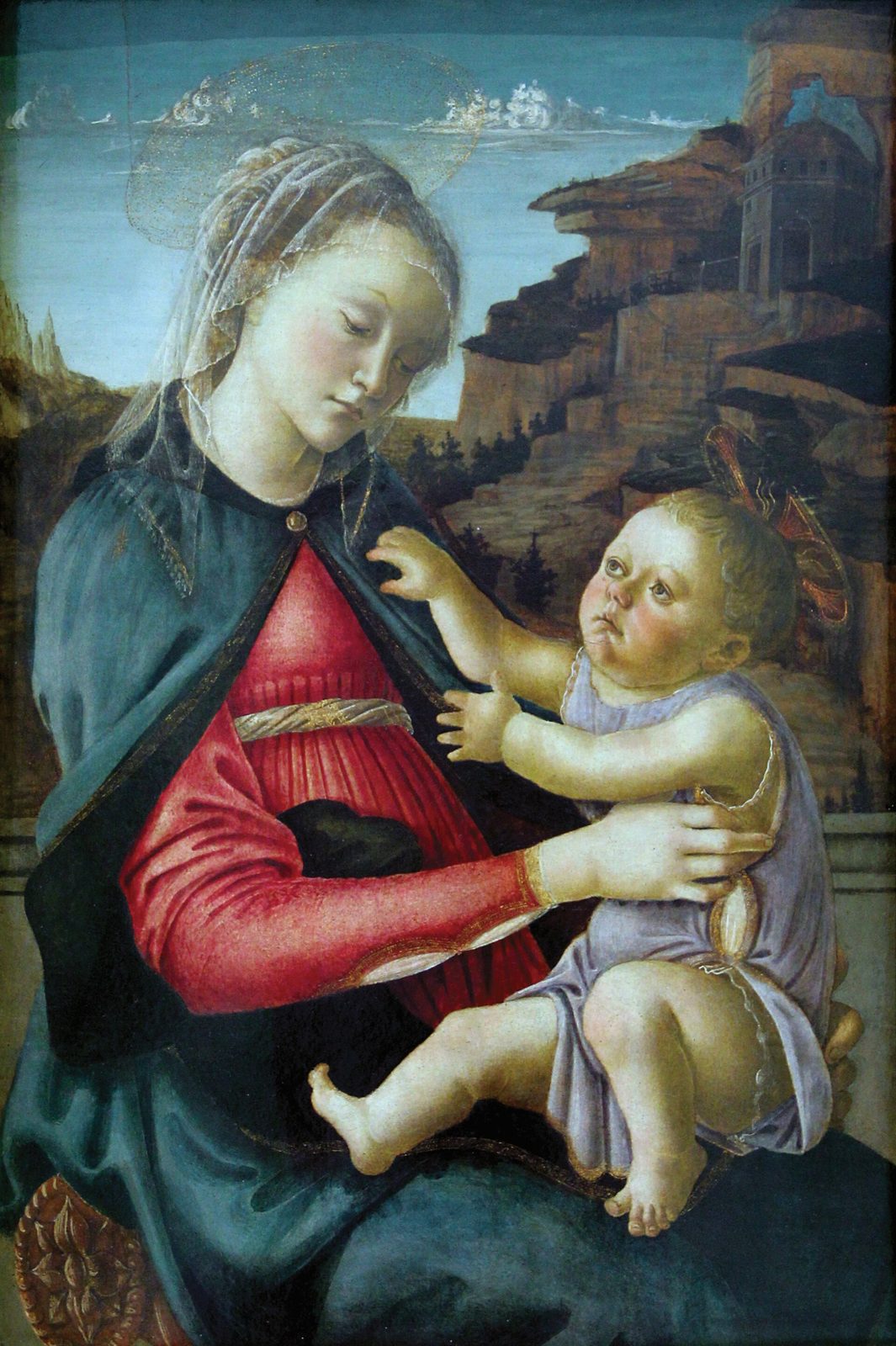
🎧 This work has audio narration — listen in the appThe seated figure of the Virgin Mary cradling the child in her arms embodies a tender moment, captured in Botticelli's "Madonna and Child." Mary’s red dress contrasts beautifully with her dark cloak and translucent veil, which frames her gentle face, adorned with a faint halo. The child, dressed in light purple, reaches out with both arms, creating an intimate connection that draws the viewer into their world.
This portrayal emphasizes the emotional bond between mother and child, a theme central to Botticelli's work. The soft, muted colors enhance the serene atmosphere, while the careful rendering of the clothing folds and skin textures reflects the artist’s meticulous attention to detail. The rocky landscape in the background, featuring a building and a clear blue sky, suggests a peaceful setting, grounding the divine figures in a relatable environment.
Filippino Lippi, born around 1457 in Prato, Tuscany, was an influential Italian Renaissance painter, the illegitimate son of the renowned artist Fra Filippo Lippi. His upbringing was marked by the artistic environment of his father's workshop, where he began his training. After his father's death, Filippino continued to hone his skills under Sandro Botticelli, contributing to a blend of styles that defined his early works.
As a painter, Filippino specialized in religious themes, often depicting elongated figures and intricate details that conveyed a sense of the surreal. His style evolved significantly after a formative period in Rome, where he absorbed classical influences and developed a unique approach characterized by vibrant, imaginative compositions. His notable works include the frescoes in the Brancacci Chapel and the altarpiece for the Strozzi Chapel, which reflect the political and religious tensions of his time.
Filippino's contributions to art history are significant; he is recognized for bridging the Early and High Renaissance styles, paving the way for the expressive tendencies that would lead to Mannerism. His innovative techniques, including visible brushwork, influenced later artists and positioned him as a pivotal figure in the evolution of Renaissance art. He passed away in Florence on April 18, 1504, leaving behind a legacy that continues to resonate in the art world.
This painting is also known as 'Madone des Guidi de Faenza,' named after its provenance from the Guidi family in Faenza. It was sold in 1902 at an auction in Rome, where it caught the attention of Baron Basile de Schlichting, who later bequeathed it to the Louvre in 1914. The painting has been part of the museum's collection ever since, cataloged under inventory number RF 2099.
The brushwork is meticulous, especially in the rendering of the folds in Mary’s red dress and the textures of the child’s skin. The muted color palette, with its soft reds, blues, and earthy tones, creates a serene atmosphere that enhances the emotional connection between the figures. The composition is intimate, with the figures centrally placed, drawing the viewer’s eye directly to their interaction. Botticelli’s choice of a rocky landscape in the background, coupled with a clear blue sky, grounds the divine scene in a relatable reality, inviting viewers to contemplate the sacred in the everyday.
Before becoming a painter, Botticelli was initially trained as a goldsmith, which likely influenced his artistic skills.
Botticelli's nickname, meaning 'little barrel', comes from his brother Giovanni's nickname, which was given due to his round stature.