 Image: Wilfredor
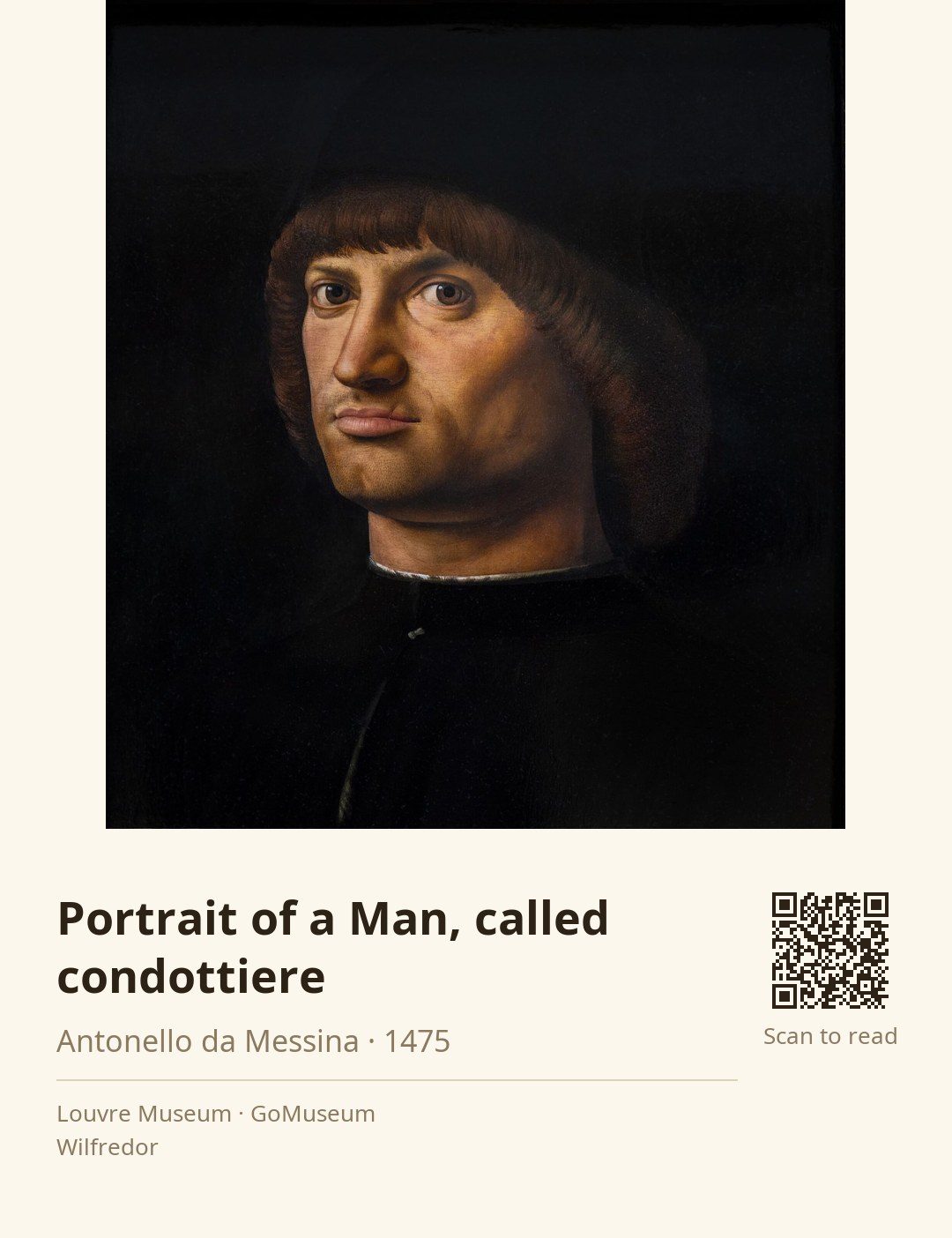
Portrait of a Man, called condottiere
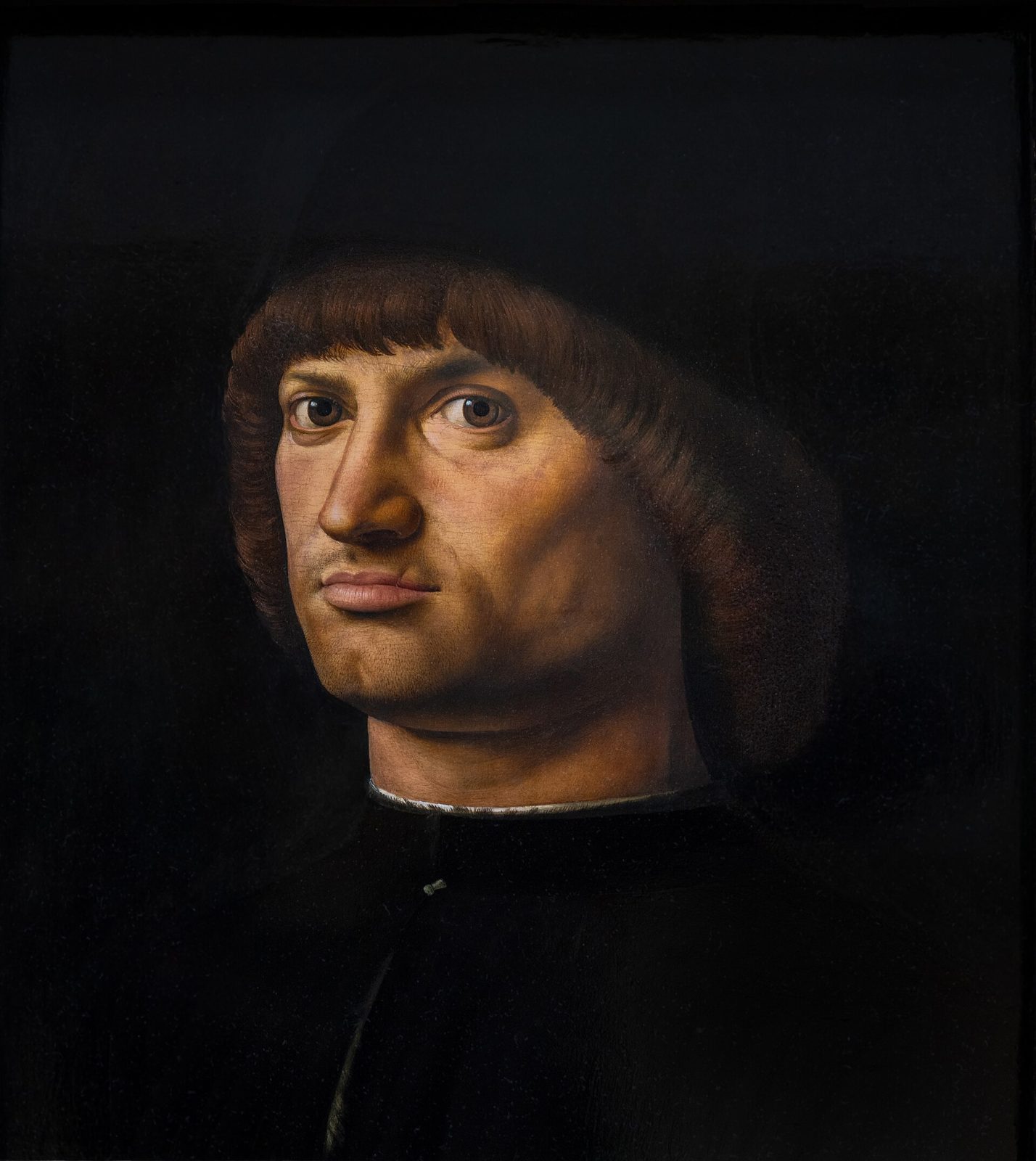
🎧 This work has audio narration — listen in the appTake a moment to really look at this striking portrait, known as the "Condottiere." Notice how the man’s intense gaze seems to follow you, pulling you into his world. His features are sharp, and that distinctive scar on his lip adds a layer of intrigue, hinting at a life filled with stories and battles.
What’s fascinating here is how Antonello da Messina breaks from the traditional profile view common in portraits of his time. Instead, he presents this figure in a three-quarter view, a technique inspired by Flemish art but uniquely his own. This choice not only gives the man a sense of presence but also invites you to engage with him on a more personal level. It’s as if he’s stepping out of the canvas, challenging you to ponder who he might have been.
Painted in 1475, this piece marks a significant moment in art history as one of the earliest examples of oil painting in Italy, a technique that Antonello mastered during his time in Naples. His ability to capture light and texture with such precision was revolutionary, influencing countless artists who followed.
So, as you stand here, consider the power of this gaze. What stories do you think this man could tell? How does he make you feel in this moment?
Antonello da Messina, born around 1430 in Sicily, was a pivotal figure in the Early Renaissance, known for his masterful integration of Flemish techniques into Italian painting. Trained by his sculptor father and later influenced by the Netherlandish painter Niccolò Colantonio in Naples, Antonello developed a unique style that combined meticulous detail and atmospheric depth with the monumental qualities of Italian art. His portraits, characterized by psychological depth and vitality, marked a departure from the traditional profile poses of his contemporaries, establishing him as a pioneer in portraiture.
Active primarily in Messina, Antonello's works, such as the Salting Madonna and the Sibiu Crucifixion, reflect a sophisticated understanding of light and space, drawing from both Flemish and Italian traditions. Despite never leaving Italy, his influence extended to northern Italy, particularly Venice, where he revolutionized local painting practices. His legacy is evident in the works of later masters, and he is credited with laying the groundwork for the tonal painting style that would define Venetian art. Antonello's innovative approach and ability to synthesize diverse artistic influences solidified his place in art history as a transformative figure of the Renaissance.
The 'Condottiere,' painted by Antonello da Messina around 1475, emerged during a pivotal period in Venice's art scene. Commissioned by an unknown patron, this portrait reflects the artist's mastery of oil painting, a technique he honed during his time in Naples. The painting was later acquired by the French state in 1865, following a sale from the collection of the Count of Pourtalès-Gorgier, at the insistence of Emperor Napoleon III. This acquisition marked its entry into the Louvre, where it has remained ever since, captivating audiences with its striking realism. Over the years, the portrait has been celebrated for its innovative approach, breaking away from the traditional profile view that dominated portraiture at the time. The identity of the model remains a mystery, adding to the allure of the piece, as viewers are left to ponder the stories behind that intense gaze.
As you look closely at the 'Condottiere,' pay attention to Antonello's remarkable brushwork. The oil paint is applied with a delicate touch, allowing for a stunning interplay of light and shadow that brings the figure to life. Notice how the background fades softly, almost merging with the subject, which serves to highlight the man's face. The three-quarter view, a departure from the flat profiles of earlier portraits, creates a dynamic presence that draws you in. Antonello's use of color is equally striking; the subtle gradations and muted tones contribute to the portrait's psychological intensity, making it feel as though the man could step out of the frame at any moment. This technique not only showcases Antonello's skill but also invites you to engage with the subject on a personal level.
One intriguing detail about the 'Condottiere' is the paper scroll affixed to the edge of the painting, which bears the inscription '1475 /Antonellus messaneus me/ pinxit.' This not only identifies the artist but also serves as one of the earliest examples of an artist signing their work in this manner, reflecting a growing sense of individual authorship in art during the Renaissance. Additionally, the painting was restored in 2018, ensuring that its vibrant colors and intricate details continue to be appreciated by modern audiences.
The 'Condottiere' was acquired by the French state in 1865 at the insistence of Emperor Napoleon III, during a sale from the collection of the Count of Pourtalès-Gorgier, for a substantial sum of 113,500 francs.
Antonello's innovative techniques and mastery of oil painting significantly influenced many artists in northern Italy, particularly in Venice, where his approach to portraiture and use of light and shadow set a new standard for realism in art.