 Image: Shonagon
Crown of Napoleon
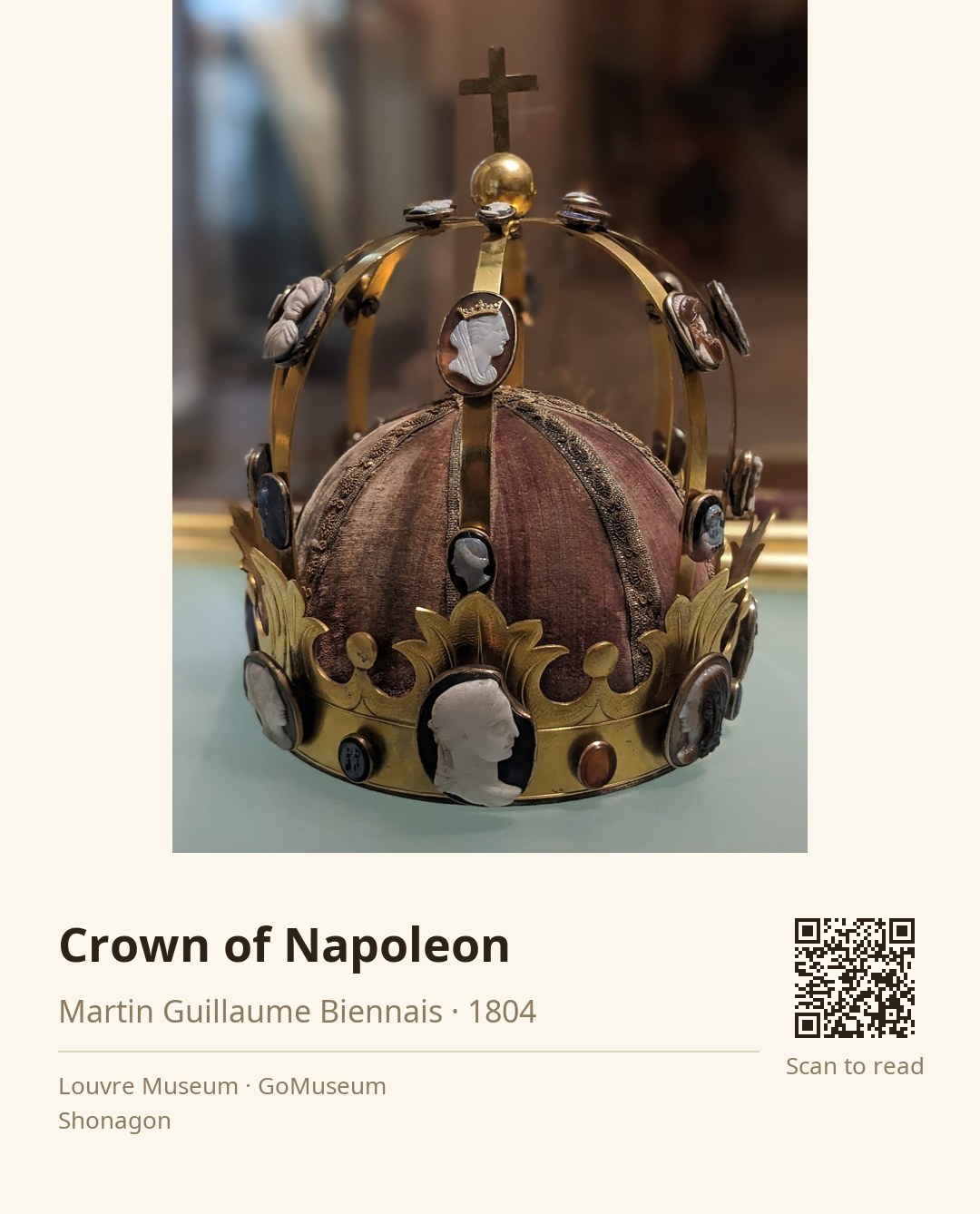
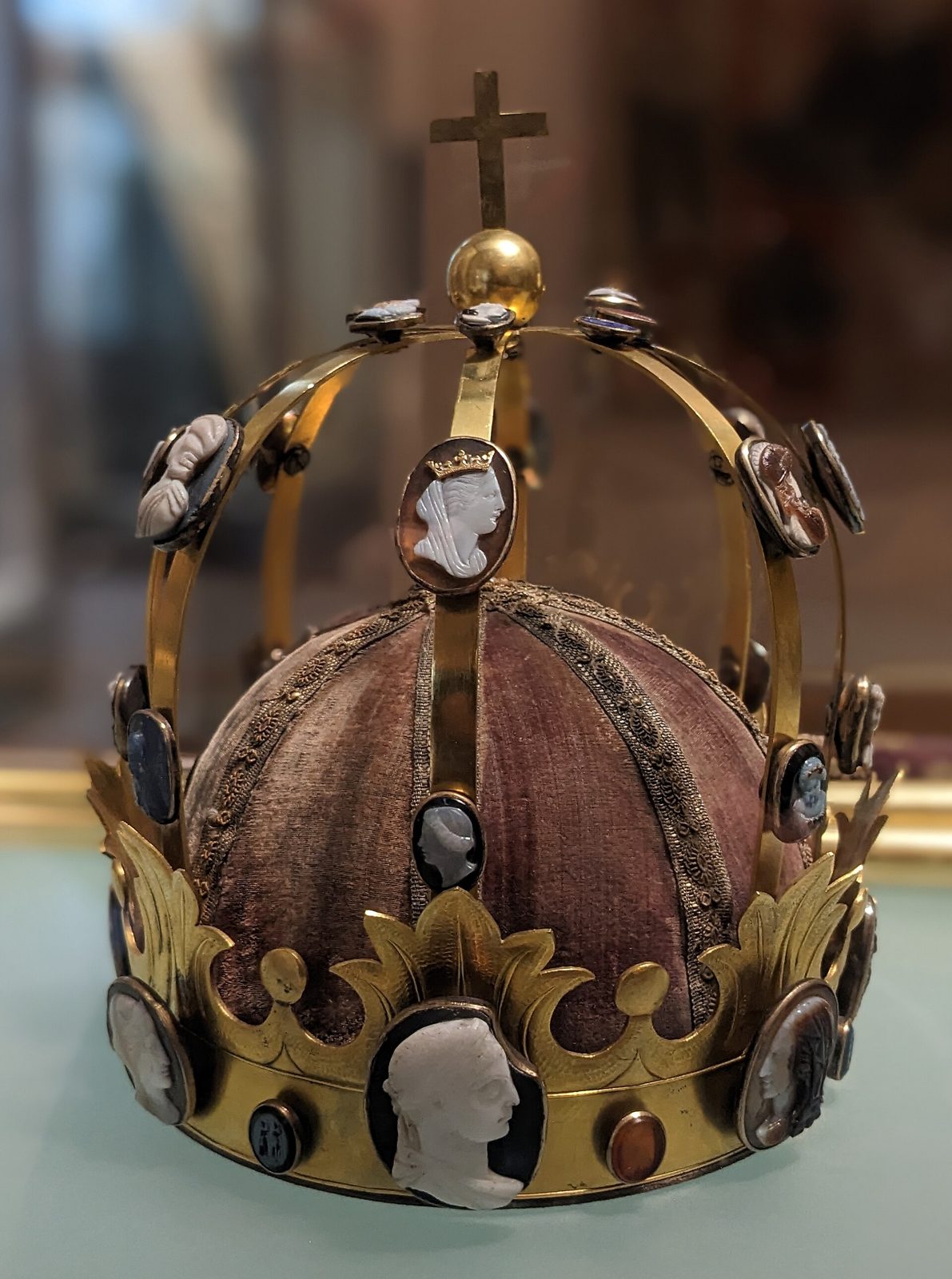
🎧 This work has audio narration — listen in the appTake a moment to gaze at the Crown of Napoleon, a striking symbol of ambition and legacy. Notice the intricate half-arches adorned with shell cameos and carved carnelians, all culminating in a golden globe topped with a cross. These details aren’t just decorative; they reflect Napoleon's desire to connect himself to the grandeur of Charlemagne, the medieval emperor of the Franks, whose crown was lost during the Revolution. By naming this crown after Charlemagne, Napoleon sought to legitimize his rule and evoke the power of a bygone era.
Crafted in 1804 by Martin Guillaume Biennais, this crown was born from the ashes of the French Revolution, which had obliterated the old royal regalia. As Napoleon crowned himself in Notre Dame, he wore this crown not just as a piece of jewelry, but as a statement of his authority and a new imperial identity for France.
So, as you stand here, think about the weight of history this crown carries. What does it mean to you that a piece of art can encapsulate such ambition and transformation?
Martin-Guillaume Biennais was a prominent French goldsmith and silversmith, born on April 29, 1764, in La Cochère. After moving to Paris in 1788 following his father's death, he initially engaged in commerce and faced personal tragedy with the loss of his wife shortly after marriage. His career flourished during the Napoleonic Empire, where he became renowned for his exquisite silverware and furniture, producing works that reflected the classical style favored by Napoleon Bonaparte. Biennais was particularly noted for his craftsmanship in creating ceremonial insignia for the Emperor, including items for Napoleon's coronation in 1804.
Among his notable creations was the silver cradle for the King of Rome, although the design was likely attributed to others. His prolific output earned him a distinguished reputation, surpassing contemporaries like Jean-Baptiste-Claude Odiot. Biennais catered to a prestigious clientele, including royalty and nobility, and was recognized as one of the leading silversmiths of his time. He retired in 1819, leaving a legacy that would influence the art of silversmithing. Biennais passed away on March 27, 1843, in Paris, leaving behind a rich heritage in decorative arts that continues to be celebrated today.
The Crown of Napoleon, officially known as the 'Crown of Charlemagne', was crafted in 1804 by the skilled goldsmith Martin Guillaume Biennais. This crown was commissioned in the wake of the French Revolution, which had led to the destruction of most royal regalia. When Napoleon crowned himself at Notre Dame Cathedral on December 2, 1804, he wore this crown as a bold statement of his authority and a new imperial identity. Interestingly, during the coronation, he used two crowns: first a laurel crown, symbolizing Roman emperors, and then the imperial crown, which he briefly placed on his own head before touching it to the head of his empress, Joséphine. After Napoleon's second abdication in 1815, the crown was preserved and later displayed at the Louvre, where it remains today. The crown's journey reflects the tumultuous shifts in French history, from monarchy to empire and back again.
Crafted by Martin Guillaume Biennais, this crown was designed to evoke the legacy of Charlemagne, linking Napoleon to a storied past while asserting his own authority as Emperor. Its creation came in the wake of the French Revolution, a time when the monarchy had been dismantled and the old symbols of power were destroyed. By establishing a new crown, Napoleon not only redefined the monarchy but also influenced future leaders and the concept of imperial regalia. This crown set a precedent for how rulers would present themselves, merging history with personal ambition. Remember, it’s not just about the gold and jewels; it’s about the power play and the narrative of a new empire rising from the ashes of the old.
One intriguing detail about the Crown of Napoleon is that it was designed to evoke the lost grandeur of Charlemagne's crown, which had been destroyed during the Revolution. To bolster its authenticity, Napoleon commissioned a study that claimed the crown had survived the Revolution, creating a narrative that linked his reign to the revered past of French monarchy.
Following Napoleon's second abdication in 1815, the crown was preserved and eventually displayed at the Louvre, where it remains a significant artifact of French history.