Saint Sebastian Attended by Saint Irene
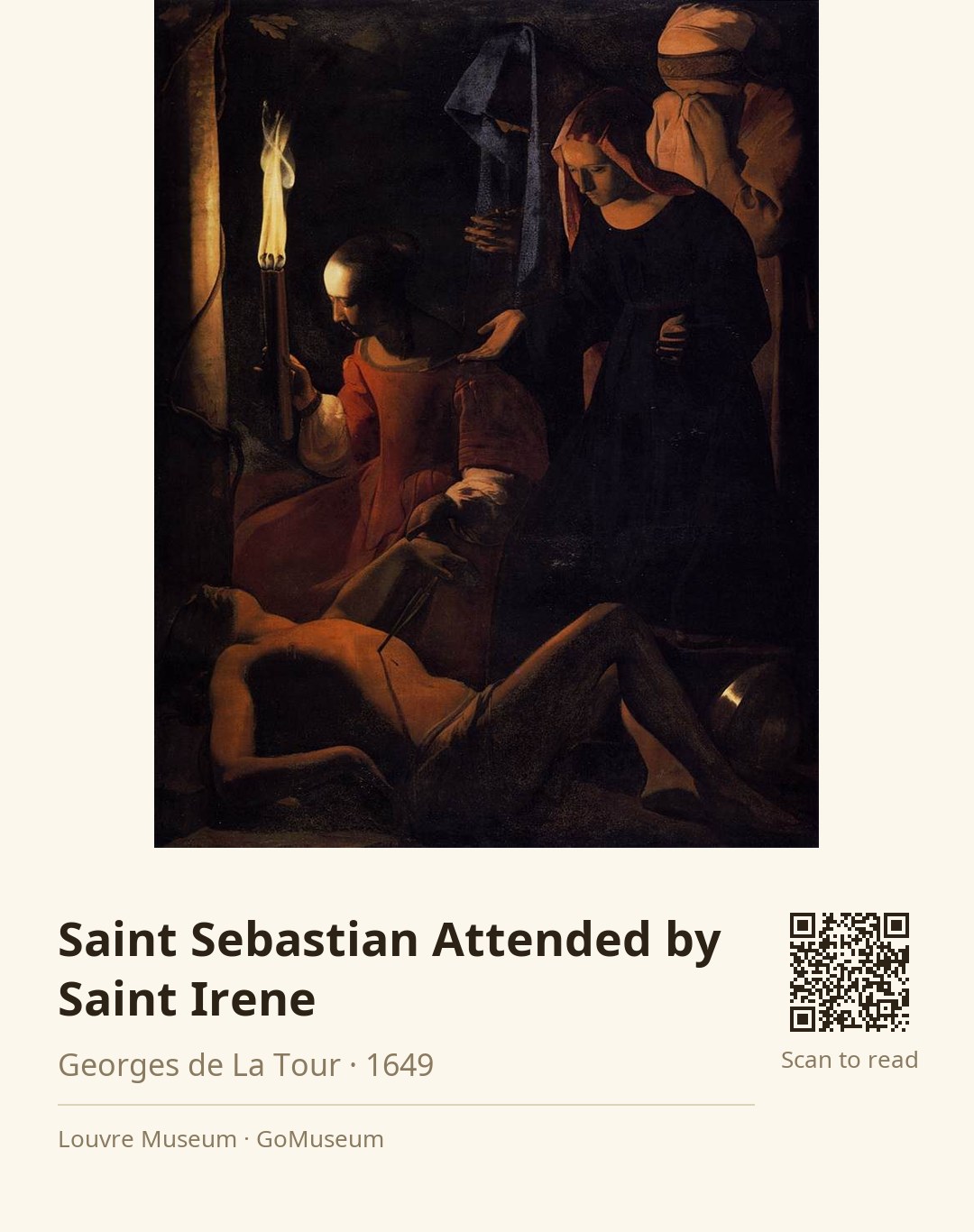
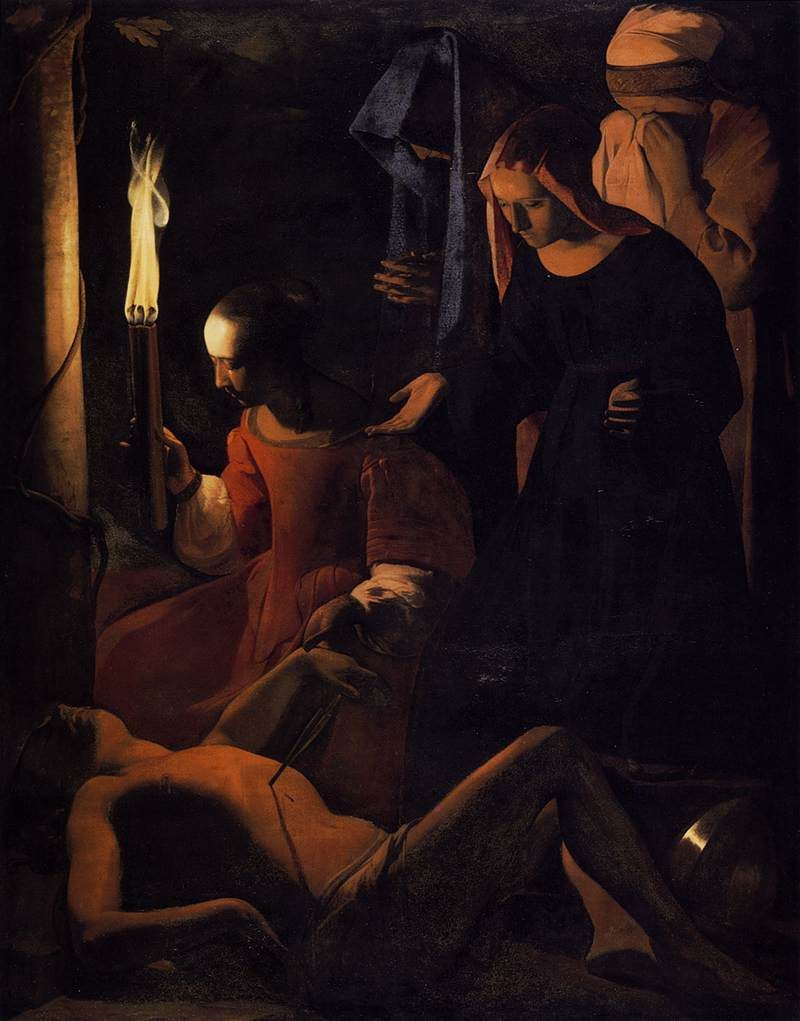
🎧 This work has audio narration — listen in the appAs you stand before "Saint Sebastian Attended by Saint Irene," take a moment to really absorb the scene unfolding on the canvas. Notice how the light plays across Saint Sebastian’s body, illuminating the wounds that tell a story of suffering and resilience. Look closely at the expression on Saint Irene’s face—her gaze is tender yet filled with urgency, as if she’s both mourning and hoping.
These details matter because they capture a profound moment of compassion amidst pain. La Tour masterfully uses chiaroscuro, the contrast of light and shadow, to draw your eye to the emotional core of the painting. It’s not just about the physical wounds of Sebastian; it’s about the spiritual healing that Irene represents. This interplay of light and dark reflects the struggles of faith and redemption, themes that resonate deeply in Baroque art.
Created in 1649, this piece is one of La Tour’s largest and most ambitious works, showcasing his unique ability to blend realism with emotional depth. Rediscovered in a small church in 1945, it has since become a highlight of the Louvre’s collection, reminding us of the artist's remarkable talent that was nearly lost to history.
As you take in this poignant moment, consider: what emotions does this scene evoke in you? How does it challenge your understanding of suffering and healing? Let those thoughts linger as you continue your exploration.
Georges de La Tour was a French Baroque painter born on March 13, 1593, in Vic-sur-Seille. He spent most of his life in the Duchy of Lorraine, where he became known for his religious paintings characterized by dramatic chiaroscuro and candlelit scenes. Influenced by Caravaggio and the Dutch Caravaggisti, La Tour's work reflects a unique blend of Nordic, Italian, and French artistic traditions. His keen observation of everyday life and mastery of light and shadow set him apart as an original successor to Caravaggio.
Married to Diane Le Nerf in 1617, La Tour established a successful studio in Lunéville, gaining recognition as "Painter to the King" in 1638. Despite his acclaim during his lifetime, he fell into obscurity after his death in 1652, largely forgotten until his rediscovery in the early 20th century by art historian Hermann Voss. La Tour's influence extended beyond painting, inspiring writers such as André Malraux and René Char. His legacy endures as a pivotal figure in art history, celebrated for his innovative approach to light and composition in religious art.
This painting, titled 'Saint Sebastian Attended by Saint Irene,' was created by Georges de La Tour in 1649. It stands out as one of his largest and most ambitious works. Interestingly, it was rediscovered in 1945, hidden away in the parish church of Bois-Anzeray, and later acquired by the Société des amis du Louvre in 1979 for the Louvre. Before its acquisition, a second version was thought to be the original and was held in the Gemäldegalerie in Berlin. This version was re-evaluated in 1972 during an exhibition and is now considered a studio copy, attributed to La Tour's son, Étienne, with some retouching by Georges himself. La Tour's connection to royal patrons is notable; he sent an earlier version of this painting to Charles IV of Lorraine in 1633, and Louis XIII was so taken with it that he hung it alone in a room. The painting's journey reflects the turbulent history of the time, including the impact of the Thirty Years' War on the region.
As you gaze at this painting, notice La Tour's masterful use of chiaroscuro—the dramatic interplay of light and shadow that creates a palpable tension in the scene. The light cascades over Saint Sebastian's body, illuminating his wounds and drawing your eye to the emotional weight of his suffering. The brushwork feels deliberate yet fluid, capturing the urgency of Saint Irene's tender care. The composition is structured with a triangular arrangement, guiding your gaze from the figures to the background, which remains intentionally subdued. This careful balance allows the viewer to focus on the intimate connection between the two saints, emphasizing the themes of compassion and healing. The scale of the painting enhances its impact, making you feel as if you're witnessing this poignant moment firsthand.
One intriguing aspect of this painting is that there exists a second version held in the Gemäldegalerie in Berlin, which was long thought to be the original. However, after a comparison in 1972, it was determined that the Berlin piece is actually a studio copy, attributed to La Tour's son, Étienne, with some retouching by Georges himself.