 Image: Rama · 7/Aleppo_Museo_archeologico_01
This file was provided to Wikimedia Commons by the Gruppo Archeologico Romano as part of the cooperation project Connected Open Heritage with Wikimedia Italia.
This file was made available by Gruppo Archeologico · Gianfranco Gazzetti · Epierre · Mike Prince from Bangalore, India
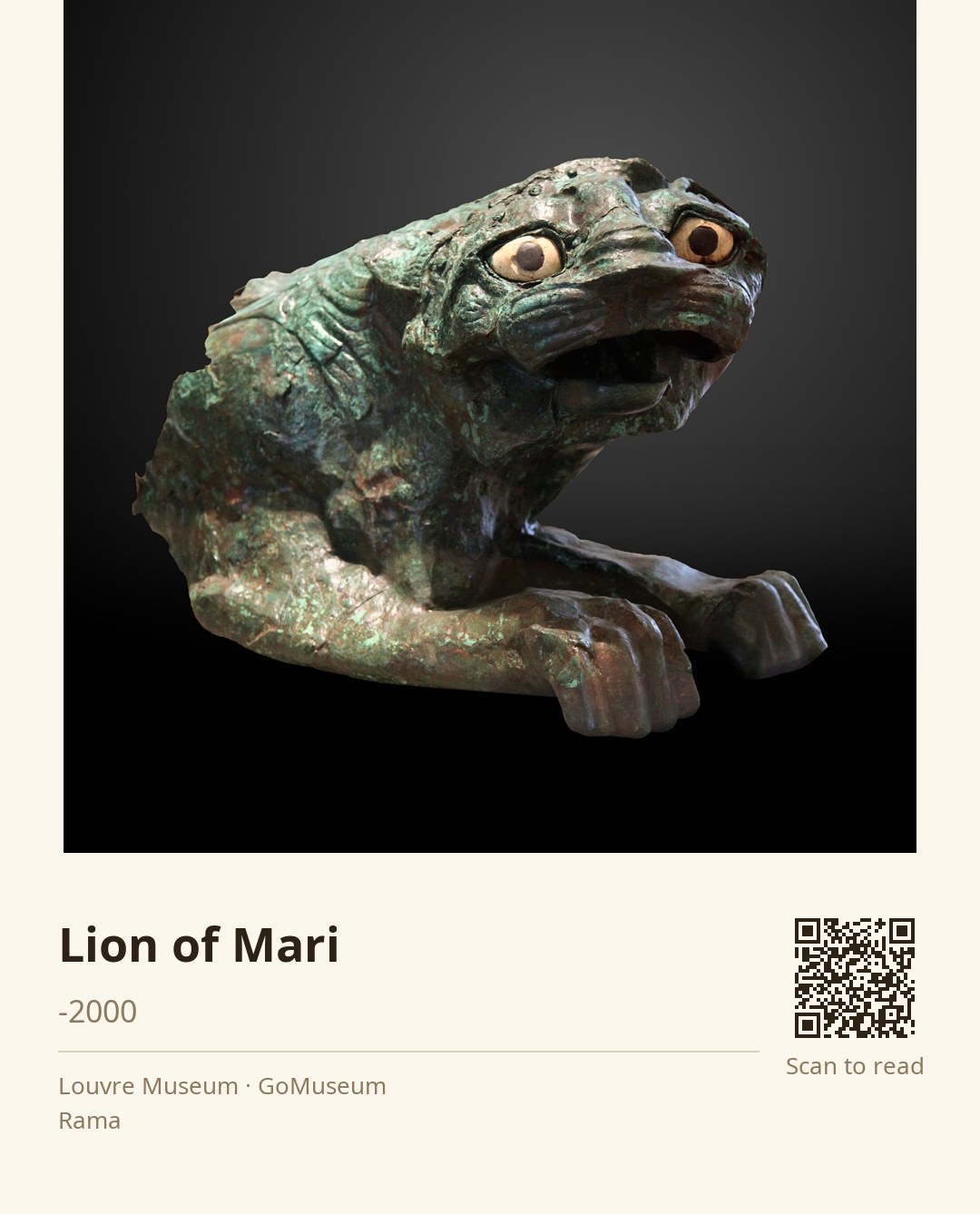
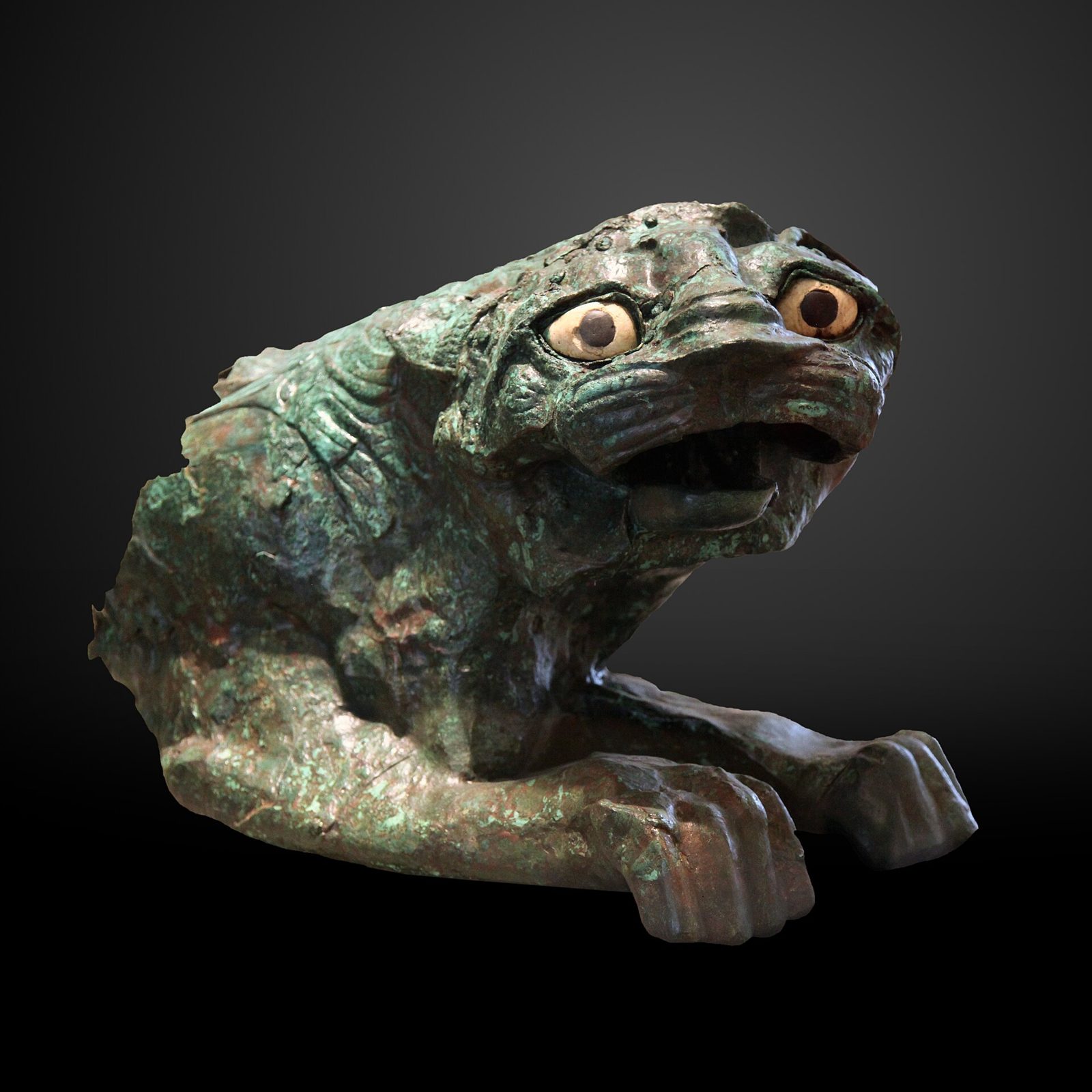
Lion of Mari
🎧 This work has audio narration — listen in the appTake a moment to really look at the Lion of Mari. Notice how the copper gleams, even after all these centuries, and how the powerful front half of this magnificent creature seems to leap forward, frozen in time. The details of its muscular shoulders and fierce expression tell a story of strength and majesty, don’t they?
This lion isn’t just a sculpture; it was once part of a grand architectural decoration in a temple, symbolizing protection and power for the people of Mari.
It’s a fragment of a world long gone, yet it still speaks to us today.
As you stand here, consider what this lion might have witnessed over the millennia. What stories do you think it could tell if it could speak?
As you gaze at the Lion of Mari, take a closer look at the copper that forms its powerful body. The craftsmanship is remarkable; notice how the surface has been meticulously shaped to capture the lion's fierce expression and muscular structure. The technique of working with copper in this way was advanced for its time, allowing for both strength and intricate detail. Imagine the artisans, their hands skillfully hammering and molding the metal, pouring their dedication into every curve and line. This wasn't just a sculpture; it was a testament to their artistry and the significance of the lion in their culture.
The Lion of Mari was unearthed in 1936 by the French archaeologist André Parrot during excavations at the Temple of Lions in Mari, Syria. This site, believed to have been constructed around 2150 BCE, was a significant religious center. The lion statue, however, dates back to the early Second Millennium BCE, likely during the reign of Zimrī-Lim, a time when the temple was undergoing reconstruction. The statue was intended as a protome, serving as a decorative architectural element.
Crafted around 2000 BCE, this copper statue served as a protome, a decorative element that adorned the Temple of Lions in Mari, Syria. Its discovery in 1936 by André Parrot not only illuminated the artistic practices of the early Second Millennium BCE but also highlighted the cultural significance of lions in ancient Near Eastern societies. The lion, a symbol of power and protection, was integral to the identity of the temple, influencing subsequent architectural designs and artistic representations in the region. This sculpture's legacy continues to resonate, reminding us of the sophistication of ancient civilizations and their ability to convey meaning through art.
Did you know that the Lion of Mari was discovered in 1936 during an excavation led by André Parrot? This copper statue, which was once part of a grand temple, is only a fragment of its former self—just the front half remains. Imagine the moment when Parrot and his team unearthed this majestic piece, only to find it had been crushed over time. It’s a striking reminder of the fragility of history, and how even the mightiest can be reduced to mere remnants. What stories could this lion tell if it could speak?
After its excavation in 1936, the Lion of Mari was transported to the Louvre, where it is currently displayed. However, the statue was damaged during its time at the site, having been crushed, which adds to its historical narrative.
The Lion of Mari has a twin figure that is displayed at the National Museum of Aleppo, which provides a fascinating comparison of two similar works from the same period, highlighting the artistic practices and cultural values of ancient Mari.