 Image: Jan van Eyck
Turin–Milan Hours
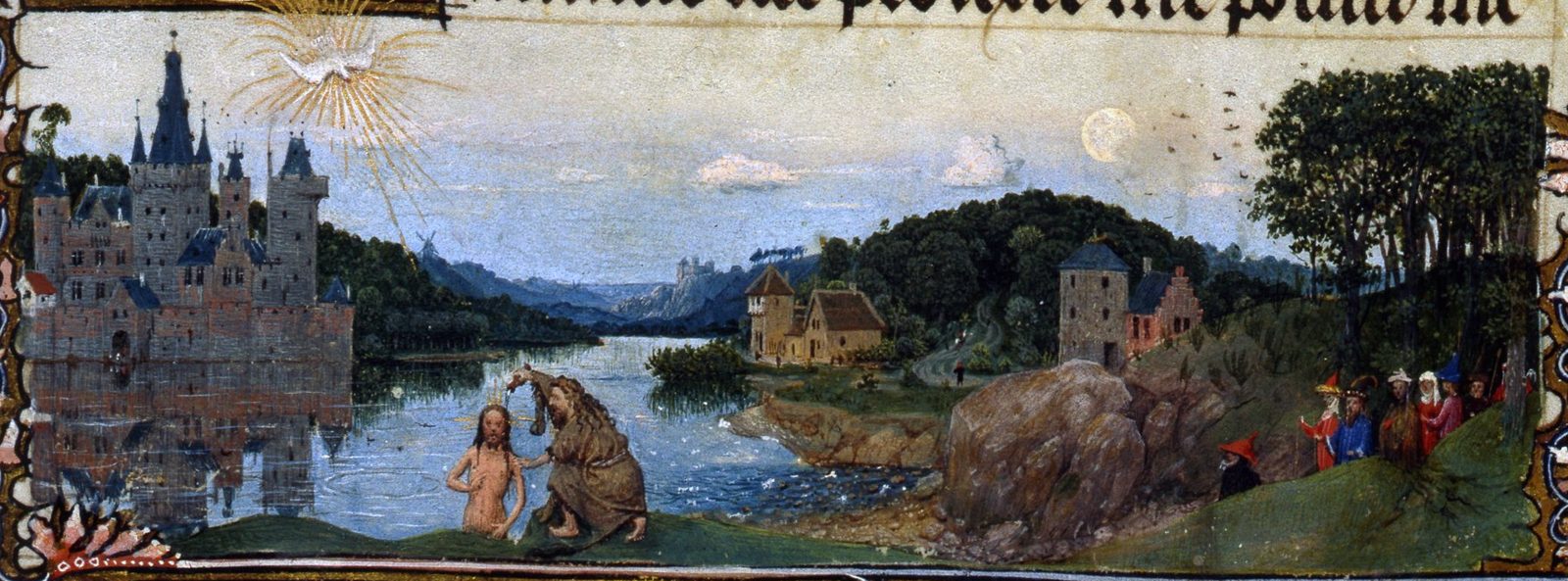
🎧 This work has audio narration — listen in the appTake a moment to really absorb the intricate details of the Turin–Milan Hours. Notice how the colors leap off the page, especially the vibrant blues and reds that seem to shimmer in the light. Look closely at the miniatures—see how the figures are not just flat images but almost seem to breathe with life, their expressions capturing a moment of prayer or contemplation.
Their mastery of perspective and depth was groundbreaking for the time, transforming how we perceive space in art. This manuscript, created around 1420, is a testament to the evolution of illuminated manuscripts, blending Gothic traditions with emerging Renaissance techniques.
Originally commissioned by a high-ranking member of the French court, this work has a complicated history, involving multiple artists and patrons over decades. It’s fascinating to think about how it was once a cherished possession of nobility, passed through many hands, and yet so much of it was lost to time, including a significant portion destroyed in a fire in 1904.
As you stand here, consider what stories these pages might tell if they could speak. What moments of devotion or reflection do you think were captured in these beautiful illustrations?
The Turin–Milan Hours has a rich and complex history that begins around 1380 or 1390, when it was commissioned by a high-ranking member of the French court, possibly Jean, Duc de Berry. This manuscript was unique, conceived as a combined book of hours, prayer-book, and missal, and it involved multiple artists over nearly sixty years. The first artist, known as the Master of the Narbonne Parement, set the stage for a work that would see contributions from many others, including the renowned Limbourg brothers and later Flemish artists. By 1413, it was in the possession of the Duke of Berry, who had it divided among his treasurer, Robinet d'Estampes, leading to its fragmentation. The section known as the Turin Hours was tragically destroyed in a fire in 1904, but the Milan Hours survived and was acquired by the Civic Museum in Turin in 1935. This manuscript's journey through nobility and its eventual loss in a fire adds layers of intrigue to its legacy.
One surprising aspect of the Turin–Milan Hours is its tumultuous journey through history. Originally commissioned in the late 14th century, this manuscript was meant to be a lavish combination of a book of hours, a prayer book, and a missal. However, it was never completed as a single entity. By the early 15th century, it was already being divided up, with sections sold off or given away. The most dramatic moment came in 1904 when a devastating fire destroyed a significant portion of the manuscript housed in Turin, leaving only black-and-white photographs as a record of its former glory. Imagine the chaos and heartbreak of losing such a treasure, a testament to the artistry of its time, in just a flash of flames!