 Image: Shonagon
Regent Diamond
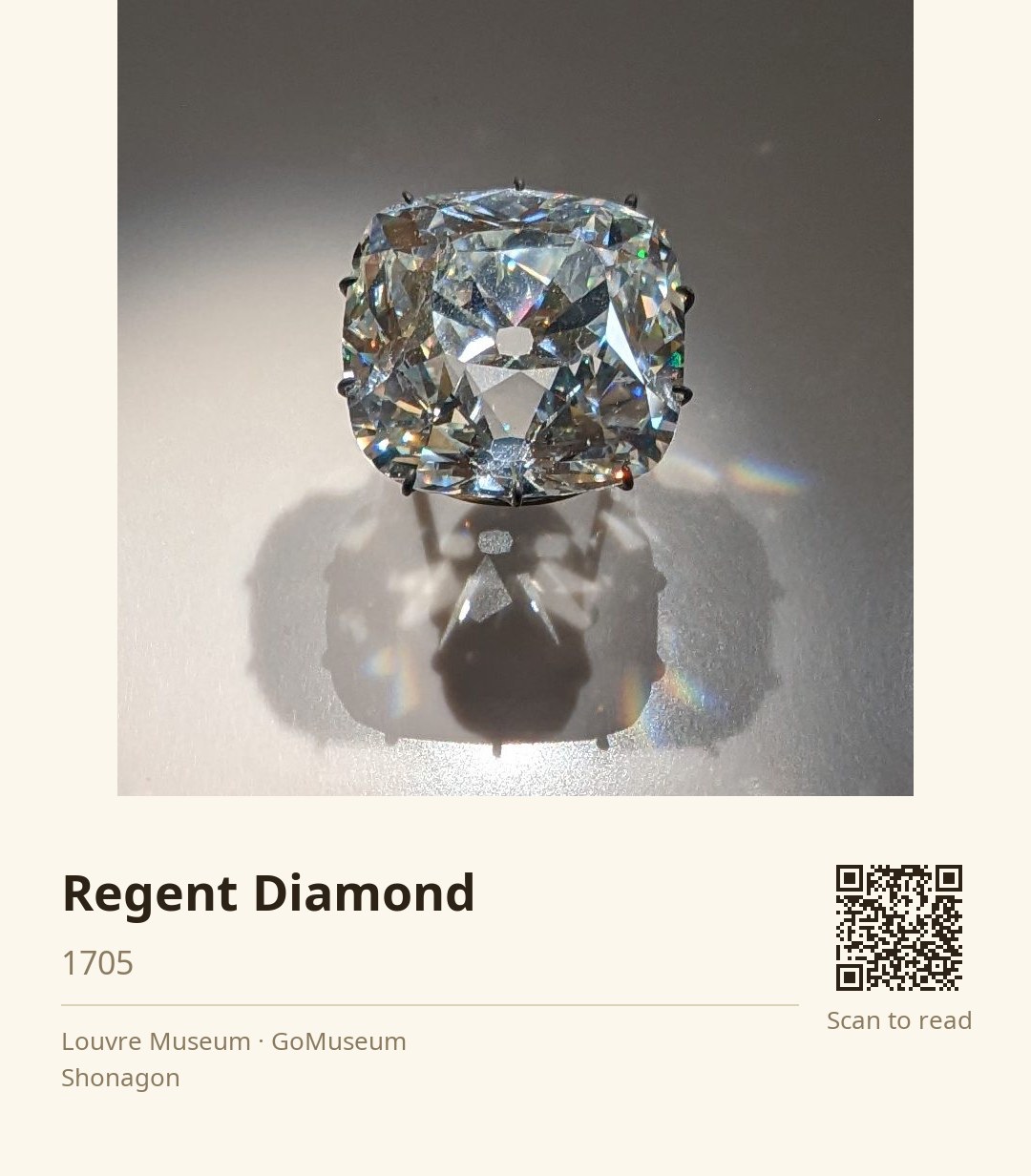
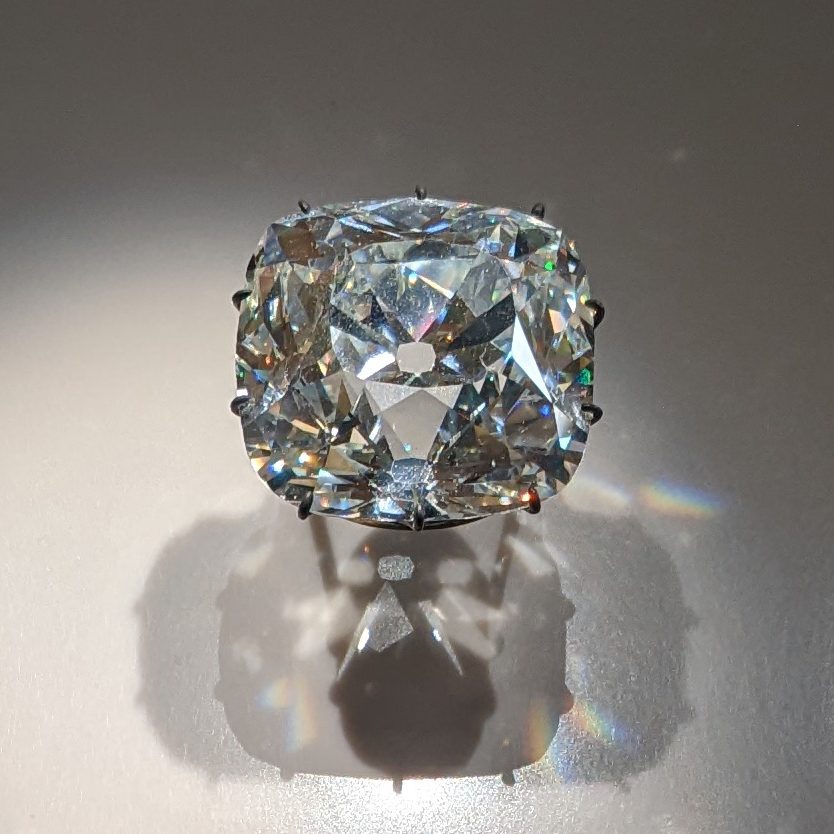
🎧 This work has audio narration — listen in the appAs you stand before the Regent Diamond, let your eyes linger on its mesmerizing facets, each one reflecting light in a dance of brilliance. Notice how its cushion shape seems to cradle the light, creating a halo effect that draws you in. This isn’t just any diamond; it’s a 140.64-carat marvel, steeped in a history as rich as its sparkle.
Why does that cushion cut matter? It’s not just about aesthetics; this particular cut was a technical achievement of its time, allowing the diamond to shine in ways that captivated royalty and commoners alike. The diamond was once owned by the Duke of Orléans, who purchased it in 1717, and it has adorned the crowns of kings and queens, including Louis XV and Marie Antoinette.
The story of the Regent Diamond begins in the Kollur Mine in India, where it was discovered under dramatic circumstances—legend has it that an enslaved man concealed it in a wound to escape danger. This tale adds a layer of intrigue and tragedy to the diamond’s allure, hinting at the tumultuous history that often accompanies such treasures.
As you take in its beauty, consider this: the Regent Diamond has been called cursed, with misfortune befalling many of its owners. What do you think? Is it just a stone, or does it carry the weight of its past?
The Regent Diamond's journey began in the Kollur Mine in India, where it was discovered in 1698 under harrowing circumstances. An enslaved man, fleeing the siege of Golconda, hid the diamond in a leg wound to escape capture. After a treacherous journey, he met an English sea captain, offering a share of the diamond's profits for safe passage. Tragically, the captain killed him and sold the diamond to Jamchand, an Indian merchant. In 1701, Thomas Pitt, the Governor of Fort St. George, acquired it for 48,000 pagodas, later smuggling it to London hidden in his son’s shoe. After being cut in London, it was sold to Philippe II, Duke of Orléans, in 1717 for £135,000. The diamond adorned the crowns of Louis XV and Louis XVI and was stolen during the Revolution, only to be recovered in an attic. It was later redeemed by Napoleon, who used it on his sword, and today, it resides in the Louvre, a testament to its tumultuous past.
After being unearthed in India, it traveled through the hands of various figures, including the controversial Thomas Pitt, who acquired it under dubious circumstances. Its eventual purchase by Philippe II, Duke of Orléans, marked its entry into the French Crown Jewels, where it adorned the heads of kings and queens, including Louis XV and Marie Antoinette. The diamond's legacy is steeped in tales of misfortune and scandal, leading many to believe it carries a curse. Remember, it’s not just a diamond; it’s a piece of history that reflects the ambitions and downfalls of those who coveted it.
One fascinating tidbit about the Regent Diamond is how it was once used as collateral to finance military campaigns. During the tumultuous years of the French Revolution, the diamond was pledged to secure funds for the army, showcasing its value not just as a jewel but as a significant asset in times of crisis.
Thomas Pitt hid the diamond in the heel of his son's shoe to avoid detection while transporting it from India to London, showcasing the lengths he went to acquire this precious gem.
The satirist Alexander Pope commented on the controversial acquisition of the diamond by Thomas Pitt in his Moral Essays, suggesting that it was obtained through deceit, which adds a layer of scandal to the diamond's history.