Portrait of Pope Paul V
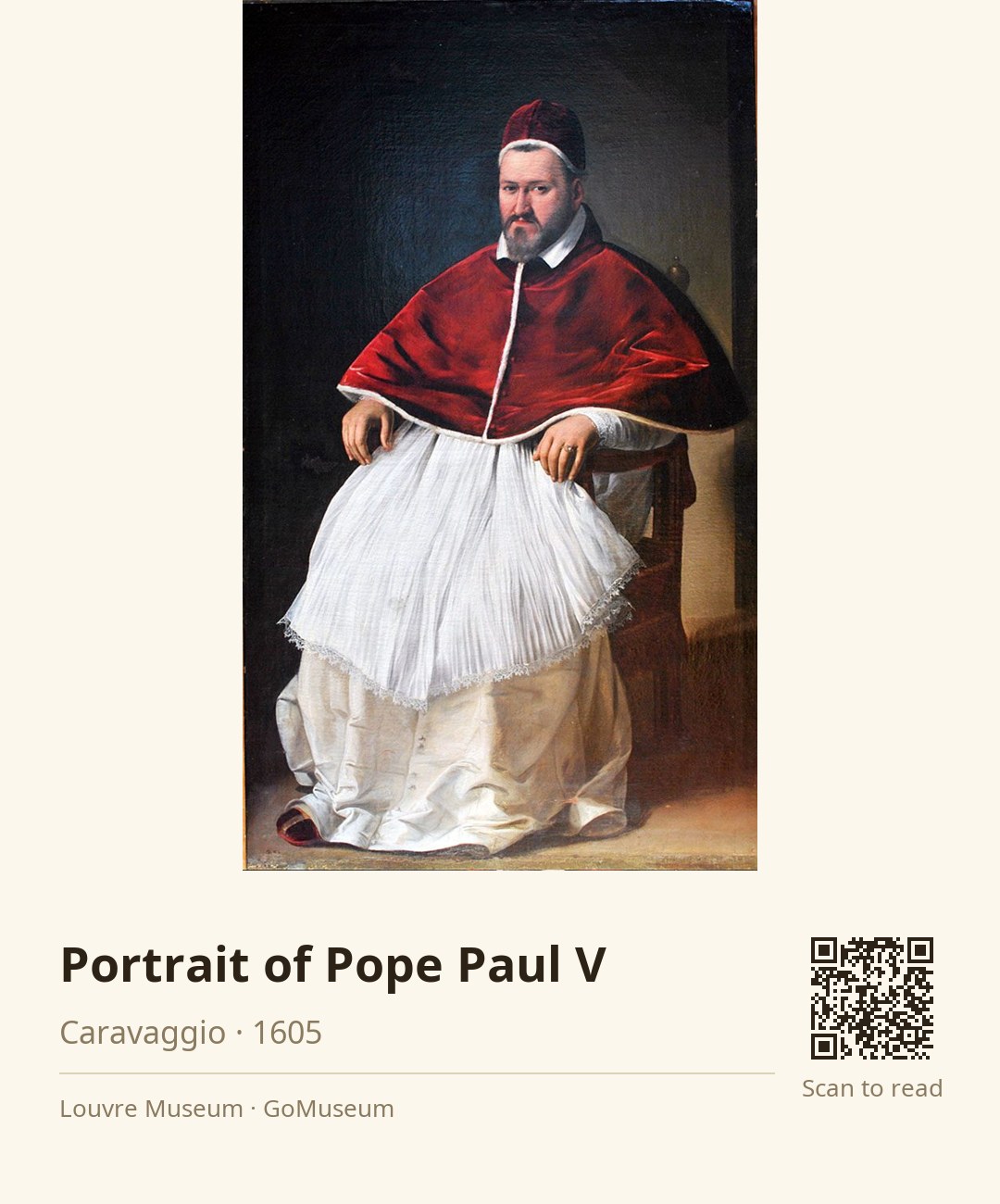
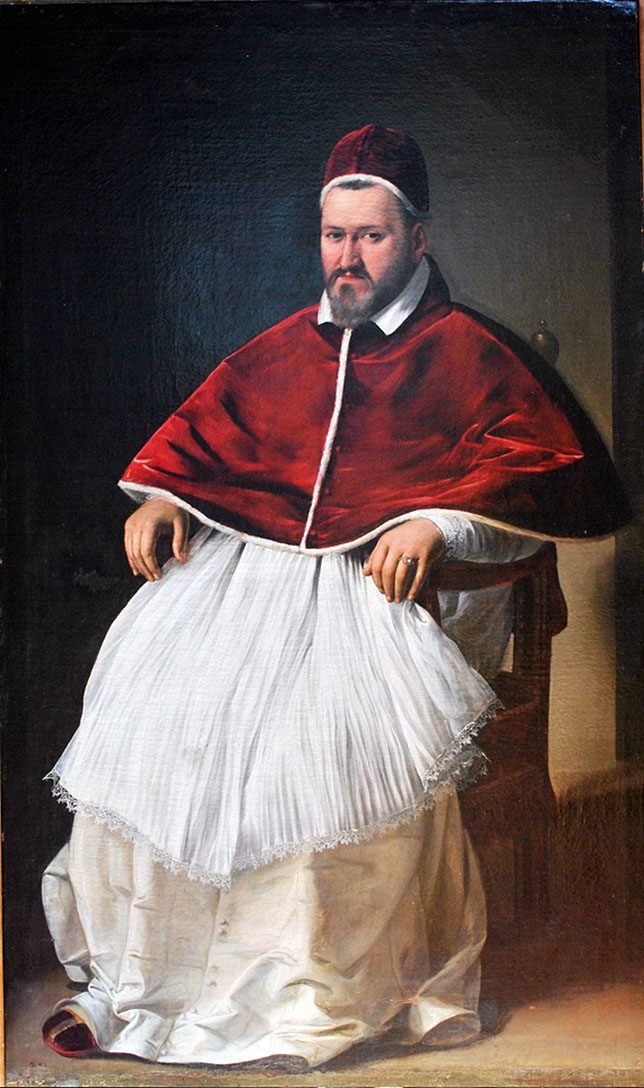
🎧 This work has audio narration — listen in the appTake a moment to really look at this striking portrait of Pope Paul V by Caravaggio. Notice how the pope's narrowed eyes seem to pierce through the canvas, revealing a man of deep contemplation. His expression, often described as taciturn, is not just a reflection of his character but also a result of chronic myopia—he struggled to see clearly, which adds an intriguing layer to this depiction of authority.
This detail matters because it humanizes a figure often seen only through the lens of power. Caravaggio captures the pope's dignity while subtly hinting at his vulnerabilities. The artist had a unique ability to blend realism with emotion, making his subjects feel alive and relatable, rather than distant icons.
Painted around 1605, this work was created during a time when Caravaggio was navigating the complexities of his own tumultuous life, including his relationships with powerful patrons like Cardinal Scipione Borghese, who was instrumental in introducing him to the pope. The portrait stands as a testament to both Caravaggio's skill and the intricate dance of patronage in Baroque Rome.
As you stand here, consider how this painting invites you to reflect on the nature of power and vulnerability. What do you think the pope might have been contemplating in that moment?
Michelangelo Merisi da Caravaggio, born in Milan in 1571, became one of the most influential figures in Baroque art. His early life was marked by tragedy and hardship, losing family members to the plague and growing up in poverty after his mother’s death. Caravaggio trained as a painter in Milan, where he developed a keen eye for realism, influenced by the naturalism of Lombard art and the dramatic compositions of the Counter-Reformation.
Moving to Rome in the early 1590s, Caravaggio's career flourished as he gained recognition for his innovative use of chiaroscuro, known as tenebrism, which brought a striking emotional depth to his subjects. His paintings often depicted intense moments of struggle and suffering, reflecting both physical and psychological states. However, his tumultuous personal life, marked by violence and legal troubles, led to his exile from Rome after killing a man in a brawl.
Despite his troubled existence, Caravaggio continued to produce powerful works in Naples, Malta, and Sicily until his untimely death in 1610. His legacy, initially overshadowed by his notorious reputation, was rediscovered in the 20th century, cementing his status as a precursor to modern painting. His influence is evident in the works of many artists, and he remains a pivotal figure in the history of Western art.
Commissioned by Cardinal Scipione Borghese, the pope's nephew, the work was created shortly after Borghese's election as pope in May 1605. Caravaggio's relationship with Borghese was complex; while the cardinal was a significant patron, he also had a reputation for being more interested in acquiring art through manipulation than genuine support. The painting remained in the Borghese Collection from at least 1650, but its authenticity has been debated over the years. Some scholars argue that the composition lacks the dynamism typical of Caravaggio's style, yet others, like John Gash, defend its attribution, suggesting that the pope's dignified demeanor limited Caravaggio's creative freedom.
As you gaze at this portrait, pay attention to Caravaggio's masterful use of chiaroscuro, the dramatic contrast of light and shadow that brings Pope Paul V to life. The way the light bathes the pope's face while the background fades into darkness creates a sense of depth and three-dimensionality. Notice the brushwork—it's both precise and expressive, capturing the texture of the pope's robes and the subtlety of his skin. The composition is structured around the pope's seated posture, which conveys authority and contemplation. The narrowed eyes, a result of his chronic myopia, draw you in, inviting you to ponder what thoughts lie behind that serious expression. Caravaggio's choice to depict the pope in this way not only highlights his vulnerability but also emphasizes the weight of his office, making the viewer feel the tension between power and humanity.
By capturing the pope's dignified yet unyielding demeanor, Caravaggio shifted the focus from idealized representations to a more humanized, relatable figure. This approach influenced a generation of artists, encouraging them to explore the emotional depth of their subjects. The portrait's stark realism and dramatic chiaroscuro not only reflect Caravaggio's innovative style but also set the stage for future artists like Velázquez and Rembrandt, who would further develop these techniques.
While Borghese was instrumental in introducing Caravaggio to Pope Paul V, he was also known for his ruthless art dealings, often acquiring works through dubious means. This dynamic adds a layer of complexity to the portrait, as it reflects not just the pope's authority but also the intricate web of patronage and power struggles in Baroque Rome.
Caravaggio was known for his rapid painting technique, often working directly on the canvas with live models instead of preliminary sketches, which allowed him to capture the pope's likeness with remarkable immediacy.
This portrait bears striking similarities to Velázquez's Portrait of Pope Innocent X, which has led to discussions about the influence of Caravaggio's style on later artists and the portrayal of papal figures in art.