 Image: Rama · Francesco Bini · Shonagon · Rama · Rama
Stele of Zakkur
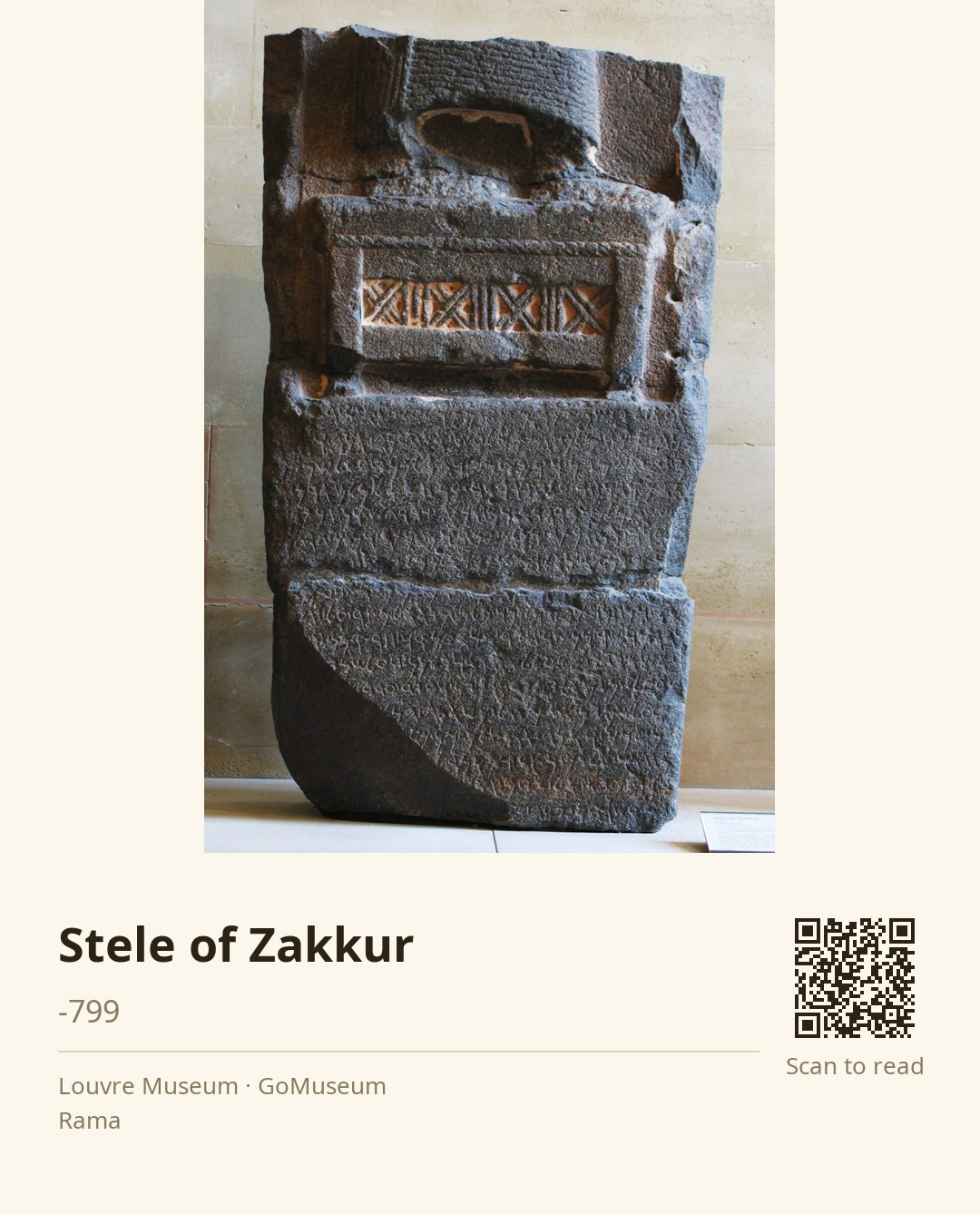
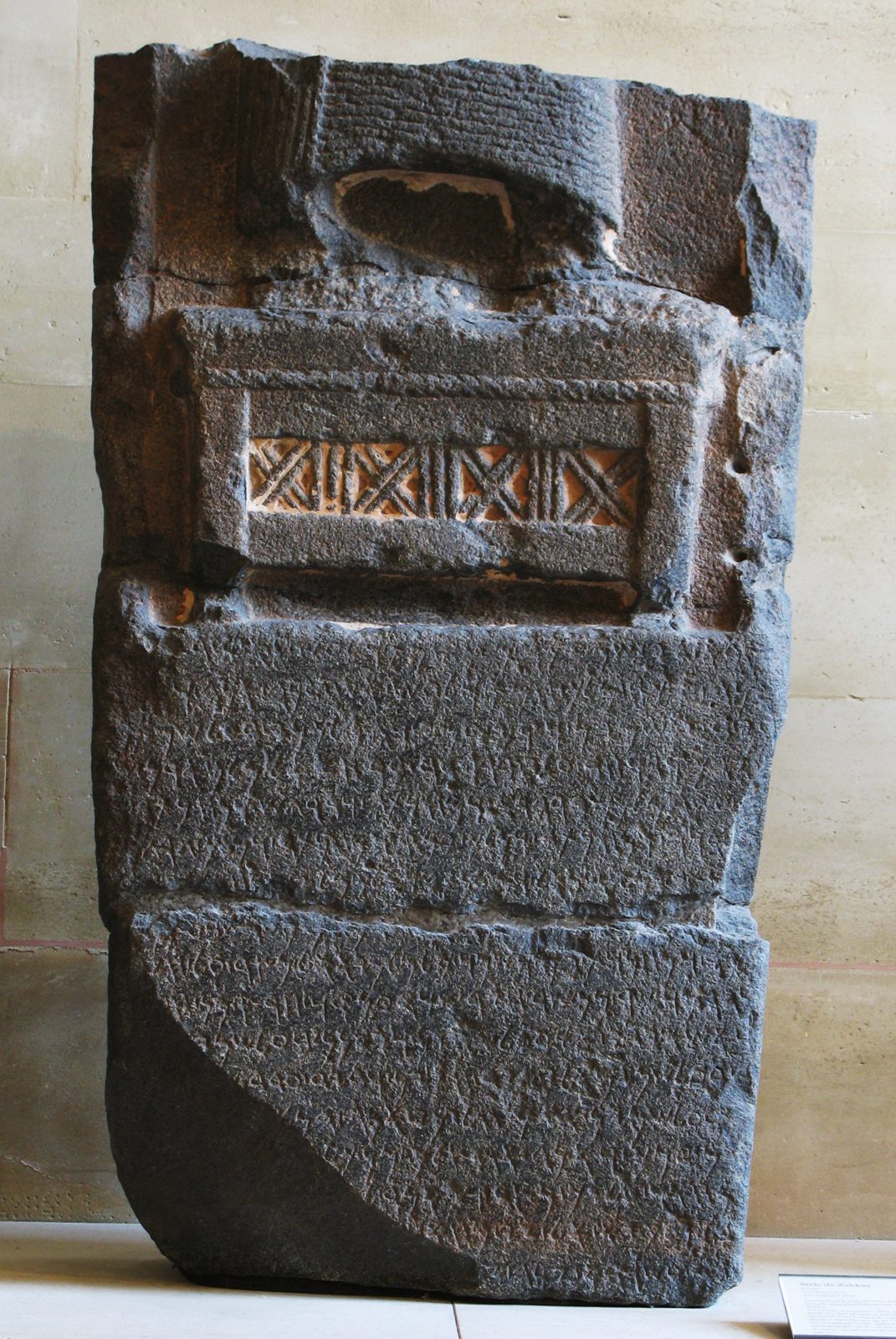
🎧 This work has audio narration — listen in the appTake a moment to really look at the Stele of Zakkur. Notice how the lower part is adorned with intricate inscriptions, while the upper section is missing, hinting at a grand statue of King Zakkur himself, once seated in regal splendor. Those feet you see peeking through the remnants? They’re a whisper of the king’s presence, a reminder of a powerful ruler who faced down seventeen kings united against him.
This stele isn’t just a stone; it’s a story carved in time, revealing the struggles and triumphs of Zakkur, who claimed divine support from Baalshamin, the god of the city. Imagine the fear and tension as he faced siege, yet found courage in a divine promise: “Do not be afraid! I will save you.” This inscription is one of the earliest records of the Aramaean god Baalshamin, linking the ancient past to the present.
Discovered in 1903 in Tell Afis, this artifact connects us to a world long gone, where kings and gods intertwined. As you stand here, think about the weight of history beneath your feet. What stories do you think this stele could tell if it could speak?
The Stele of Zakkur was discovered in 1903 at Tell Afis, a site rich in history located about 45 kilometers southeast of Aleppo, Syria. This ancient kingdom of Hamath was a significant player in the region, and the stele itself is a testament to King Zakkur's reign around 785 BC. The stele features an extensive inscription that recounts Zakkur's struggles against a coalition of seventeen kings led by Bar-Hadad, the son of Hazael. The stele was published in 1907, bringing to light its intricate details and the dramatic narrative it holds. Interestingly, the site of Tell Afis is referred to as Hazrach in the stele, a name that also appears in biblical texts as Hadrach, linking the artifact to both history and scripture.
This stele, with its vivid inscription, captures a moment of conflict and divine intervention, reflecting the political landscape of the time. It marks one of the earliest mentions of the god Baalshamin, linking it to the broader tapestry of ancient Near Eastern religions. By preserving this narrative, the stele influences our understanding of ancient kingship and the interplay between power and faith, making it a vital piece of art history that continues to resonate with scholars and enthusiasts alike.
One fascinating detail about the Stele of Zakkur is that it features two deities: Baalshamin, the god of the city, and Iluwer, Zakkur's personal god. Iluwer is believed to represent an earlier deity, possibly Mer or Wer, tracing back to the 3rd millennium BC.
The upper part of the stele is missing, which likely included a statue of King Zakkur seated on a throne, adding to the mystery of its original grandeur.