 Image: JackyM59
The Four Seasons
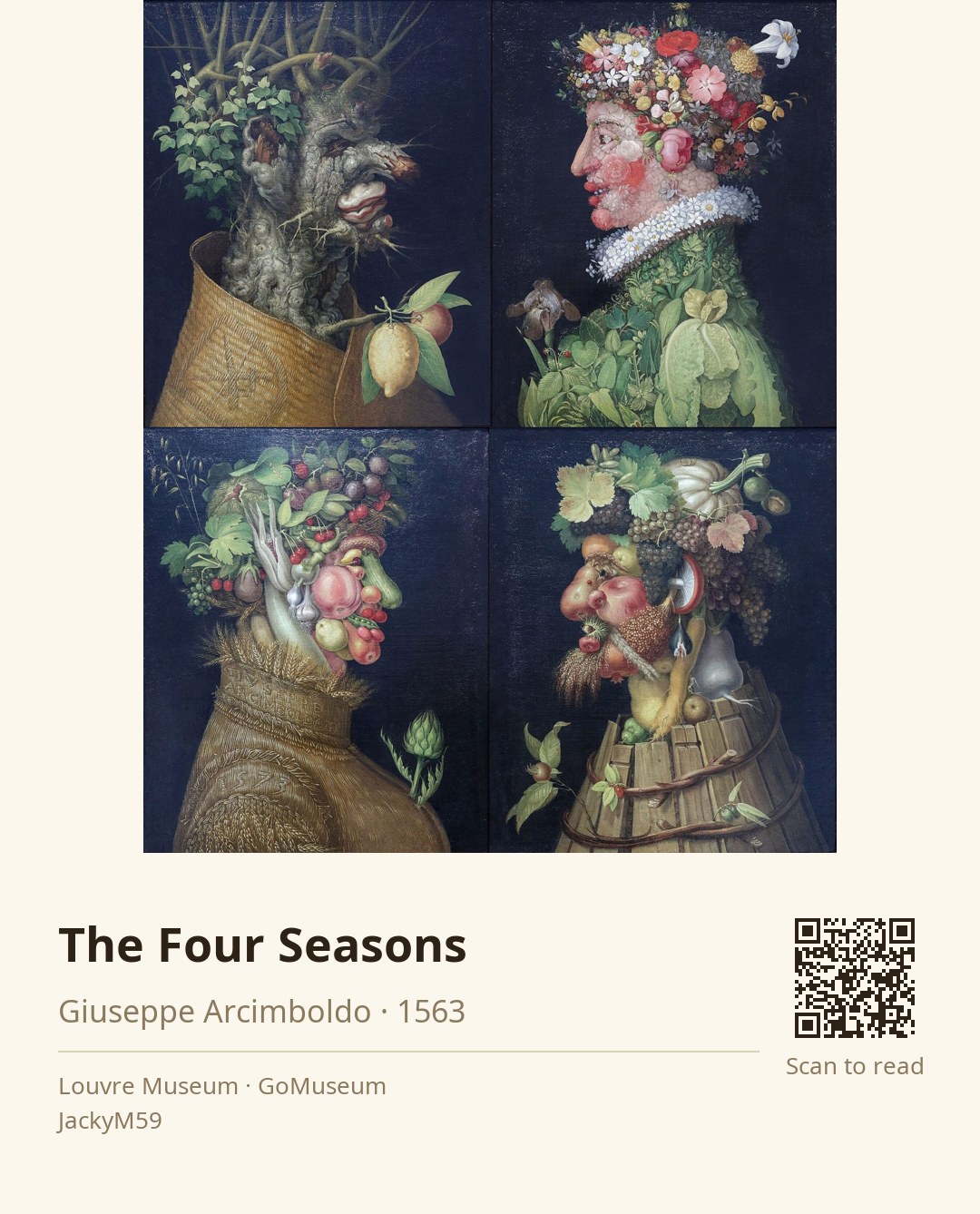
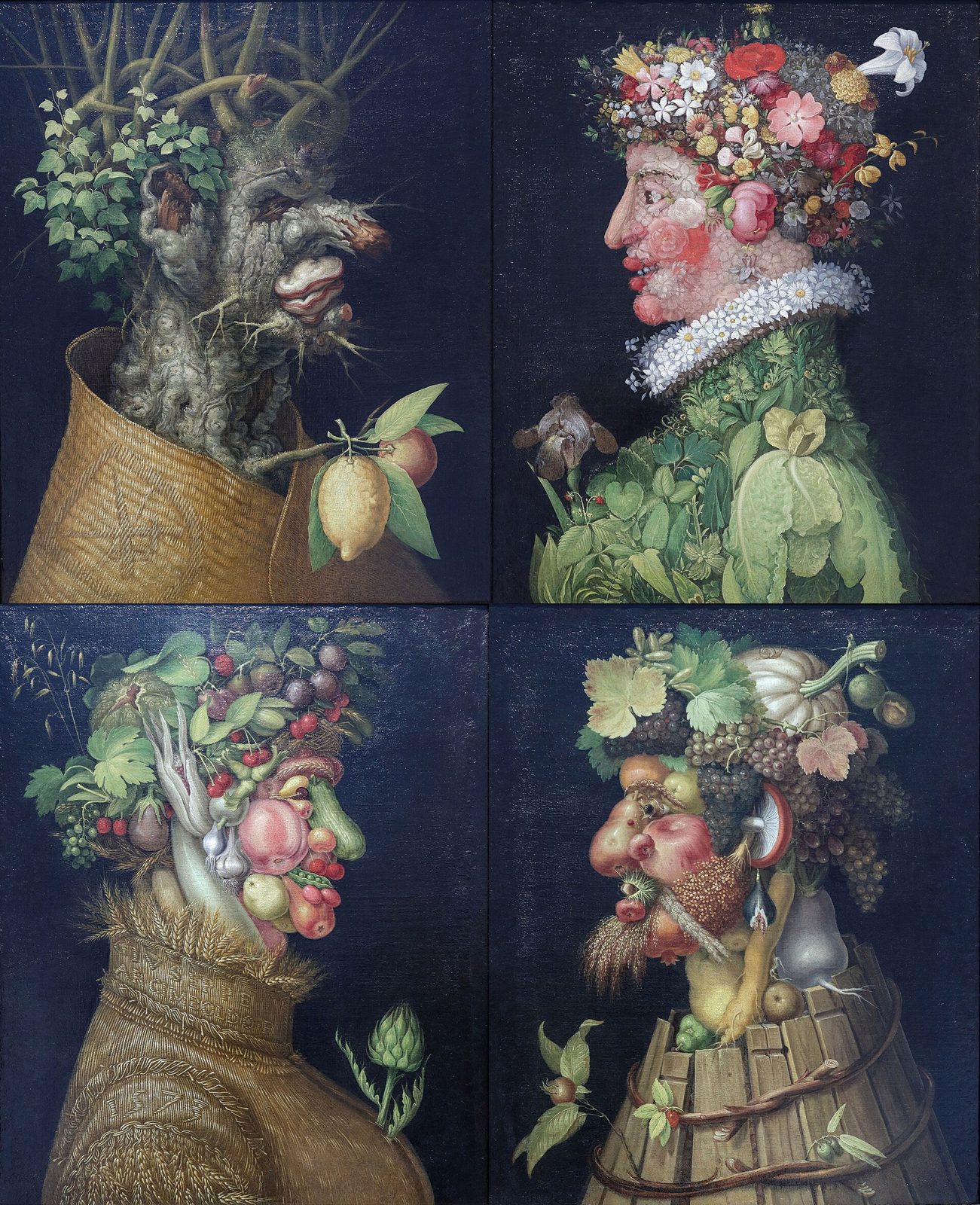
🎧 This work has audio narration — listen in the appTake a moment to look closely at "The Four Seasons" by Giuseppe Arcimboldo. What you see here is not just a portrait; it’s a vibrant tapestry of nature woven into the very fabric of humanity. Notice how Spring is depicted as a woman made entirely of flowers—rose petals for her skin, a bouquet for her hair, and even belladonna berries for her eyes. This isn’t merely decorative; it’s a celebration of renewal and the beauty of life that comes with the season.
These details matter because they reflect Arcimboldo's genius in merging human forms with the natural world, creating a dialogue between the two. Each element symbolizes the essence of the season it represents, inviting viewers to contemplate the interconnectedness of life and nature.
Created in 1563, this piece was part of a series commissioned for Maximilian II, Holy Roman Emperor, showcasing the grandeur of the Habsburg dynasty. Arcimboldo was known for his imaginative style, which was both whimsical and deeply symbolic, capturing the spirit of the Renaissance fascination with nature and allegory.
As you stand here, think about how these seasonal portraits might resonate with your own experiences. What does Spring mean to you? How do you see nature reflected in your life?
Giuseppe Arcimboldo, born in Milan around 1527, was an Italian Mannerist painter renowned for his imaginative portraits formed from an array of objects like fruits, vegetables, and flowers. He began his artistic career as a designer for stained glass and frescoes before becoming the court portraitist for three Holy Roman Emperors. His unique style, characterized by grotesque compositions that cleverly arranged everyday items into human forms, captivated the courts of Vienna and Prague. Arcimboldo’s works, while whimsical, often contained deeper critiques of society, reflecting the era's intellectual currents. His portraits, such as "The Librarian," not only showcased his creativity but also commented on the superficiality of wealth and scholarship. Despite his conventional religious works fading into obscurity, his composite portraits remain celebrated for their intricate symbolism and playful nature. Arcimboldo died in Milan in 1593, leaving a legacy that bridges the Renaissance and Baroque periods, influencing future generations of artists fascinated by the relationship between humanity and nature. His works are housed in major museums across Europe and the United States, continuing to intrigue audiences today.
Giuseppe Arcimboldo's 'The Four Seasons' was created in 1563, commissioned by Maximilian II, Holy Roman Emperor, as part of a grand series that included 'The Four Elements.' This series was presented to the emperor in 1569, accompanied by a poem from Giovanni Battista Fonteo that delved into the allegorical meanings of the paintings. While only Winter and Summer from the original series survive today, the Louvre holds a complete set of copies made for Augustus of Saxony, featuring a floral frame not present in the originals. Interestingly, Spring also exists in a version copied for Philip II of Spain, now housed in Madrid. The original works were celebrated for their intricate compositions, showcasing the Habsburg dynasty's grandeur and the Renaissance's fascination with nature and allegory. Arcimboldo's imaginative style captivated audiences, blending whimsy with deep symbolism, and his work was a reflection of the cultural currents of his time.
These imaginative works, composed entirely of fruits, vegetables, and flowers, were groundbreaking in their allegorical representation of the seasons. They influenced not only the art of the Mannerist period but also sparked curiosity and fascination that resonates even today. By intertwining the human form with the natural world, Arcimboldo challenged traditional portraiture, inviting viewers to see beyond mere likeness and explore deeper connections.
When he presented them to Maximilian II, they came with a poem by Giovanni Battista Fonteo that explained their deeper allegorical meanings. This wasn't merely about showcasing artistic talent; it was a clever commentary on the cycles of nature and perhaps even a nod to the Habsburg dynasty's enduring legacy. Imagine the court's reaction, not just to the vibrant colors and unusual compositions, but to the layers of meaning packed into each piece!
In addition to being a court painter, Arcimboldo was also responsible for organizing elaborate festivities and designing costumes, showcasing his versatility and importance in the cultural life of the Habsburg court.