 Image: Shonagon · Ken and Nyetta · Tangopaso · Tangopaso · Tangopaso
Borghese Venus
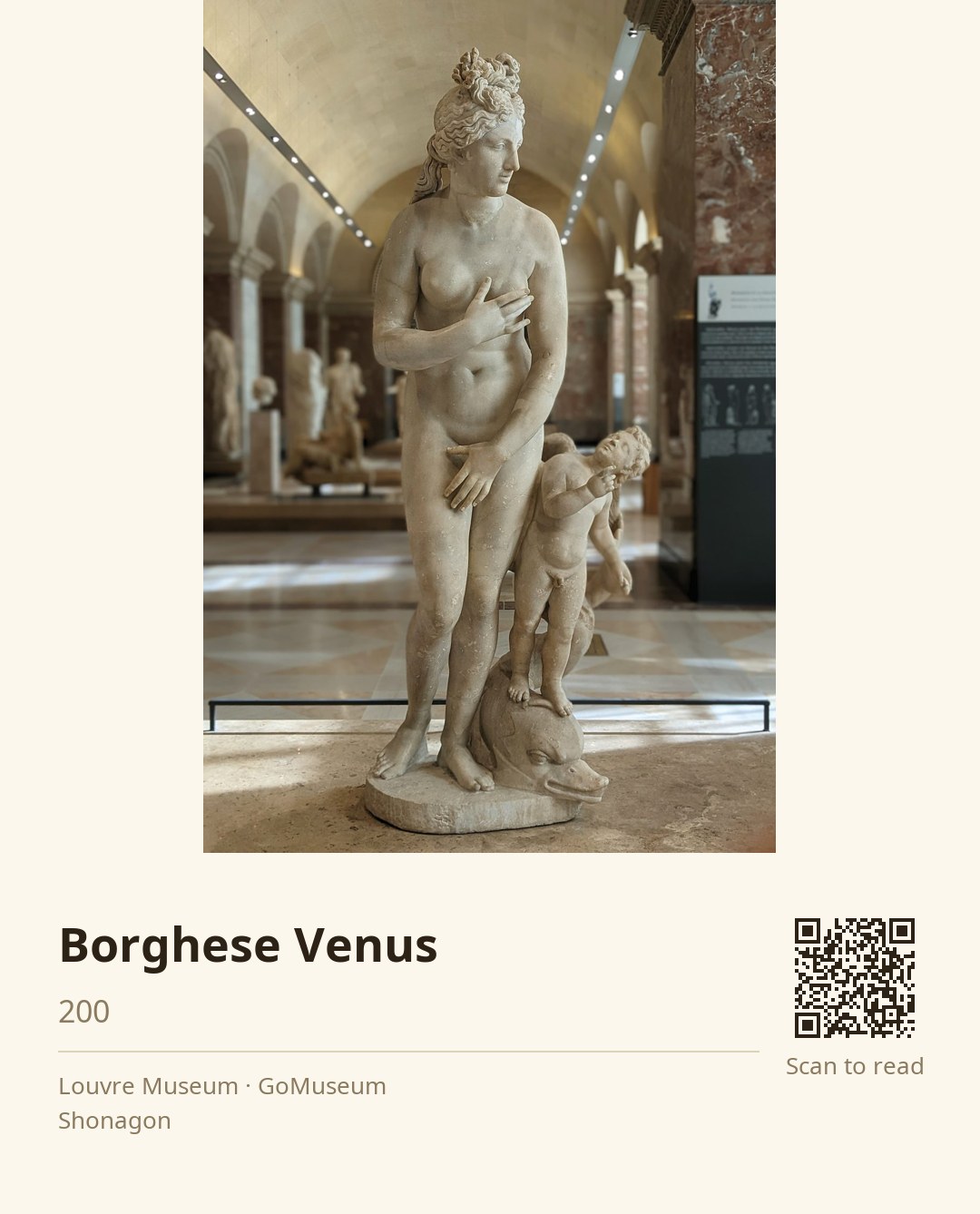
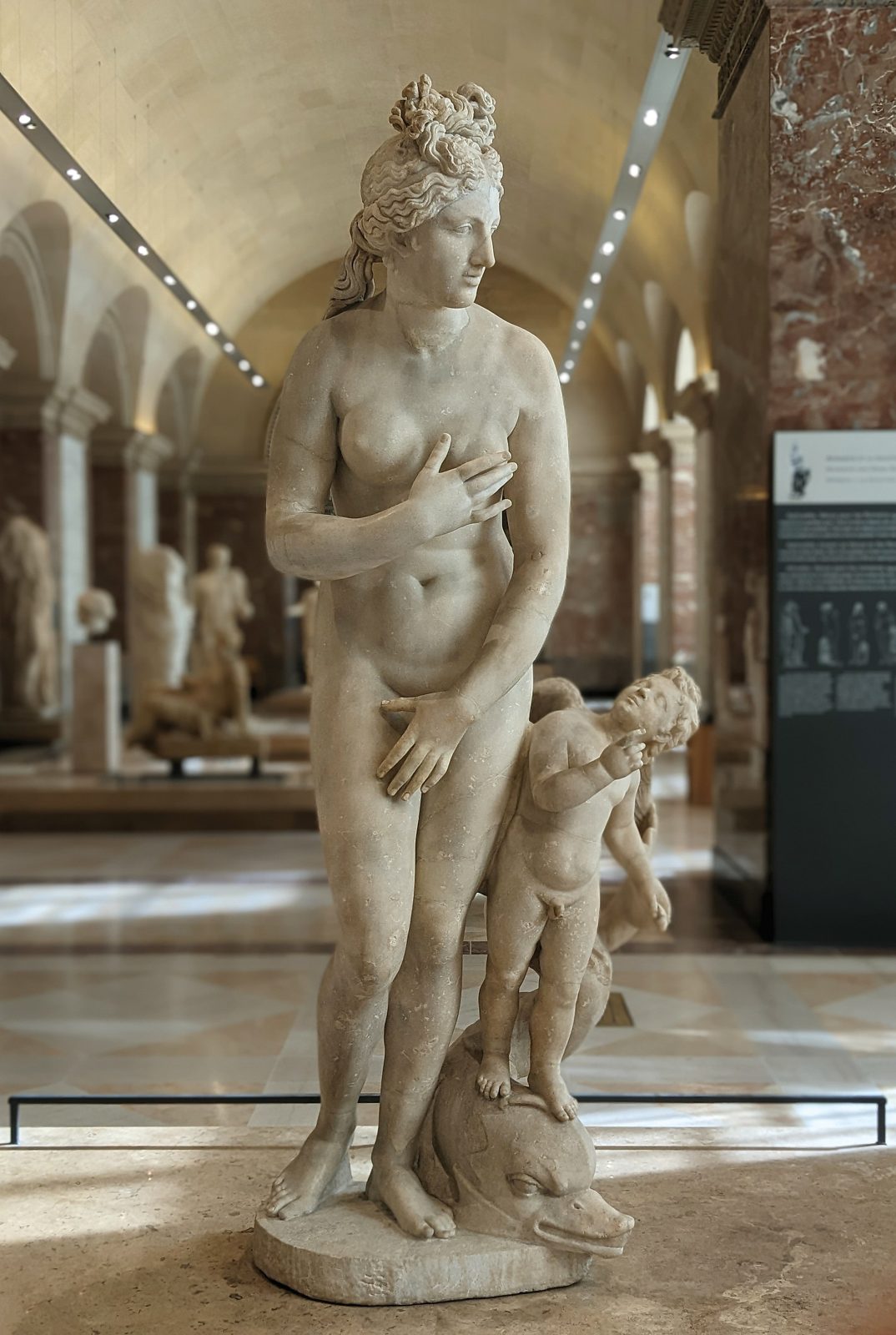
🎧 This work has audio narration — listen in the appTake a moment to really look at the Borghese Venus. Notice how she stands, her body slightly turned, as if caught in a moment of graceful movement. The way her drapery clings to her form creates a beautiful tension, drawing your eye across the smooth marble. And don’t miss Cupid nestled at her feet, along with the dolphin — both symbols of love and beauty that enrich her story.
The addition of Cupid and the dolphin adds layers of meaning, emphasizing Venus's role as the goddess of love. It’s a clever nod to her divine nature, inviting you to ponder the interplay between beauty and affection.
Created in the 2nd century CE, this sculpture is a Roman interpretation of an iconic Greek work, showcasing how the Romans admired and adapted Greek art. Acquired by Napoleon, it has traveled through history, much like the goddess herself.
As you stand here, consider what Venus represents to you. Is she merely a figure of beauty, or does she evoke deeper feelings about love and desire in your own life?
As you gaze at the Borghese Venus, take a moment to appreciate the craftsmanship of the marble. Notice how the sculptor has skillfully carved the drapery, allowing it to cling to her form with a lifelike quality. The smoothness of the marble contrasts beautifully with the intricate details of her hair and the delicate features of her face. This isn't just a block of stone; it's a testament to the Roman artist's ability to breathe life into the material, transforming it into a figure that seems almost ready to step off the pedestal.
The Borghese Venus, created in the 2nd century CE, is a Roman marble copy of the famed Greek Aphrodite of Cnidus. Originally part of the prestigious Borghese collection, it found its way to the Louvre Museum after being purchased by Napoleon III in 1861. Interestingly, the Cupid and dolphin, which are often associated with Venus, are believed to be additions by the Roman copyist, showcasing how interpretations can evolve over time.
Did you know that the Borghese Venus is actually a Roman copy of a famous Greek original? This sculpture, created in the 2nd century CE, is a reinterpretation of the Aphrodite of Cnidus, which was celebrated for its beauty. But here's the twist: the Cupid and dolphin you see accompanying Venus were likely added by the Roman sculptor, not part of the original design. So, while you're admiring this stunning piece, remember that it’s a blend of Greek elegance and Roman creativity, showcasing how art evolves over time.
Three other Venuses were acquired from the Borghese collection at the same time, including 'Aphrodite at the pillar', an 'Armed Venus', and a Venus Pudica, although the last two are significantly more restored than the Borghese Venus.
The Borghese Venus showcases an exceptional level of detail in the carving of the drapery and facial features, which reflects the Roman artist's ability to imbue marble with a lifelike quality, distinguishing it from many other sculptures of the same period.