 Image: Shonagon
Eurytios Krater
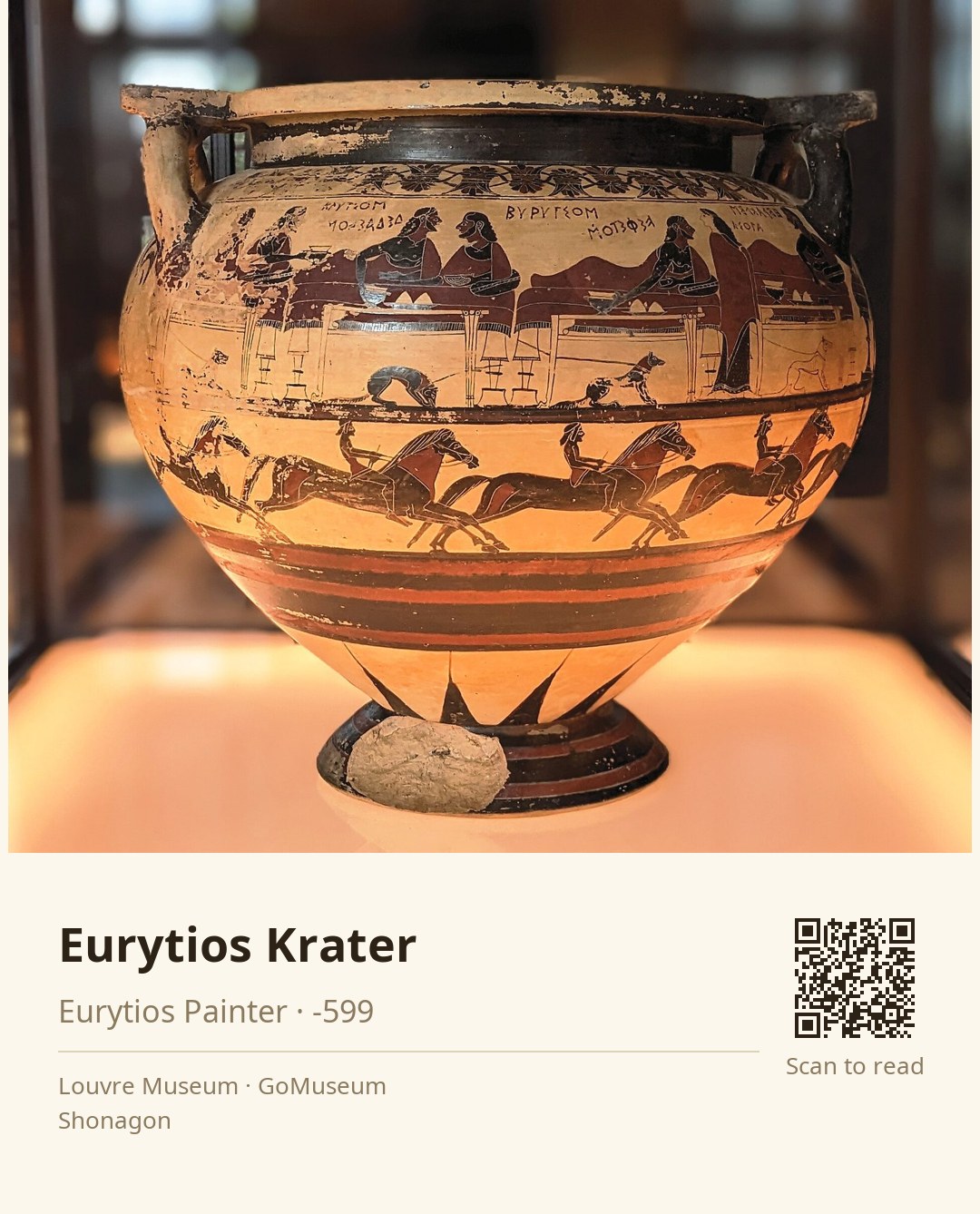
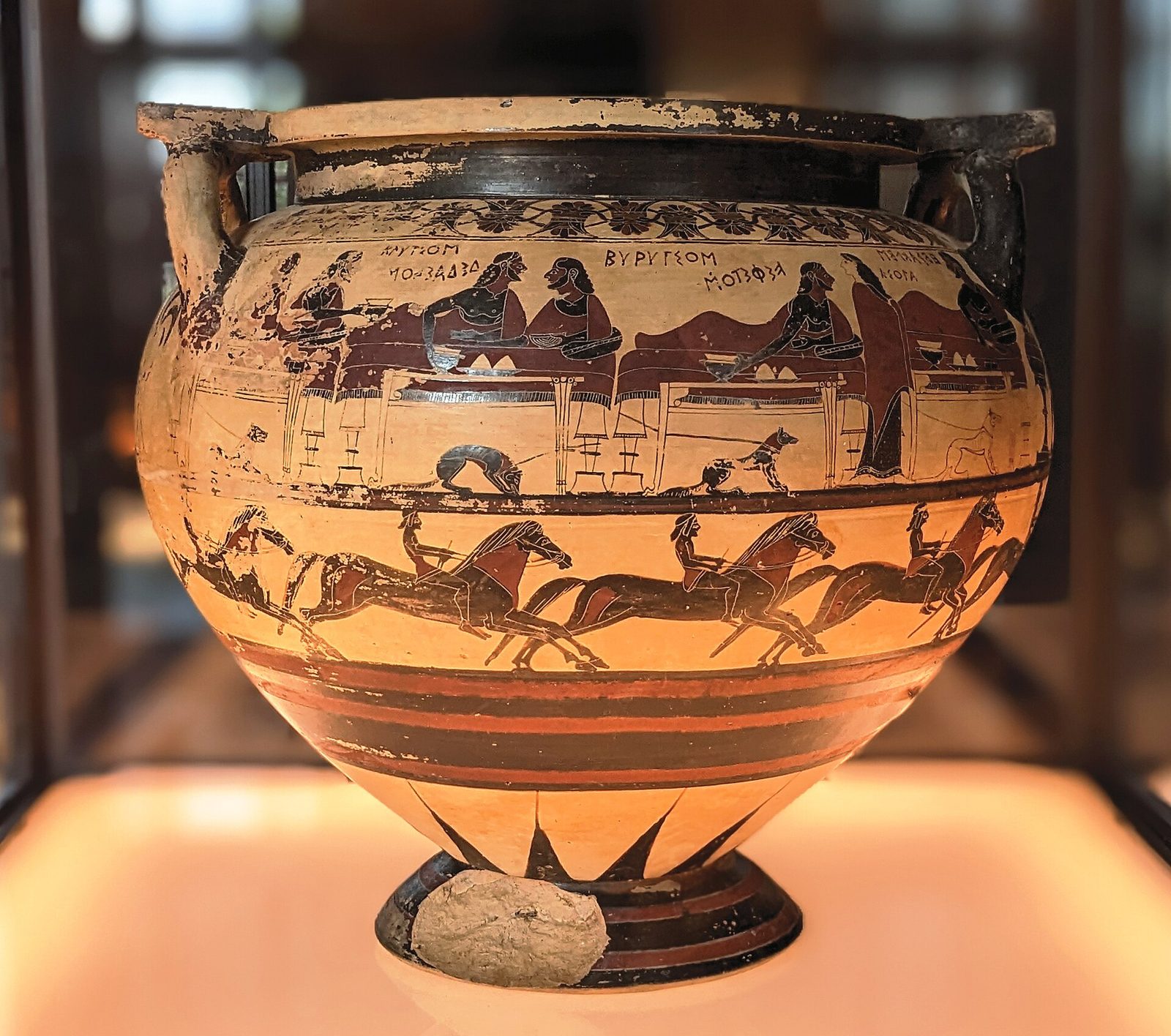
🎧 This work has audio narration — listen in the appTake a moment to really look at the Eurytios Krater. Notice how the figures seem to leap off the surface, their expressions frozen in a lively feast. The scene on the front features Eurytus hosting Herakles, a moment of camaraderie captured in exquisite detail. Look closely at the inscriptions; they name the figures, adding a personal touch that draws you into the narrative.
This krater showcases the innovative blend of black-figure and polychrome techniques, marking a significant evolution in vase painting around 600 BC. The craftsmanship here is exceptional, hinting at the skill and creativity of the Eurytios Painter, who was pushing the boundaries of artistic expression.
Discovered in Cerveteri and now residing in the Louvre, this piece is not just a vessel for mixing wine; it’s a window into the social and cultural life of ancient Greece. As you stand here, think about the stories this krater could tell. What do you imagine the conversations were like at that feast?
The Eurytios Krater, crafted around 600 BC, is a remarkable artifact from the early Corinthian period. It was discovered in Cerveteri, Italy, a site rich in Etruscan tombs, and is now housed in the Louvre. This piece was named after the central figure, Eurytus, who is depicted hosting Herakles in a lively feast—a scene that stands out in Corinthian vase painting. The inscriptions that accompany the figures add a personal touch, inviting viewers to connect with the characters. The back of the krater features a battle scene, possibly linked to the Trojan War, while the lower frieze depicts a deer hunt and the earliest known representation of Ajax's suicide. This blend of themes reflects the complexities of human experience in ancient narratives.
One surprising detail about the Eurytios Krater is its inclusion of inscriptions that name several figures in the artwork. These inscriptions transform the figures from mere representations into identifiable characters, enhancing the storytelling aspect of the piece.
The Eurytios Krater is notable for its innovative combination of black-figure and polychrome techniques, showcasing a high level of artisanship that was quite advanced for its period.
The back features a battle scene possibly linked to the Trojan War and the earliest known representation of Ajax's suicide, reflecting the complexities of heroism and tragedy in Greek storytelling.