Bonaparte at the Pont d'Arcole
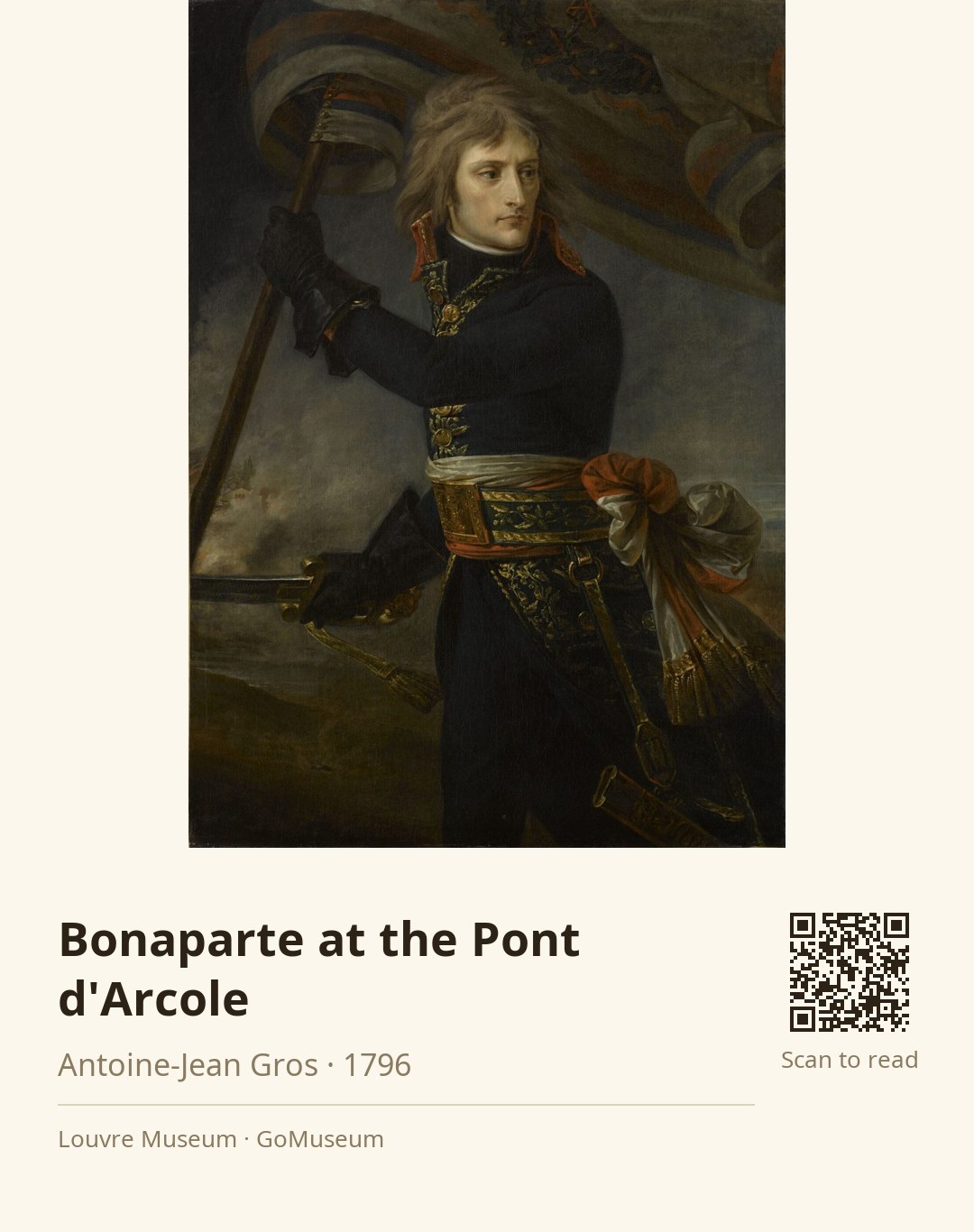
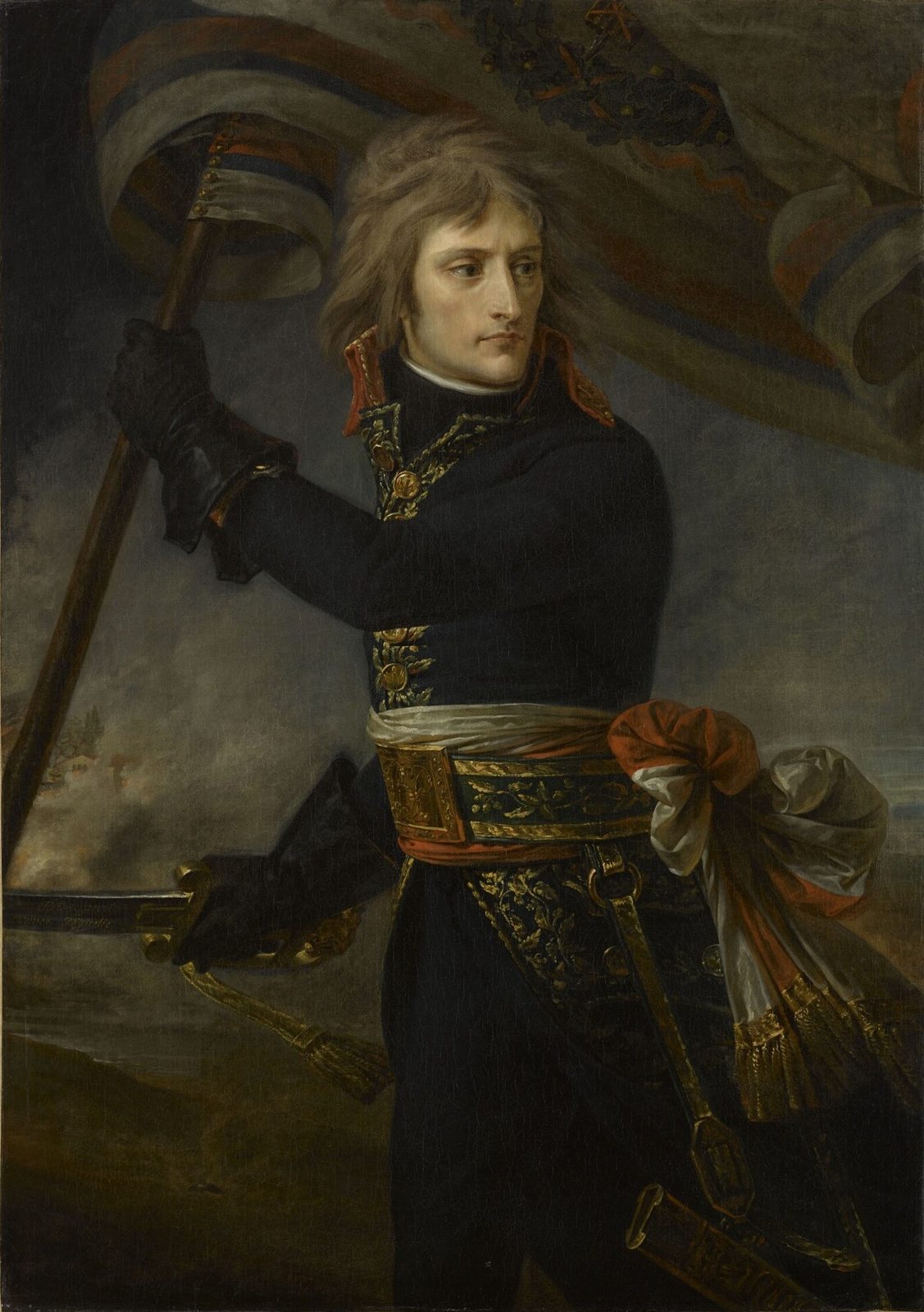
🎧 This work has audio narration — listen in the appTake a moment to really look at "Bonaparte at the Pont d'Arcole." Notice how Napoleon stands confidently, sword in hand, with a determined gaze that seems to pierce through the smoke of battle. His left hand grips the flagstaff, a symbol of his leadership and ambition. The inscription on the sword, "Bonaparte, Armée d'Italie," isn’t just a name; it’s a declaration of his identity and purpose.
This painting isn’t just about a military leader; it’s about the birth of a legend. Gros captures not just the physicality of Napoleon, but the essence of his charisma and the fervor of his campaign in Italy. The smoke and distant houses hint at the chaos of war, contrasting sharply with Bonaparte’s poised figure, as if to say that amidst turmoil, a leader must rise above.
Commissioned by Joséphine during the Italian Campaign, Gros had to find a way to capture Napoleon’s likeness, even coaxing him to sit still by having him perch on her lap. This intimate moment speaks volumes about the personal dynamics behind the creation of such a monumental piece.
As you stand here, consider how this painting contributed to the mythos of Napoleon. How does this image shape your understanding of him as a leader? What emotions does it evoke in you as you witness this moment frozen in time?
Antoine-Jean Gros was a prominent French painter born on March 16, 1771, in Paris. He was a student of Jacques-Louis David, and his early life was marked by artistic promise, nurtured by a family of painters. Gros gained fame during the French Revolution, particularly for his portrait of Napoleon Bonaparte at the Battle of Arcole, which led to a close relationship with the emperor. His works often depicted historical events, blending neoclassicism with emerging romanticism, showcasing both grandeur and emotional depth.
After spending time in Genoa, where he painted portraits, Gros returned to Paris and became a celebrated artist. His notable works include "Bonaparte Visiting the Plague Victims of Jaffa," which served to counter negative propaganda against Napoleon. Despite his success, Gros struggled with the changing artistic landscape, feeling overshadowed by the rise of Romanticism. His later years were marked by personal turmoil, culminating in his tragic suicide in 1835. Gros's legacy lies in his ability to capture the complexities of his subjects, securing his place in art history as a bridge between neoclassicism and romanticism.
Antoine-Jean Gros painted 'Bonaparte at the Pont d'Arcole' in 1796, during the heat of the Italian Campaign. Commissioned by Joséphine, Napoleon's wife, the painting captures a defining moment when Bonaparte led his troops across the Arcole Bridge. The scene was so pivotal that Gros had to coax Napoleon into sitting for him by having him perch on Joséphine's lap. This intimate arrangement highlights the personal dynamics at play in the creation of this monumental work. The painting was first exhibited at the Salon of 1801, where it was met with acclaim, cementing Gros's reputation. After Napoleon's fall, the painting changed hands several times, passing through the collections of Napoleon III and eventually finding its home in the Louvre, before being moved to the Palace of Versailles in 1938.
Notice how he uses a three-quarter pose to give Bonaparte a commanding presence, almost as if he’s stepping out of the canvas. The brushwork is dynamic, particularly in the smoky background that suggests chaos, contrasting with the clarity of Bonaparte's figure. The color palette is rich yet somber, with dark tones framing the vibrant blue of his uniform, drawing your eye to him as the focal point. The light subtly highlights the gold embroidery on his collar and the flagstaff he grips, symbolizing his leadership. The composition is carefully structured, with Bonaparte's gaze directed towards the viewer, creating an intimate connection that pulls you into the moment. This blend of realism and idealism captures not just a leader, but the very essence of ambition and determination.
This work, painted in 1796, captures the essence of Bonaparte as a heroic figure, leading his troops with determination. It influenced not only the portrayal of military leaders in art but also served as a powerful piece of propaganda, glorifying Napoleon's image during a tumultuous time in France. Gros's dramatic brushwork and composition set a new standard for historical painting, merging realism with a sense of grandeur that would inspire countless artists in the years to come. Remember, this painting was more than a depiction; it was a calculated move in the game of power and public perception, forever altering how leaders would be represented in art.
Here's a surprising tidbit: when Gros was painting Bonaparte at the Pont d'Arcole, Napoleon couldn't sit still for long. To solve this, Joséphine, his wife, had him sit in her lap! Imagine the scene—Napoleon, the future emperor, perched on his wife's lap while the artist captured his likeness. It’s a testament to their close relationship and the lengths they went to for art.
Gros struggled to get Napoleon to sit still for the portrait, as the general was known for his restlessness. To solve this, Joséphine had him sit on her lap, allowing Gros to capture the likeness he needed for this iconic image.
After Napoleon's fall, the painting changed hands multiple times, eventually being sequestered following the collapse of the Second French Empire. It was later reacquired by Napoleon III's wife, Eugénie de Montijo, and eventually found its way to the Louvre and then to the Palace of Versailles.