 Image: Unknown artistUnknown artist · anonymous · anonymous · Yortw
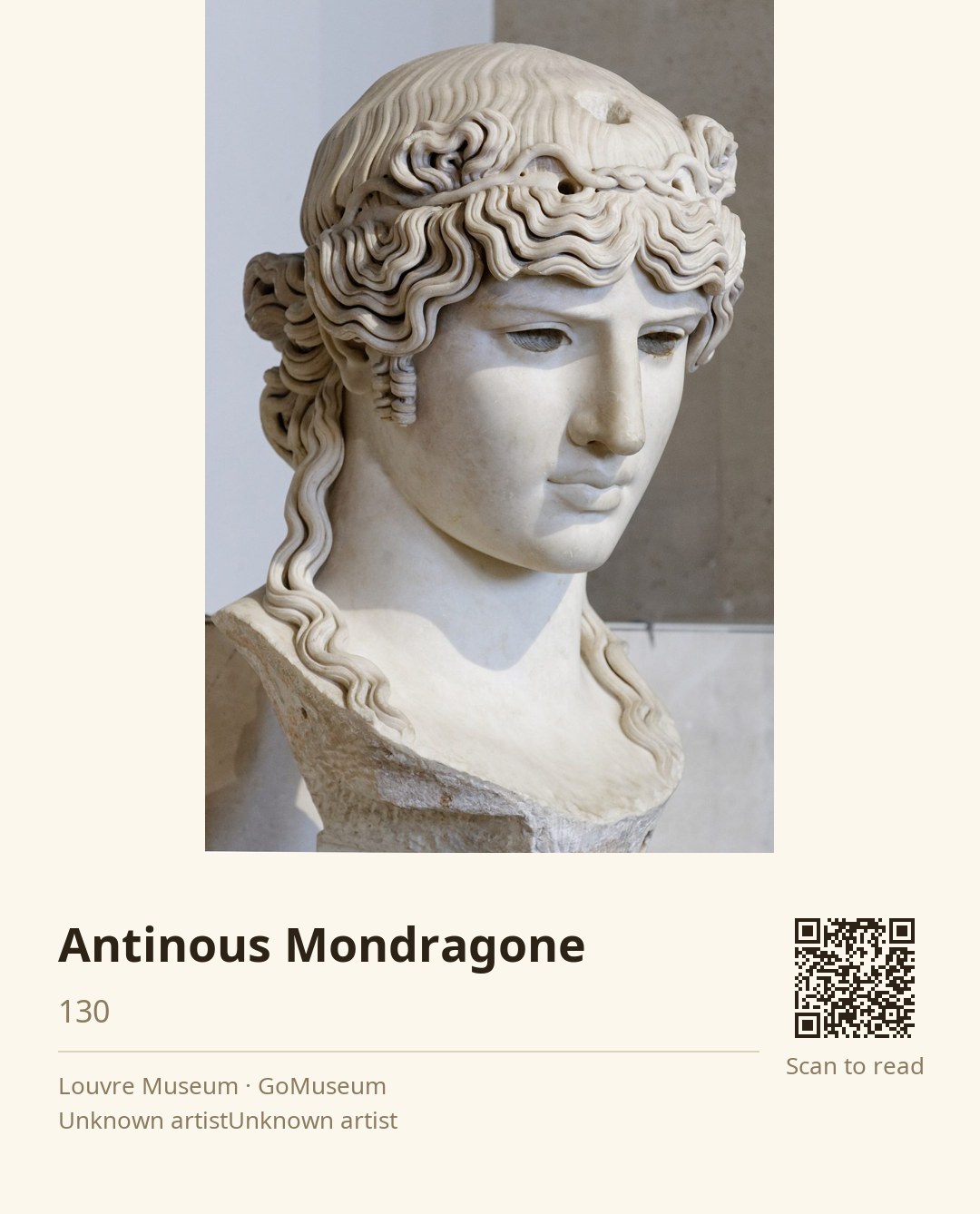
Antinous Mondragone
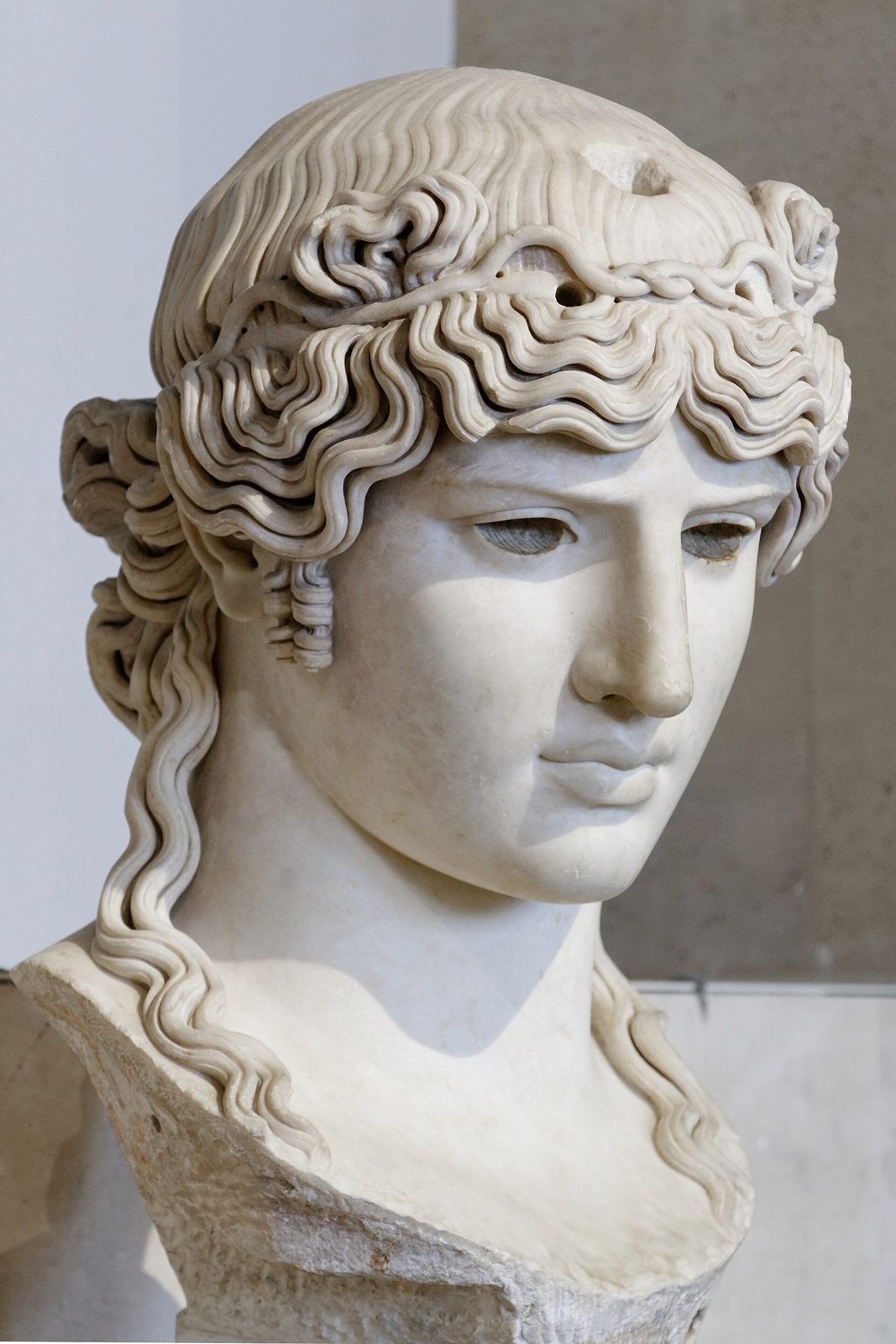
🎧 This work has audio narration — listen in the appTake a moment to really look at the Antinous Mondragone. Notice the striking features of the face—those deeply carved striated eyebrows and the full, pouting lips. They give him an almost otherworldly presence, don’t they? This isn’t just a pretty face; it’s a powerful symbol of love and loss from the Roman Empire.
The details matter because they reflect the divine status Antinous was given after his untimely death—rumored to be a drowning in the Nile, a tragedy that sent shockwaves through Emperor Hadrian’s heart. Hadrian immortalized Antinous in art, creating a cult around him that thrived long after his passing. This sculpture is part of that legacy, a testament to their complex relationship that blurred the lines between love and divinity.
Crafted in 130 AD, during Hadrian’s reign, this piece is not just a sculpture; it’s a glimpse into the emotional world of one of Rome’s most enigmatic figures. The hairstyle, reminiscent of the Greek god Dionysus, hints at the cultural blending of the time and the reverence Hadrian had for Antinous.
As you stand here, consider this: what does it mean to immortalize someone in art? How does love transcend time and shape our understanding of history?
As you gaze at the Antinous Mondragone, let your eyes trace the smooth, cool surface of the marble. This sculpture, standing at nearly a meter tall, showcases the acrolithic technique, where the head is carved from marble while the body would have been made from a different material, possibly wood. Notice the intricate details in the striated eyebrows and the full, pouting lips—these were not just for show; they reflect the skill of the sculptor in capturing the essence of Antinous. The hair, styled in a way that evokes the Greek god Dionysus, adds to the divine aura surrounding this figure. Each chisel mark tells a story of craftsmanship, a labor of love that immortalizes a fleeting moment in time.
The Antinous Mondragone was crafted during the reign of Emperor Hadrian, around 130 AD, a time when art flourished under imperial patronage. This colossal head was rediscovered in the early 18th century near the ruins of Tusculum, a significant archaeological site. Initially housed at the Villa Mondragone as part of the Borghese collection, it caught the eye of Napoleon Bonaparte, who purchased it in 1807 for a hefty sum. Its journey didn't end there; it has since found a permanent home in the Louvre in Paris. The sculpture was part of a larger cult dedicated to Antinous, which Hadrian established in his grief after the young man's mysterious death, rumored to be a drowning in the Nile. The reception of this piece over the centuries reflects the enduring fascination with Antinous and the complex emotions tied to his legacy.
Crafted during Emperor Hadrian's reign, this sculpture represents the deified Antinous, Hadrian's beloved, whose untimely death sparked a cult that spread across the Roman Empire. The widespread veneration of Antinous, seen in temples and statues from Egypt to Greece, showcases how this sculpture transcended its time, merging the cultures of the Greco-Roman and Egyptian worlds. Remember, this isn't just a head; it's a testament to a love story that shaped the very fabric of art and spirituality in antiquity.
When it was first displayed in the Villa Mondragone, it was paired with other colossal busts, and there was considerable debate about its identity. It wasn't until its rediscovery in the 18th century that scholars correctly identified it as Antinous, showcasing how art can often be misinterpreted and recontextualized over time.
After Napoleon purchased the sculpture in 1807, a layer of brown wax was added to give it an opaque finish, and plaster was used around the neck to create a more complete appearance. These alterations were later removed during a recent cleaning, restoring the sculpture to its original state.
The cult of Antinous was remarkably widespread, with temples and priesthoods dedicated to him in various regions, including Egypt and Greece. This extensive veneration contributed to the enduring legacy of his image, making it one of the most recognized in antiquity.