The Pilgrims of Emmaus
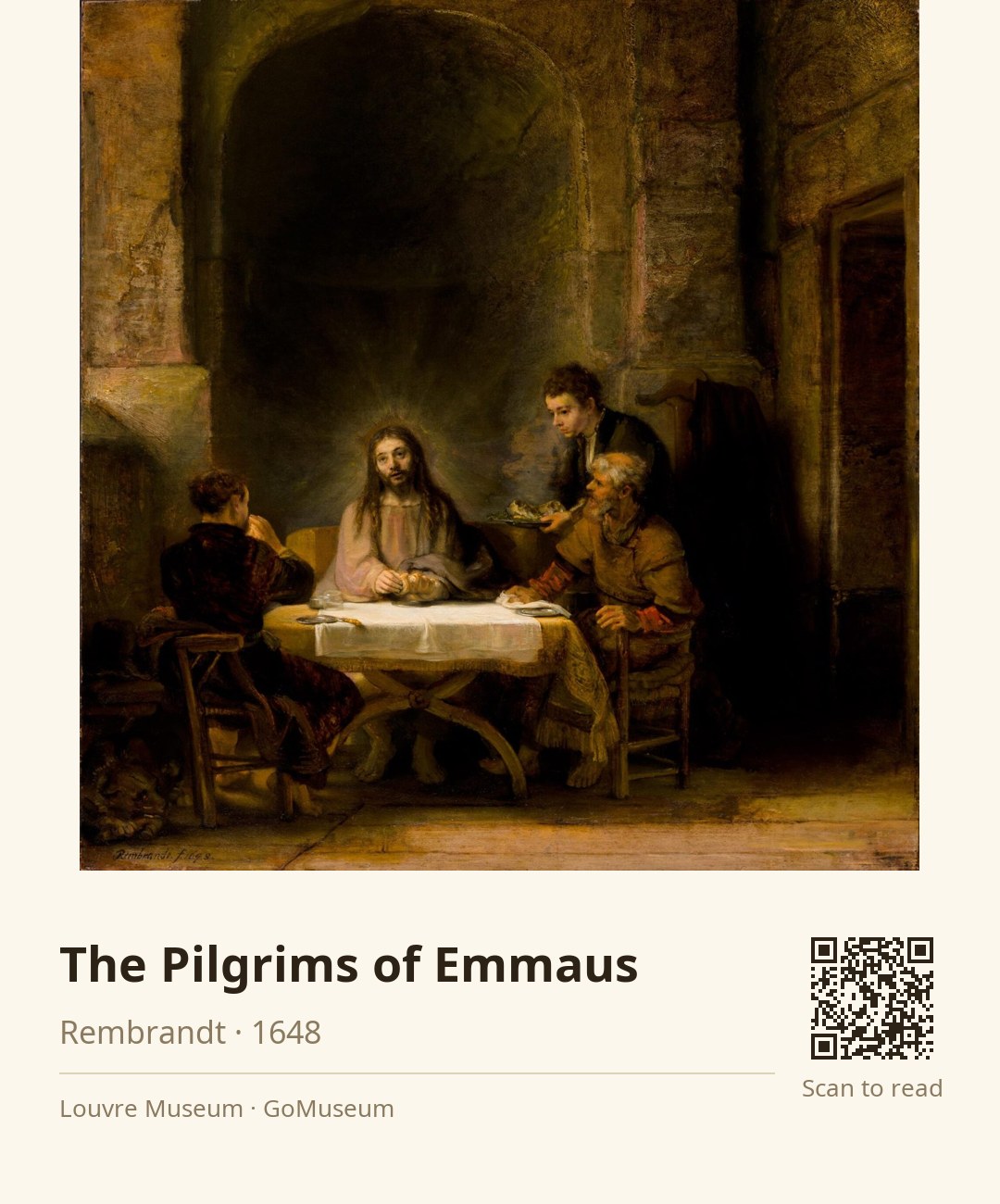
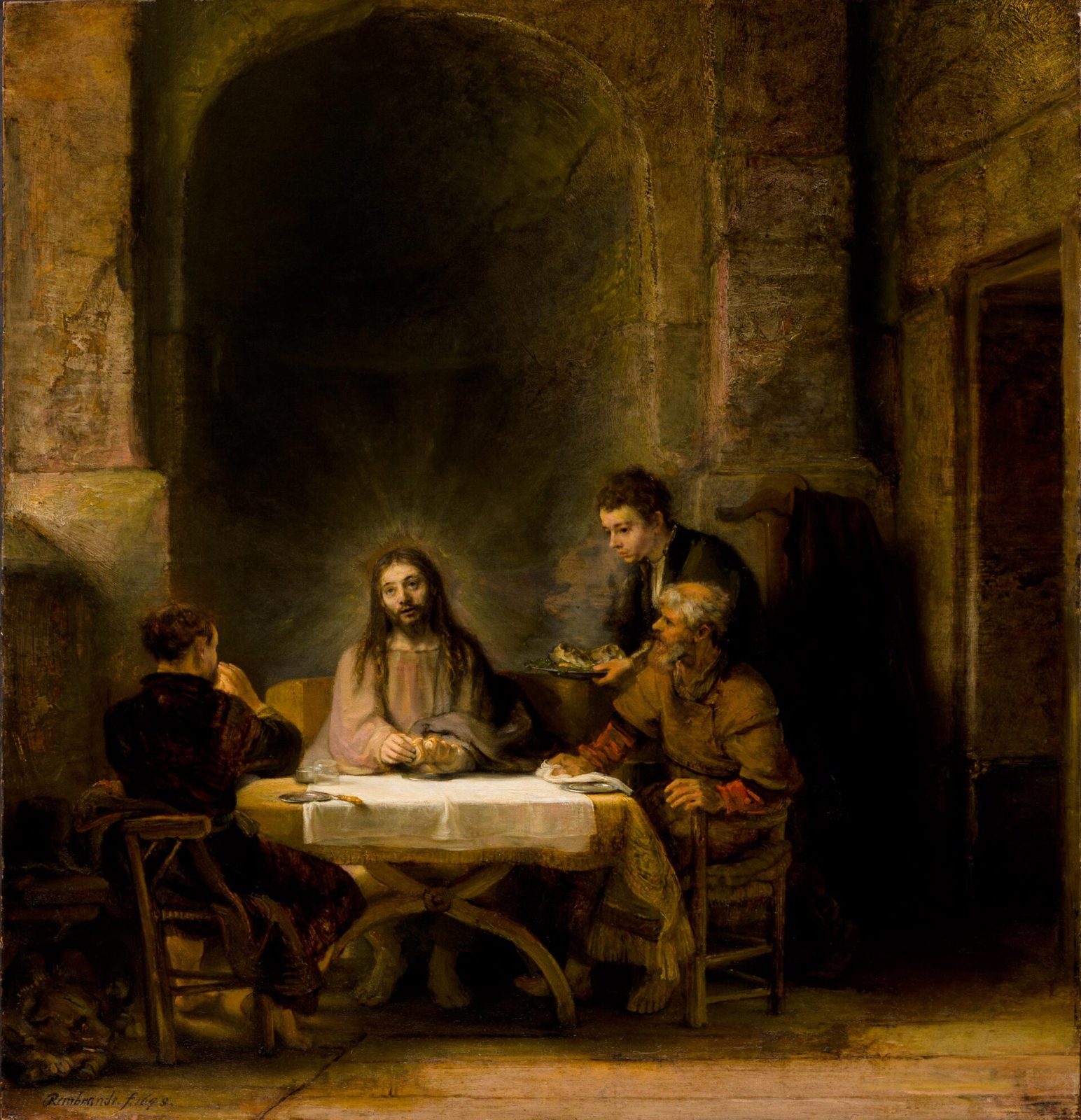
🎧 This work has audio narration — listen in the appThe figure at the center of "The Pilgrims of Emmaus" is breaking bread, illuminated by a gentle glow that draws your eye. Flanking him are two disciples, one in prayerful contemplation and the other leaning forward, engaged in a moment of revelation. Behind them, a young servant holds a dish, frozen in surprise, which heightens the tension of this intimate gathering.
This scene captures the biblical moment when the resurrected Christ reveals his identity to the disciples at Emmaus through the act of sharing bread. The warm earth tones and soft lighting create a sacred atmosphere, emphasizing the transformative nature of this encounter. Rembrandt's meticulous brushwork brings texture to the clothing and the stone walls, grounding the spiritual experience in a tangible reality. The slightly off-center composition, with Christ nestled in an alcove, further enhances the sense of divine presence.
Painted in 1648, this work reflects Rembrandt's deep engagement with religious themes, showcasing his ability to convey profound emotion through the interplay of light and shadow. "The Pilgrims of Emmaus" was part of the collection of Willem Six before passing through several notable owners, ultimately becoming part of the French royal collection in 1777.
Rembrandt Harmenszoon van Rijn, born on July 15, 1606, in Leiden, was a pivotal figure of the Dutch Golden Age and is celebrated as one of the greatest artists in Western art history. His oeuvre includes around three hundred paintings, three hundred etchings, and numerous drawings, showcasing a remarkable range of styles and subjects, from intimate portraits to grand historical and biblical scenes.
Rembrandt's artistic journey began in Leiden, where he was influenced by both Dutch and Italian masters. He opened his studio in 1625 and quickly gained recognition for his portrait work. His move to Amsterdam marked a significant turning point, as he became a sought-after portraitist and married Saskia van Uylenburgh, a union that brought both joy and tragedy. The couple faced immense personal losses, including the deaths of their children and Saskia's own passing in 1642, which deeply affected his work.
Despite financial struggles later in life, Rembrandt's innovative techniques, particularly in etching, transformed the medium into a respected art form. His mastery of light and shadow, known as chiaroscuro, and his empathetic portrayal of human experience set him apart from his contemporaries. Rembrandt's legacy endures through his profound ability to capture the complexities of the human condition, making him a cornerstone of art history.
Rembrandt's technique in 'The Pilgrims of Emmaus' is a masterclass in oil painting on wood, measuring 68 by 65 centimeters. His brushwork is both meticulous and expressive, allowing for a rich texture that brings the figures and their garments to life. The warm earth tones create a cozy yet sacred atmosphere, while the soft lighting highlights the central figure of Christ, enhancing the spiritual significance of the moment. The slightly off-center composition draws the viewer's eye to the action at the table, creating a sense of intimacy. This choice not only emphasizes the divine presence of Christ but also invites the viewer into the scene, making them a silent participant in this profound revelation.
Yes, Rembrandt depicted the theme of the pilgrims at Emmaus in another painting that is housed at the Jacquemart-André Museum.
Rembrandt enjoyed a high reputation during his lifetime, with his paintings being popular, and he taught many significant Dutch painters for two decades.