 Image: Marie-Lan Nguyen
Namara inscription
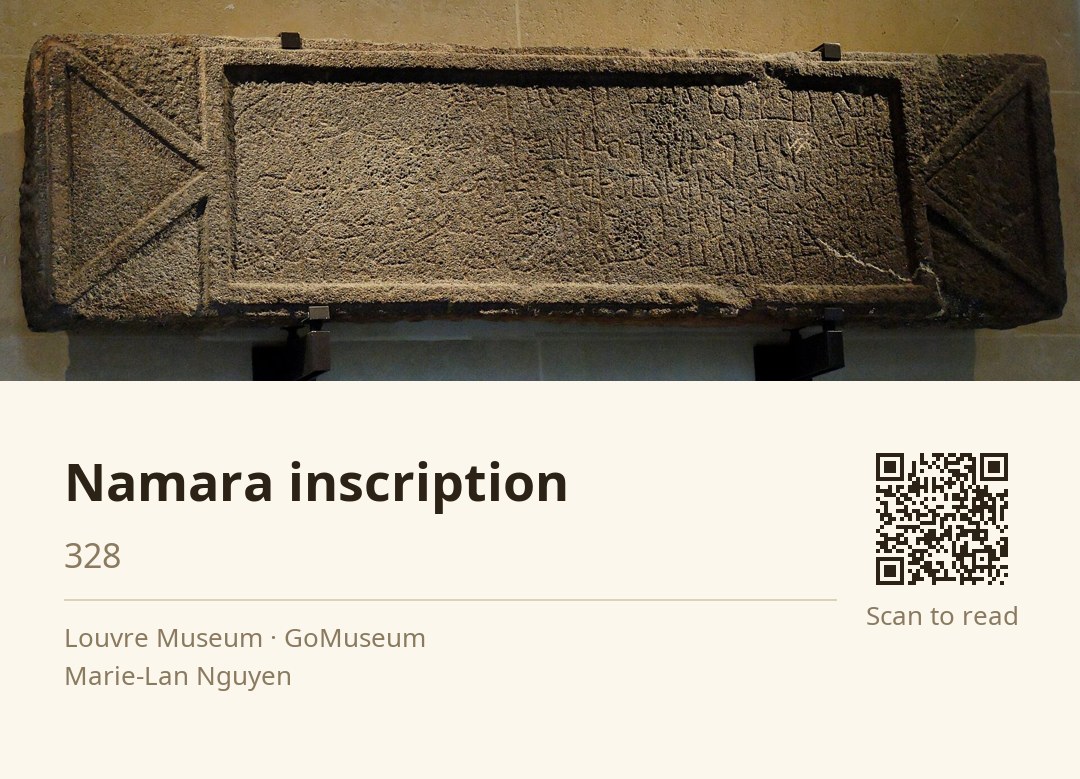
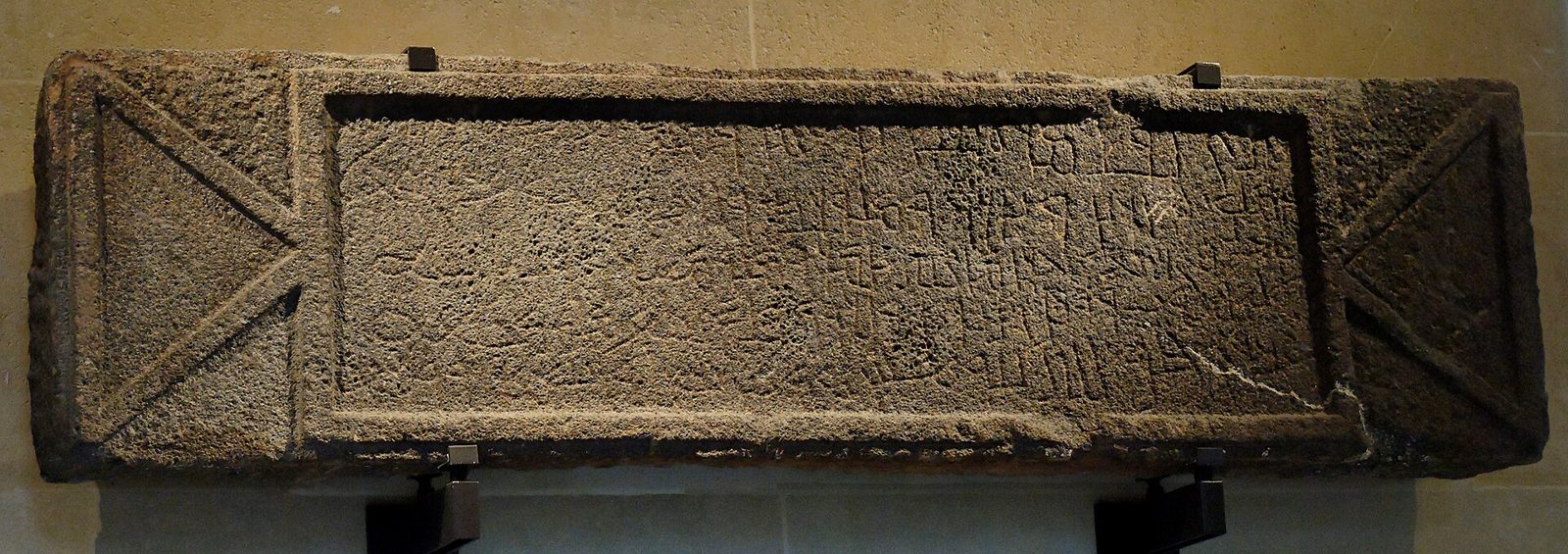
🎧 This work has audio narration — listen in the appTake a moment to really look at the Namara inscription. Notice how the letters are carved into the rough basalt stone—each line tells a story, a whisper from the past. Focus on the way the script transitions from Nabataean to early Arabic; it’s like watching a language evolve right before your eyes.
Why does this matter? This inscription, dating back to 328 AD, is one of the earliest examples of Arabic writing, marking a pivotal moment in the history of language and culture in the region. It’s not just a tombstone; it’s a bridge connecting ancient Arab identity with the broader tapestry of history, showcasing the power and achievements of King Imru' al-Qays.
Discovered in 1901, it serves as a crucial link between the Romans and the Arabs, revealing the intricate relationships that shaped the ancient world. This king, who once commanded armies and navigated political alliances, is immortalized here, reminding us of the legacies that endure through time.
As you stand here, think about the stories this stone has witnessed. What do you think it was like for the people who first read these words? What echoes of their lives linger in the air around you?
As you gaze upon the Namara inscription, take a moment to appreciate the craftsmanship involved in its creation. Carved into a solid block of basalt, the letters are not just etched; they are a testament to the skill of the artisan who shaped them. Notice the way the script transitions from the angular Nabataean to the more flowing early Arabic. This evolution in style reflects not just a change in language but also a shift in cultural identity. The rough texture of the stone adds a raw, tactile quality, inviting you to imagine the tools used to carve these ancient words. Can you feel the weight of history in that stone?
The Namara inscription was discovered on April 4, 1901, by French archaeologists René Dussaud and Frédéric Macler in southern Syria, near the ancient site of al-Namara. This area was significant, lying close to the boundary of the Roman Empire during the time it was carved. The inscription serves as the epitaph for Imru' al-Qays, a king of the Lakhmids, and is securely dated to 328 AD. Today, it resides in the Louvre Museum, where it continues to draw attention for its linguistic and historical significance.
Carved in 328, it stands as one of the earliest examples of Arabic script, bridging the gap between the ancient Nabataean script and what would become the Arabic alphabet. This inscription not only memorializes King Imru' al-Qays, a significant figure in Arab history, but also reflects the intricate relationships between the Romans and the Arabs during a time of political upheaval. Scholars like Irfan Shahid have hailed it as the most important Arabic inscription of its era, highlighting its role in illuminating the early development of Arabic identity and script. Remember this: the Namara inscription isn't just stone; it's a voice from the past, echoing the complexities of a world in transition.
Did you know that the Namara inscription is not just a remarkable piece of art, but also a significant historical document? Discovered in 1901 by two French archaeologists, it offers a glimpse into the life of Imru' al-Qays, a king who was not only a ruler but also a warrior. His life was filled with drama—he faced the might of the Sassanids and even sought help from the Roman emperor Constantine before his death. This inscription, carved into basalt, serves as his epitaph, marking his achievements and the tumultuous times he lived in.
The Namara inscription was discovered near the boundary of the Roman Empire, specifically at the Limes Arabicus of Arabia Petraea, which highlights the cultural and political interactions between the Romans and the Arabs during that time.
Imru' al-Qays was a vassal of the Persian Sassanids, and after facing military challenges, he sought assistance from the Roman emperor Constantine, illustrating the complex political dynamics of the era.