Jewish Wedding in Morocco
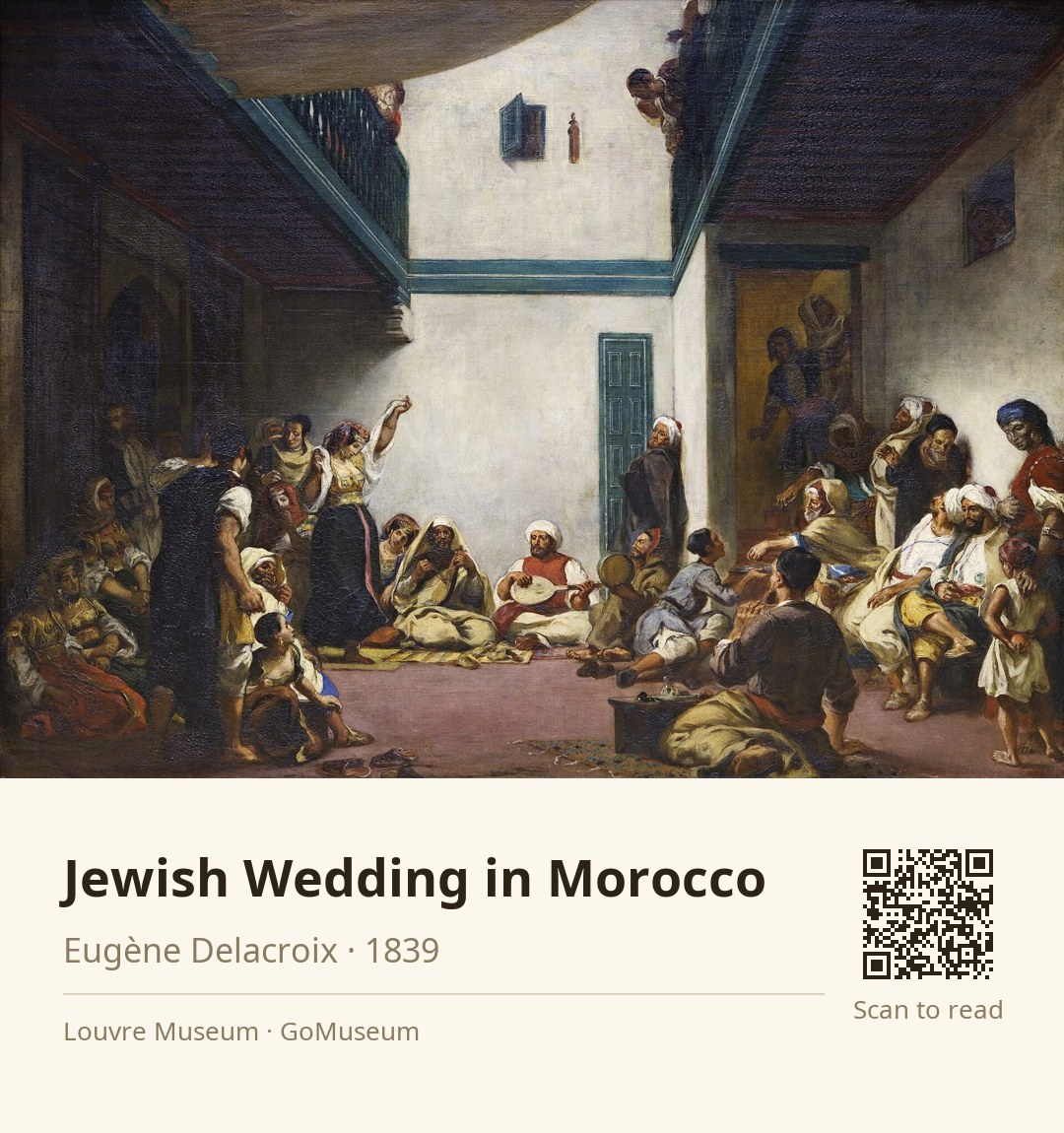
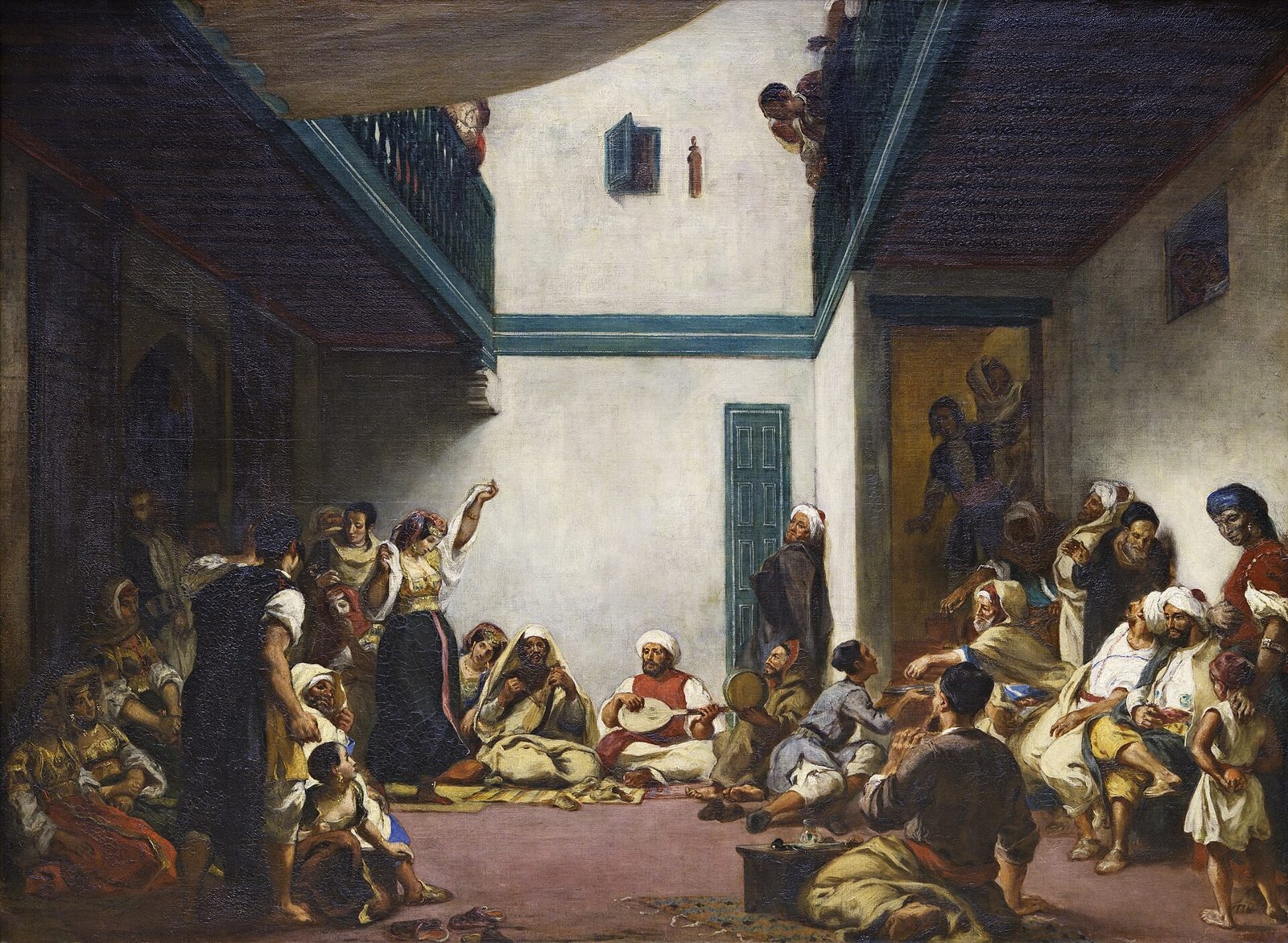
🎧 This work has audio narration — listen in the appTake a moment to soak in the vibrant scene before you in Eugène Delacroix's "Jewish Wedding in Morocco." Look closely at the intricate details of the wedding party—the rich colors of their garments and the joyful expressions on their faces. Notice how the musicians, with their instruments poised, seem to bring the entire courtyard to life.
These details matter because they capture not just a moment in time, but the essence of celebration and cultural identity. Delacroix, a master of the Romantic movement, was deeply inspired by his travels in North Africa, and this painting reflects his fascination with the exotic and the emotional depth of human experience. The way he uses color and movement here draws you into the scene, making you feel as if you’re part of the festivities.
Painted in 1839, this work was born from Delacroix's firsthand experience of a Jewish wedding he witnessed in Tangier. It’s a glimpse into a world that was both foreign and familiar to him, showcasing the beauty of cultural diversity.
As you stand here, think about what this celebration means to you. How do moments of joy and connection resonate across cultures and time?
Eugène Delacroix, born on April 26, 1798, in Charenton-Saint-Maurice, emerged as a pivotal figure in the French Romantic movement. He diverged from the Neoclassical ideals of his contemporaries, such as Ingres, drawing inspiration from the vibrant colors and dynamic forms of Rubens and the Venetian Renaissance. His works, characterized by dramatic themes and a passion for the exotic, often reflected his travels in North Africa and his fascination with the sublime forces of nature, influenced by literary figures like Lord Byron.
Delacroix's career was marked by both acclaim and controversy; his early painting, "The Barque of Dante," stirred public debate but was ultimately recognized by the state. His later masterpieces, including "Liberty Leading the People," showcased his ability to blend historical and contemporary narratives, solidifying his status as a master of expressive brushwork and color theory. His innovative techniques laid the groundwork for Impressionism and inspired the Symbolist movement.
Despite personal struggles, including early orphanhood and financial hardships, Delacroix's legacy endures. He is celebrated not only for his paintings but also for his lithographs and writings, which reveal his artistic philosophy. As one of the last old masters, his influence resonates through art history, marking him as a cornerstone of Romanticism and a precursor to modern artistic movements. Delacroix passed away on August 13, 1863, leaving a profound impact on the art world.
Eugène Delacroix's "Jewish Wedding in Morocco" was painted in 1839, inspired by his travels in North Africa, particularly a Jewish wedding he witnessed in Tangier in 1832. This vibrant work was first shown at the Salon of 1841 in Paris, where it caught the attention of the art world. It was acquired that same year by Philippe, Duke of Orléans, the heir to the French throne, and has since been housed in the Louvre. The painting's reception was mixed; while it showcased Delacroix's unique style and fascination with exotic cultures, it also faced scrutiny typical of his career, where his bold choices often polarized audiences. Interestingly, around 1875, the Impressionist painter Pierre-Auguste Renoir created a copy of this work for industrialist Jean Dollfus, highlighting its lasting impact and influence on future generations of artists.
Notice how he employs rich, saturated hues that evoke the vibrancy of the celebration. The brushwork is dynamic and expressive, creating a sense of rhythm that mirrors the joyful atmosphere of the wedding. The composition is structured yet fluid; the figures are arranged in a way that draws your eye across the canvas, from the musicians to the wedding party, creating a narrative flow. Delacroix's use of light enhances the emotional depth, casting warm tones that suggest the warmth of the Moroccan sun and the intimacy of the gathering. This interplay of color and form not only captures the scene but also invites you to feel the energy and excitement of the moment.
In 1832, he traveled to Tangier and was captivated by the vibrant ceremonies he observed. This firsthand experience infused his work with authenticity, capturing not just the scene, but the very essence of the celebration. Imagine the colors, sounds, and emotions he must have felt as he sketched the joyous moments that would later inspire this masterpiece.