Virgin of the Rocks
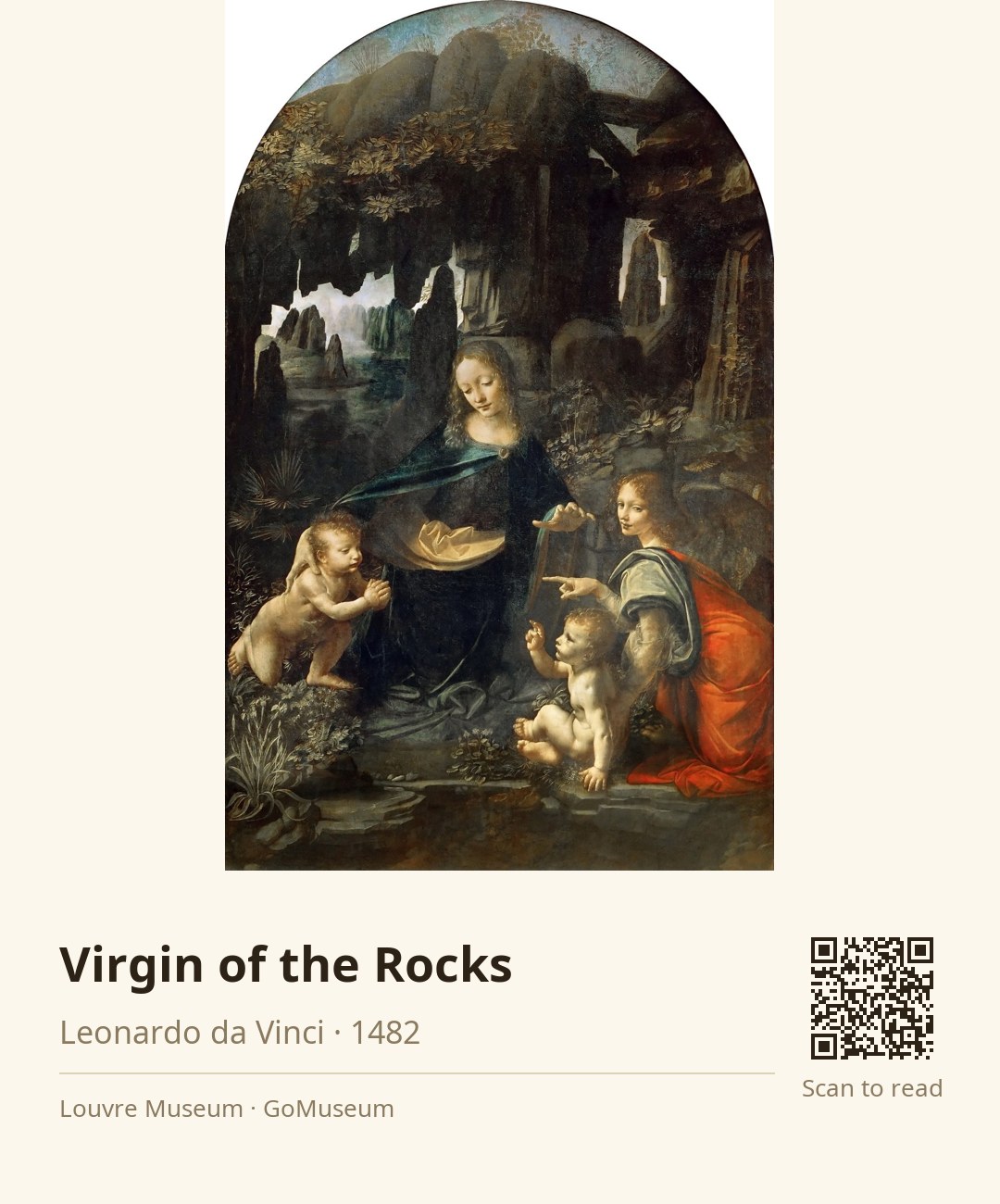
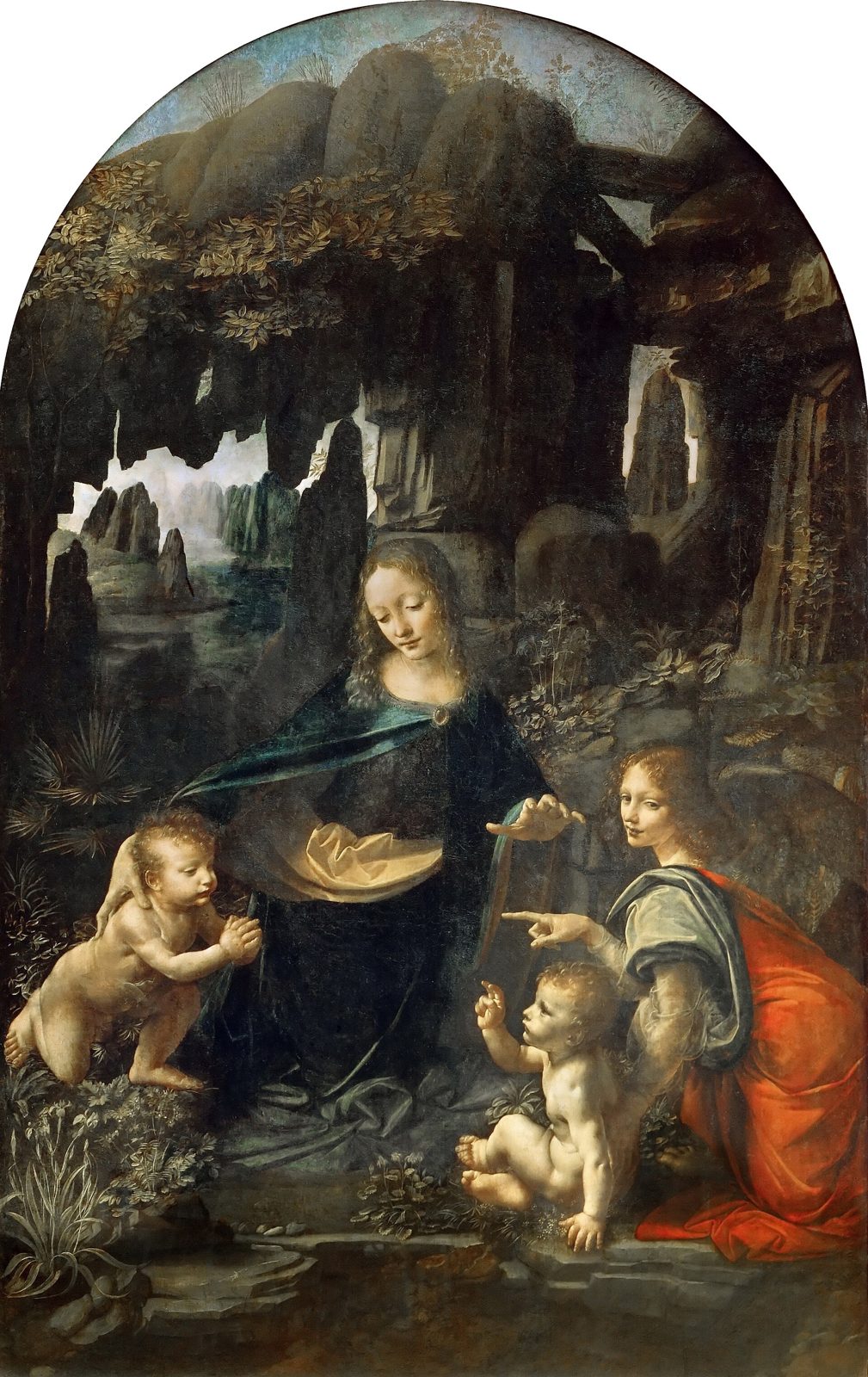
🎧 This work has audio narration — listen in the appTake a moment to really look at the Virgin of the Rocks. Notice how the figures seem to emerge from the shadows, almost as if they’re stepping into the light from a hidden world. The way Leonardo da Vinci uses light and shadow, known as chiaroscuro, creates a depth that pulls you in, making it feel like you’re witnessing a moment frozen in time.
Now, focus on the expressions of the characters. Mary’s serene gaze and the tender way she holds the child Jesus speak volumes about maternal love and divinity. This isn’t just a painting; it’s a profound exploration of human emotion and spirituality, capturing a connection that transcends time.
It reflects not only his mastery of technique but also his deep understanding of human nature. He was not just an artist; he was a thinker, a scientist, and a visionary, all of which is evident in the intricate details of this work.
As you stand here, consider what it must have been like for Leonardo to envision this scene. What thoughts and feelings do you think he poured into every brushstroke? What do you feel when you look at it? Let that connection linger with you as you move on.
Leonardo da Vinci, born on April 15, 1452, in Vinci, Italy, was a quintessential figure of the High Renaissance, renowned for his multifaceted genius as a painter, scientist, and inventor. Raised by his grandparents after being born out of wedlock, he received artistic training under Andrea del Verrocchio in Florence. His career flourished in Milan under Ludovico Sforza, where he produced iconic works like "The Last Supper" and began his extensive studies in anatomy and engineering.
Leonardo's notebooks reveal a relentless curiosity, encompassing subjects from botany to mechanics, showcasing his innovative spirit. Despite creating fewer than 25 major works, his influence on Western art is profound, with the "Mona Lisa" standing as a cultural icon. His visionary designs for flying machines and other inventions, though largely unfeasible in his time, reflect a forward-thinking approach that laid groundwork for future scientific exploration.
In his later years, he moved to France, where he continued to work until his death in 1519. Leonardo's legacy endures as a symbol of the Renaissance ideal, blending art and science, and inspiring generations with his empirical observations and artistic mastery. His life and work remain a testament to the boundless potential of human creativity.
The painting titled 'Virgin of the Rocks' was created by the renowned artist Leonardo da Vinci in 1482. Commissioned for the Confraternity of the Immaculate Conception in Milan, this work was intended to adorn their chapel. It was first displayed in the church of San Francesco Grande, where it garnered significant attention. Over time, the painting's journey took it through various hands, leading to its eventual placement in the National Gallery in London. This piece stands as a testament to Leonardo's mastery of light and shadow, as well as his ability to convey complex emotions through his subjects. The painting's provenance reflects its importance in the art world, as it has been studied and admired for centuries, influencing countless artists who followed in Leonardo's footsteps.
As you gaze at the Virgin of the Rocks, take a moment to appreciate Leonardo's masterful technique. The brushwork is incredibly nuanced, with soft transitions between light and shadow that create a lifelike quality. Notice how he layers the paint to build depth, especially in the folds of the drapery and the delicate features of the figures. The use of chiaroscuro not only adds dimension but also imbues the scene with a sense of drama and emotion. The composition is carefully structured, guiding your eye through the triangular arrangement of the figures, which enhances the narrative flow. The cool blues and warm earth tones create a harmonious balance, while the subtle highlights draw attention to the faces, emphasizing their expressions. This meticulous approach to light and color is what makes the painting feel almost three-dimensional, inviting you to step into the scene.
The first version, created for a chapel in Milan, was completed around 1483. But Leonardo wasn't satisfied and went on to create a second version, which is the one you see here. This kind of perfectionism was typical of Leonardo, who often left works unfinished if they didn’t meet his high standards. It’s a fascinating glimpse into the mind of a true genius, always striving for that elusive ideal.
Leonardo's upbringing as an illegitimate child may have shaped his understanding of complex human emotions, allowing him to depict the intimate connection between Mary and Jesus with profound sensitivity.